The History of Fire Emblem: Path of Radiance
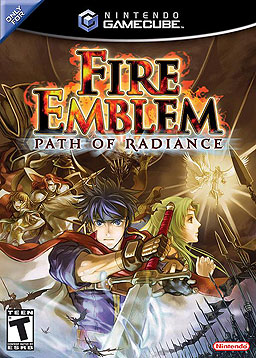
Fire Emblem: Path of Radiance (GameCube, 2005), Soen no Kiseki, Trail of the Blue Flame, in Japan, was developed by Intelligent Systems with Nintendo SPD and published by Nintendo. It was directed by Masayuki Horikawa, produced by Toru Narihiro and Hitoshi Yamagami, written by Ken Yokoyama, and designed visually by Senri Kita, an artist new to the series. On the continent of Tellius, the nation of Daein invades Crimea, and the mercenary Ike, not a prince, leads the dead king's daughter home through a war that keeps exposing the hatred between the human Beorc and the shape shifting Laguz.
THE MAKING
The GBA success bought the ticket homeDevelopment began after the overseas success of the Game Boy Advance's Fire Emblem, the first localized entry. The team had held off the GameCube because of development costs; the GBA game's Western performance changed the calculation, and Path of Radiance became the first home console Fire Emblem since Thracia 776 on the Super Famicom, and the series' first with 3D graphics, full motion cutscenes and voice acting. Animation studio Digital Frontier made the films, and the team used motion capture for battles and cutscenes, then exaggerated it slightly to keep the series' fantasy feel. Producer Narihiro has said he considered the game only seventy percent complete at release, a regret he stated on the record.
Ike was the deliberate break. Earlier Fire Emblem protagonists were royalty; this one is a mercenary's son who is pulled into royal politics rather than born to them, a direction many on the staff suggested for the new 3D game, with the mercenary trait specifically and highly requested by the male staff. Kita's character designs were drawn to a higher finish than earlier games because every character now had to read as unique in 3D. The subtitle is not an object or a place; the team has said it is a metaphor for the journeys of Ike and the others. The game was first announced in April 2004, its title, story and platform revealed in Weekly Shonen Jump, and Japanese pre-orders carried a soundtrack CD and a calendar marking the series' fifteenth anniversary.
THE DESIGN
Permadeath, a base, and two peoplesThe series' frame holds: grid battles, the weapon triangle, weapons that wear out, and permadeath, any character who falls is gone for the rest of the game, and Ike's fall ends it. What is new is everything around the battles. A Base between chapters holds supports, forging, trading and bonus experience earned from secondary objectives, a place the team added because they wanted characters to interact away from the battlefield; a dedicated battle arena was one of the features the move to 3D cost them.
Tellius's second people are a system as well as a theme. Laguz fight only in transformed animal form, on a gauge that fills and drains, helpless in humanoid shape between transformations, and each kind has its elemental weakness. Forty six characters can be recruited. Owners of the Game Boy Advance Fire Emblem games could also connect them and unlock concept art and special maps built around those games' characters.
THE EDITIONS
One release, two difficulty laddersTHE RECEPTION
85, with the graphics carrying the complaintsTHE LEGACY
Late for its console, early for its series' futureThe developers have said the late GameCube timing affected sales, and also that the game helped sell hardware and convinced Nintendo the series had selling power on home consoles. The proof moved fast: a direct sequel, Fire Emblem: Radiant Dawn, began development in May 2005, before this game had even reached the West, and shipped for the Wii in 2007. Ike went on to fight in every Super Smash Bros. from Brawl onward, which is how much of the world knows his face.
The game has since returned through Nintendo's GameCube library on modern hardware, closing the loop on a title whose original sin was arriving at the end of its console's life. On this shelf it stands beside its studio sibling, Paper Mario: The Thousand-Year Door, as the two halves of Intelligent Systems' GameCube: one bright, one grave, both permanent.
THE GAME ON THE SHELF
Path of Radiance · GameCube