
The History of Guilty Gear
In 1998 the 2D fighting game looked like a closed shop. Capcom and SNK owned the genre, the arcade was its home, and a small Japanese studio called Arc System Works had no fighting game pedigree at all. Into that arrived Guilty Gear: a PlayStation only, hand drawn, heavy metal fighting game designed by a vocational school graduate who also composed its music and voiced its hero.
It was not a mainstream hit, and its own reviewers flagged its difficulty and balance from the start. But it landed, kept its audience for decades, and grew into one of the most durable series in the genre. This is how it was made, how it was received, and what it left behind.
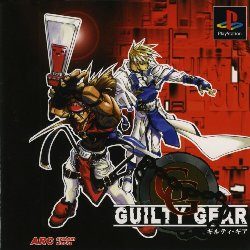
THE TWO COVERS
Same game, two sales pitches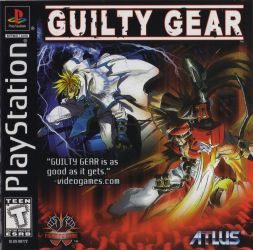
HOW IT WAS MADE
One man's game, a team of twelveDaisuke Ishiwatari conceived Guilty Gear while he was still in vocational school. After joining Arc System Works part time in 1995, he told the company's founder and president, Minoru Kidooka, that he wanted to make a game like Street Fighter. Kidooka approved, and Ishiwatari was given a team of around twelve developers, nicknamed Team Neo Blood. By Ishiwatari's own account only about four people did the main work, and the group had no real experience making video games. Production took a year and a half.
The one man band reputation is documented, not decorative. Ishiwatari was the game's producer and designer, designed the characters and the storyline, and composed the music, despite having no instrumental training: he built MIDI compositions in the music editor of the Famicom game Dezaemon and sent them to the sound team. He had intended Koichi Yamadera to voice the protagonist, Sol Badguy. When that did not happen, Ishiwatari voiced Sol himself, a role he kept until 2007. Lead programmer Hideyuki Anbe voiced Potemkin. The game was designed first with rendered 3D visuals; Ishiwatari disliked the result, and the team replaced them with the hand drawn artwork the series is known for.
THE RELEASE
PlayStation only, and proud of itHOW IT WAS RECEIVED
A cult classic, scored like oneWHAT IT LEFT BEHIND
The first link in a long chainGuilty Gear became the first installment of a series that is now considered a cult classic line in the genre. The direct sequels followed at long intervals: Guilty Gear X in 2000, Guilty Gear X2 in 2002, Guilty Gear 2: Overture in 2007, Guilty Gear Xrd in 2014 and Guilty Gear Strive in 2021, alongside spin offs and a shelf of updated editions. Themes from this first soundtrack, including Keep Yourself Alive and Holy Orders (Be Just or Be Dead), were carried into later games, and the soundtrack as a whole became one of the things the series is most known for.
The original kept circulating. It returned as a PS one Classic download in Japan in 2007 and Europe in 2010, and for the series' 20th anniversary Arc System Works ported it to Nintendo Switch, PlayStation 4 and Windows, released worldwide on May 16, 2019. It also picked up one strange footnote in American politics: in a 1999 speech about violent game advertising, President Bill Clinton held up a Guilty Gear advertisement and objected to its tagline about killing your friends guilt free. Decades later, Strive quietly added a portrait of Clinton to its Digital Figure mode.