
From the Library: covers, censuses, and editions, documented. Browse the Library →
SOJ Inuyasha · The History
← Back to the Library

The History of Inuyasha

Takahashi’s deliberate dark turn: an eleven-year Sengoku quest of 558 chapters and 56 volumes, and her longest series.

After Ranma ½, Takahashi wanted the darker register of her Mermaid Saga stories at full length. Inuyasha debuted in Weekly Shonen Sunday on November 13, 1996 and ended on June 18, 2008, a run of eleven years and seven months, 558 chapters, 56 tankobon. The Sengoku period was chosen so that violence would belong to the setting rather than to her characters’ cruelty; by her own account she did no notable research into samurai or castle design, treating the period as common knowledge.

As with her earlier series, she began without an ending in hand: in June 2001, nearly five years in, she still had not settled how the relationship between Inuyasha and Kagome would resolve. The series won the 47th Shogakukan Manga Award and reached 50 million copies in circulation by September 2020. In 2013 she returned for one chapter: the epilogue “Since Then,” published February 6, 2013 in the Heroes Come Back anthology raising funds for Tohoku earthquake recovery, and collected in the final volume of the 30-volume wideban edition.
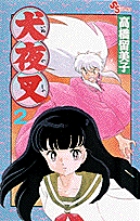
Inuyasha volume 2 cover
Inuyasha, Vol. 2
Volume 2 (1997), from the manga’s first year in Weekly Shonen Sunday.

THE DARK TURN

Weekly Shonen Sunday, 1996–2008
The Register
Not a comedy with battles but a quest with jokes: the ratio of her earlier work, reversed, on purpose.
No Ending, By Design
Her serial method across all three series on this shelf: build the cast, set it moving, and let the ending arrive when the characters do.
The Numbers
558 chapters; 56 volumes; 50 million copies; the 47th Shogakukan Manga Award.
The Epilogue
“Since Then” (2013): a charity one-shot that quietly became the series’ official last word, and a collector’s target ever since.
The Manga GalleryThe AnimeYashahime
MORE FROM THE RUMIKO TAKAHASHI ARCHIVE →
One shelf of the Library. Browse them all →

THE FIRST WORD

New pages and new pieces, first.