The History of Kirby Super Star
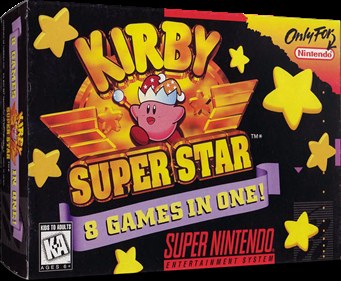
Kirby Super Star (Super NES, 1996), Kirby of the Stars: Super Deluxe in Japan and Kirby's Fun Pak in PAL regions, is an anthology: seven platform adventures of different shapes, plus two minigames, all sharing one engine and one hero. It added two player Helpers, gave every copy ability a full fighting game moveset, and sold over a million copies in Japan. Its remake would sell nearly three million more.
THE MAKING
Three years, an NES prototype, and a mid-course rebuildSakurai directed his third Kirby game, and development began unusually: the prototype was built on the NES, the older machine, for internal testing. It was nearly complete, and some of Kirby's animations in the final Super NES game are nearly identical to it. Sakurai said running the ideas on the internal build made them easier to develop before the team committed to the bigger hardware.
Development lasted three years, long for the era. Part of the cost was Rare's Donkey Kong Country (1994): its computer generated look convinced Sakurai that CG graphics would benefit Kirby, and the team redid the artwork about halfway through. HAL president Satoru Iwata took an unusually hands-off role and left the game to Sakurai. A whole extra mode, Kagero Mansion, a horror tinged action puzzle game in which Kirby is trapped in a mansion and cannot inhale, was designed and then cut for time.
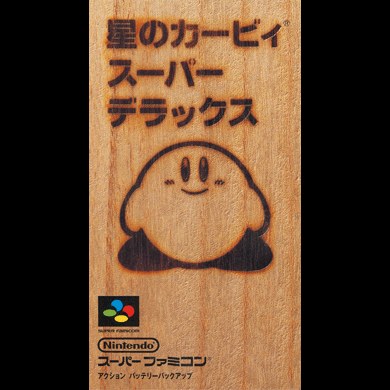
The working title was Kirby of the Stars: Active. The final Japanese title, Super Deluxe, was suggested by Mother creator Shigesato Itoi, who also proposed the packaging: a box modeled on a Paulownia wood box, of the kind used in Japan for expensive sake and silverware, to tell the buyer before the cartridge was even touched that this object was special.
THE DESIGN
Three pillars: a partner, a moveset, an omnibusSakurai built the game on three pillars. The first was two player cooperative play, which Miyamoto requested: he had wanted co-op in Mario for years and judged Kirby's slower pace the place it could finally work. Sakurai's answer was the Helper: Kirby converts a copy ability into a partner character, controlled by the computer or a second player, which let an inexperienced player join without carrying the game.
The second pillar was fighting game actions. Because a Helper made enemies too easy, enemies were strengthened, and each copy ability gained multiple moves on different inputs, the way a fighting game character works. This is also the first Kirby game where Kirby's appearance changes with his ability, the hat tradition that defines him now. The third pillar was the omnibus format itself, short complete games instead of one long one, which has its own page in this shelf.
The modes run from Spring Breeze, the beginner remake of Dream Land, through the treasure hunt of The Great Cave Offensive and the timed assault of Revenge of Meta Knight, to Milky Way Wishes, where copy abilities are collected permanently instead of swallowed. Jun Ishikawa composed the score, one of the most remixed in the series: the Gourmet Race theme became Kirby's musical signature in Super Smash Bros., and an 8-Bit Big Band arrangement of Meta Knight's Revenge won a Grammy Award in 2022.
THE EDITIONS
The remake outsold the original's legendTHE RECEPTION
Content, praised as contentTHE LEGACY
The deluxe templateSuper Star taught the series its habits: helpers and partners, hats for abilities, minigames as standard furniture, and content presented as a collection rather than a single quest. Meta Knight's battleship, the Halberd, returned across Kirby and Super Smash Bros. for decades. And its Japanese box remains the boldest packaging statement Nintendo ever made for the character, a deluxe edition that announced itself in wood grain before deluxe editions were a category.
THE GAME ON THE SHELF
Kirby Super Star · Super NES