
The History of Marvel vs. Capcom on PlayStation
Marvel vs. Capcom: Clash of Super Heroes is a 1998 crossover fighting game developed and published by Capcom for the CP System II arcade board. It is the third entry in the Marvel vs. Capcom series, and the first to open the Capcom side beyond Street Fighter, pulling in Mega Man, Strider Hiryu, Captain Commando and Morrigan alongside Marvel names such as Spider-Man, Wolverine, Hulk, Venom and Captain America.
Its PlayStation port, released in Japan on November 11, 1999 as the EX Edition and in North America on January 27, 2000, is a different story: the same roster and moves, rebuilt around the limits of the hardware. This page covers the arcade original, the port and its compromises, and what the game left behind.
HOW IT WAS MADE
The arcade originalClash of Super Heroes keeps the two on two tag team structure of Marvel Super Heroes vs. Street Fighter: pick two fighters, swap between them at any point in the match, and let the resting partner recover health off screen. It changes the support system around that core. The old Variable Assist, which summoned your own partner, is replaced by a Special Partner system: a guest character, drawn from a pool of 22 Marvel and Capcom names including Colossus, Cyclops, Arthur and Devilotte, is randomly allocated to each player and can be called in only a limited number of times per round.
The new signature technique is the Variable Cross, also called the Duo Team Attack, which brings both of your fighters on screen at once for a limited time with unlimited use of the Hyper Combo gauge. The roster holds 15 regular fighters and six secret characters, most of them altered versions of existing fighters, with Roll from Mega Man the exception. Every run ends at Onslaught, the X-Men crossover villain, as final boss. The game was exhibited at the AOU Show in February 1998 and released in Japanese arcades that month, with North America following in March.
THE RELEASE
Arcade hit, two very different portsThe arcade game landed. Game Machine listed it as the second most successful arcade game of March 1998 in Japan, and in the United States it sold an estimated 3,000 arcade units, reportedly outperforming Street Fighter III to become Capcom’s most successful arcade game in the country during that period.
The Dreamcast port came first at home, on March 25, 1999 in Japan and October 7, 1999 in North America, and was treated as a flawless translation of the arcade game, with a new four player mode, Cross Fever, added. The PlayStation port followed on November 11, 1999 in Japan, renamed Marvel vs. Capcom: Clash of Super Heroes EX Edition, then January 2000 in North America and Europe. To fit the PlayStation, Capcom removed tag team battles, cut animation frames, reduced the second fighter to an assist role, and added two compensations: an exclusive Cross Over mode that restores tagging under strict conditions, and an art gallery of game art and ending animations.
THE TWO COVERS
Same game, two shelves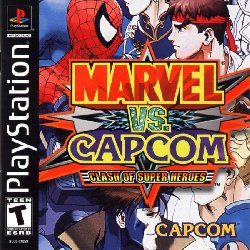
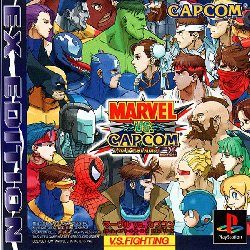
HOW IT WAS RECEIVED
Named scores, both portsWHAT IT LEFT BEHIND
The version history sinceA sequel, Marvel vs. Capcom 2: New Age of Heroes, followed in 2000 and made the series a phenomenon. The original game returned in 2012 as part of Marvel vs. Capcom Origins for PlayStation 3 and Xbox 360, built from the arcade ROM with online play, until Capcom’s Marvel licenses lapsed and the collection was removed from sale in December 2014.
Arcade1Up released a home cabinet including the game in June 2020. In September 2024 the arcade original reached Nintendo Switch, PlayStation 4 and Windows in the Marvel vs. Capcom Fighting Collection: Arcade Classics. The PlayStation EX Edition itself has never been reissued: it survives as the record of what the most popular home console of its era could and could not do with the defining fighter of 1998.