
From the Library: covers, censuses, and editions, documented. Browse the Library →
SOJ Mortal Kombat ยท Vintage Fighting Games
← Back to the Fighting Games Gallery

The History of Mortal Kombat on Consoles

The port that split an industry in two.

In the arcade, Mortal Kombat was Midway's digitised shock act of 1992: real actors, spraying blood, and Fatalities that finished a beaten opponent for good. The console story begins when Acclaim brought it home on September 13, 1993, a date marketed as Mortal Monday, releasing the Super NES, Genesis, Game Boy and Game Gear versions simultaneously in one of the largest game launches of the time.

What happened next was not really about the game. Nintendo and Sega looked at the same arcade hit and made opposite decisions about its violence, and that single split ran through sales charts, Senate hearing rooms, and eventually into the ratings box printed on every game sold in North America.

THE GENESIS COVER

The box that carried the rating
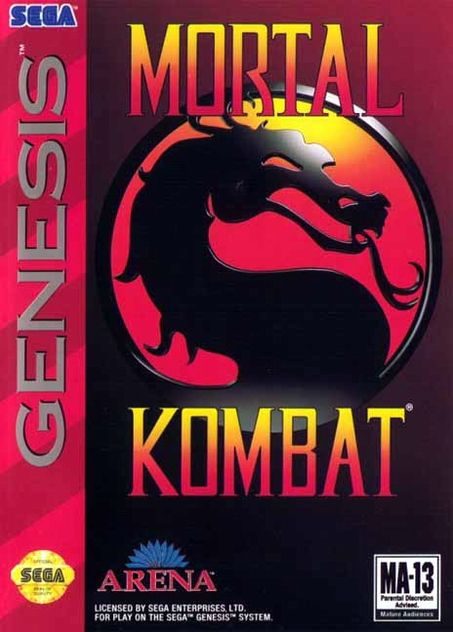
Mortal Kombat US Genesis cover
United States, Genesis
The Genesis box, published by Arena. Note the MA-13 rating from Sega's Videogame Rating Council in the corner: the rating the uncensored code sat behind.

HOW IT WAS MADE

Two policies, two different games
The Nintendo version
The SNES version's visuals and audio were more arcade accurate than the Genesis version's, but it has less precise controls, and under Nintendo's family friendly policies the blood was replaced with sweat and most Fatalities became less violent finishing moves.
The Sega version
The Genesis version shipped without the gore and was rated MA-13 by Sega's own Videogame Rating Council. The blood and the uncensored Fatalities were in the code, restored by entering ABACABB, a nod to Abacab, the 1981 album by the band Genesis.
The handhelds and the CD
The Game Boy version was heavily cut down and omitted Johnny Cage. The Game Gear version was closer, and also censored unless a code was entered. The later Sega CD version needed no code, carried an MA-17 rating, and used the arcade soundtrack, at the cost of loading times.

THE RELEASE

Mortal Monday and the numbers
September 13, 1993
All four home versions launched the same day in North America and Europe, heralded by a flood of television commercials. The Mortal Monday yell from those adverts was later built into the series' theme music.
Three million shipped
In November 1993 Acclaim announced it had shipped more than three million copies of Mortal Kombat for home systems, counting the SNES, Genesis, Game Boy and Game Gear versions combined. The game sold three million copies worldwide in its first three weeks.
The year's best seller
In the United States it was the top selling Genesis, SNES and Game Gear game of 1993, and the Genesis version was the overall best selling console game of the year. By July 1994 the console versions had sold more than six million units worldwide.

HOW IT WAS RECEIVED

Close scores, clear winner
Electronic Gaming Monthly
Genesis 8.25 out of 10, SNES 7.25 out of 10. EGM also named Mortal Kombat the Most Controversial Game of 1993.
GamePro and GamesMaster
GamePro gave both the Genesis and SNES versions 5 out of 5. GamesMaster gave both 81 percent. On scores alone, the two ports were close.
The exception that saw it coming
GamePro's Mortal Monday era coverage, quoted by SYFY Wire, warned that Genesis owners would be taunting SNES owners, because the special blood enabling option made the Genesis cartridge the winner despite its weaker graphics.

WHAT IT LEFT BEHIND

Hearings, a ratings board, a reversal

The home release landed in a Washington already primed to act. Senator Joe Lieberman's former chief of staff had been asked by his son to buy the Sega version, was appalled by it, and brought it to the senator. Lieberman and Senator Herb Kohl led hearings before combined Senate committees on December 9, 1993 and March 4, 1994, covering Mortal Kombat, Night Trap and Lethal Enforcers, and Congress threatened to regulate the industry if it did not regulate itself.

The industry did. The Interactive Digital Software Association was created in April 1994, and it formed the Entertainment Software Rating Board. The ESRB was formally introduced to Congress in July 1994 and became officially active on September 13, 1994, exactly one year after Mortal Monday. No federal law was passed. The last word went to the sequel: Mortal Kombat II reached the SNES with its violence intact, Nintendo raised no objection after the ESRB existed, and that year the gap between the versions nearly closed instead of flipping: 1.51 million copies on SNES against 1.78 million on Genesis in America.

More fighting games →

THE FIRST WORD

First word on new listings, plus a subscriber promo code for the eBay store.