The History of Persona 3
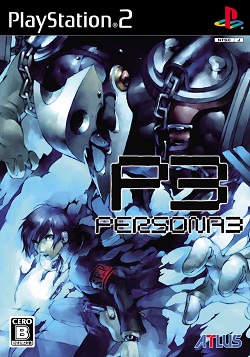
Persona 3 (PlayStation 2, 2006) took a spin-off series about students and demons and rebuilt it around a calendar: go to school, make friends, and at midnight climb a tower that should not exist. Its inventions, the school year structure and the Social Link system that turns friendship into combat power, became the foundation every later Persona was built on.
THE MAKING
Atlus, and a formula foundAtlus developed Persona 3 in house, directed by Katsura Hashino, with character designs by Shigenori Soejima and a score by Shoji Meguro that leaned hard into vocals, English language tracks included. Meguro has said the game was one of his first chances to fully realize his music in a game; the battle theme, Mass Destruction, began as a prototype and tested so well it stayed.
The Western release became a small production drama of its own. The North American edition was packaged as a deluxe box with a soundtrack disc and a 52 page art book, and when Atlus found a problem in the art book's production days before launch, it chose to delay the game three weeks, to August 14, 2007, rather than ship without the book.
THE DESIGN
Days, links, and the Dark HourThe game's year runs day by day. By day the protagonist attends Gekkoukan High School, studies, works, and builds Social Links, friendships keyed to the Major Arcana. Each link ranks up a kind of strength: fuse a Persona of that Arcana and it is born stronger. Relationships can reverse, and even break, if neglected or betrayed. It is the negotiation systems of older Megami Tensei games turned inside out: instead of talking to demons, you talk to people, all year.
At the Dark Hour, a hidden hour between one day and the next, the school becomes Tartarus, a tower of Shadows. The party, SEES, summons each member's Persona by firing a gun shaped object called an Evoker at their own head, the game's signature image. In battle the party members act on their own AI, a choice Hashino defended on the record: it is more fun, he said, when each member's character shows in how they fight. New Personas are fused in the Velvet Room, and the protagonist alone can carry many.
THE EDITIONS
FES, then the portable yearTHE RECEPTION
The social half won the argumentTHE LEGACY
The foundation, and the remake that proved itPersona 3's calendar and links are now simply what Persona is: Persona 4 kept the structure, Persona 5 industrialized it, and the series' center of gravity moved permanently to the school year. The original and FES each sold in the several hundred thousand range worldwide; the PSP version passed a million, most of it outside Japan.
Then the remake made the point at modern scale: Persona 3 Reload sold a million copies in its first week, the fastest selling game in Atlus history at the time, and passed two million by August 2025. The 2006 experiment is the company's flagship formula now.
THE GAME ON THE SHELF
Persona 3 · PS2