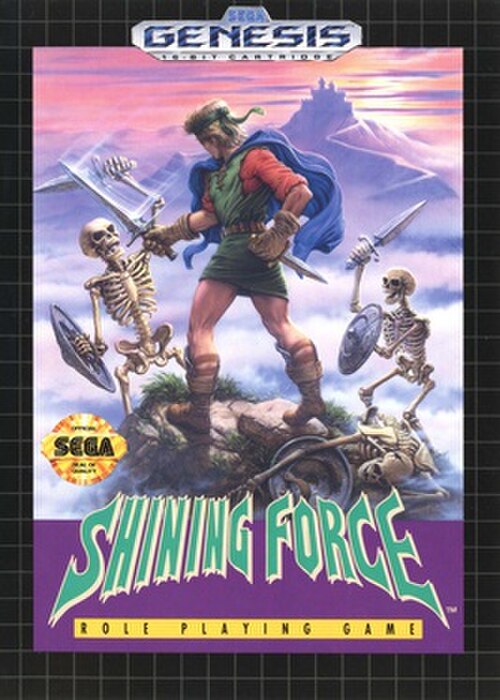
The History of Shining Force
Shining Force: The Legacy of Great Intention (Japan March 20, 1992; North America May 1993) is the second Shining game and the first tactical one: Max of Guardiana raises a twelve strong force against Runefaust to stop the resurrection of Dark Dragon. It was developed by Climax Entertainment and Sonic! Software Planning, designed and produced by Hiroyuki Takahashi, with art by Hidehiro Yoshida and Yoshitaka Tamaki and music by Masahiko Yoshimura.
THE MAKING
A hit sequel on a minimal budgetShining in the Darkness had succeeded, and Sega still allotted Shining Force only a minimal budget. The influence question that follows this game everywhere can be answered on the record (Tier 1: lead developer Hiroyuki Takahashi, in the GamesTM behind the scenes account carried by the game's reference record): Shining Force was not influenced by Fire Emblem. Takahashi said the tempo of that title was so bad it was not something he even wanted to play. His stated starting point was Dragon Quest: how to take its battles and make them more fun. His stated model was an obscure Japanese PC game, Silver Ghost, a simulation action game about directing and commanding multiple characters.
That record matters to this Library's labeling: the Fire Emblem resemblance is Tier 2 inference by later writers. The creator's own account names Dragon Quest and Silver Ghost, and this page prints his account.
THE DESIGN
An army of people, and no game overBattles run on square grids where agility sets the turn order. Every allied unit is a named character with a background, where the genre's habit was generic soldiers, and classes gate spells and equipment until promotion between levels 10 and 20 resets the level and trades statistics for a stronger class. Between battles the game becomes a traditional RPG: towns, shops, treasure, and headquarters management, with no labyrinths and few puzzles.
Its kindest idea is structural: there is no game over. If Max falls, the force keeps its experience, loses half its money, and retries. The army grows stronger even in defeat, a design that made tactical RPGs approachable years before the genre softened elsewhere.
THE EDITIONS
Original, remake, and everywhere sinceTHE RECEPTION
Accessible was the praise wordTHE LEGACY
The Shining series finds its shapeShining Force set the series' durable form: a named army, grid battles, and town life between them, a form its sequel would enlarge and its Game Gear spin offs would carry. It also left the Library a documented lesson in influence claims: the obvious comparison is not always the true one, and the creator had already answered the question.
THE GAME ON THE SHELF
Shining Force · Genesis