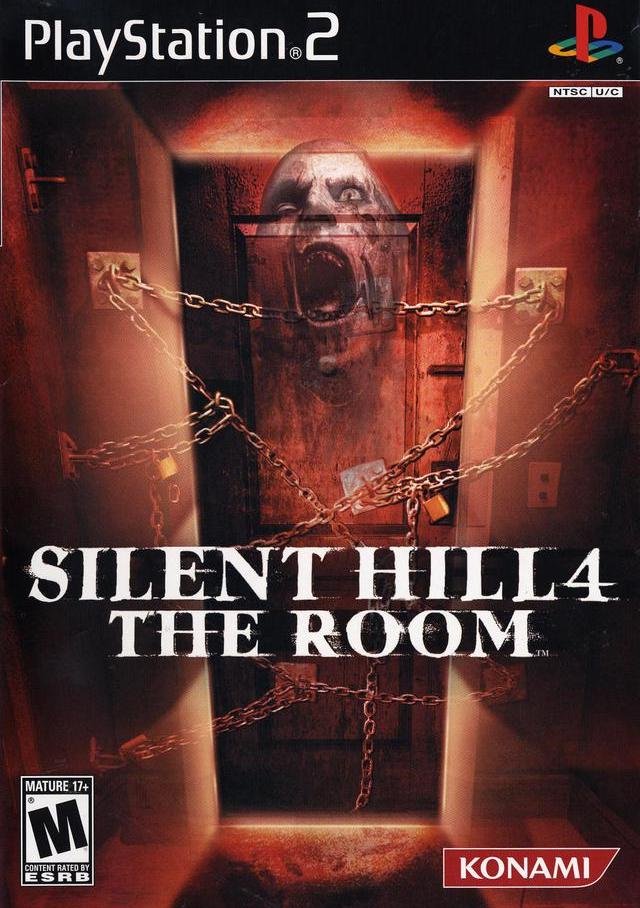
The History of Silent Hill 4: The Room
Henry Townshend wakes in his apartment in Ashfield, a town near Silent Hill, and finds his front door chained shut from the inside. Silent Hill 4: The Room (2004) never sends him to the town at all: his only way out is a hole in his bathroom wall, into worlds built by the undead serial killer Walter Sullivan, a name the series had been planting since a newspaper in Silent Hill 2. It was Team Silent's final game.
THE MAKING
Team Silent, 2001 to 2004Development began immediately after Silent Hill 2 was finished and ran alongside Silent Hill 3: pre-production in fall 2001, full production from spring 2002, around seventy people over two and a half years. Suguru Murakoshi directed and wrote it; Akira Yamaoka produced and composed; Masashi Tsuboyama, the second game's director, led the art. The working title was The Room: Silent Hill before the subtitle settled as simply The Room, in part so newcomers could grasp the concept from the box.
One piece of folklore needs correcting on the record: the game was not an unrelated horror title retitled late for financial reasons. The developers have stated, in Konami's own developer interviews and the game's postmortem, that it was a Silent Hill game from the start, designed deliberately to take the series in a different direction. What is true is narrower: at one stage it was considered as a spin-off rather than a numbered sequel.
THE DESIGN
First person at home, third person in hellThe stated concept, in the producers' words, was to take "the room" as "the safest part of your world" and make it a danger zone. The apartment is played in first person for a personal, claustrophobic feel, and it holds the game's only save point and item chest. For the first half it heals Henry. For the second half it is haunted, and the hauntings drain the health the room used to restore.
Outside, the game leans into combat: charged melee attacks, breakable weapons, a limited inventory, and ghosts that cannot be killed, only knocked down, pinned with a special sword, or warded off. In the second half Henry escorts his neighbor Eileen Galvin, and how much damage she takes decides whether she lives through the final fight. The game has four endings and, a first for the series, no joke UFO ending. The creators acknowledged Ryū Murakami's novel Coin Locker Babies and the film The Cell as inspirations for the premise, alongside the series' standing debts to Jacob's Ladder and Twin Peaks.
THE EDITIONS
One game, a shelf of versionsTHE RECEPTION
Acclaim, with the dissent keptNo Team Silent game split its reviewers like this one. Game Informer wrote that its "disarming voyeurism, bizarre camera angles, and exceptionally well-placed tension is what the series has been trying to do all along." The New York Times found it completely lacking in "true terror." Edge held both views in one review, calling it from one angle a choking journey of unparalleled sophistication and from another "just a clunky PSone throwback." The repeated environments of the second half and the forced trips back to the room were the common mechanical complaints. In Japan it topped the sales chart in a slump week with 41,000 copies, fell to tenth the next week, and Konami's official statements called its Japanese and European sales "favorable."
THE LEGACY
The end of Team SilentSilent Hill 4 closed the first era of the series. The first four games were all made by Team Silent inside Konami in Tokyo between 1999 and 2004; everything after was made by outside, mostly Western, studios to noticeably cooler reviews. The Room's departures, divisive in 2004, are exactly what it is now studied for: the apartment that turns on its tenant anticipated a decade of horror games set in a single corrupted home.
Its afterlife has been curatorial rather than commercial: no remaster, no remake, but a maintained PC edition, preserved and patched on GOG a full twenty years after release, for the strangest numbered game in the series.
THE GAME ON THE SHELF
Silent Hill 4 · PS2