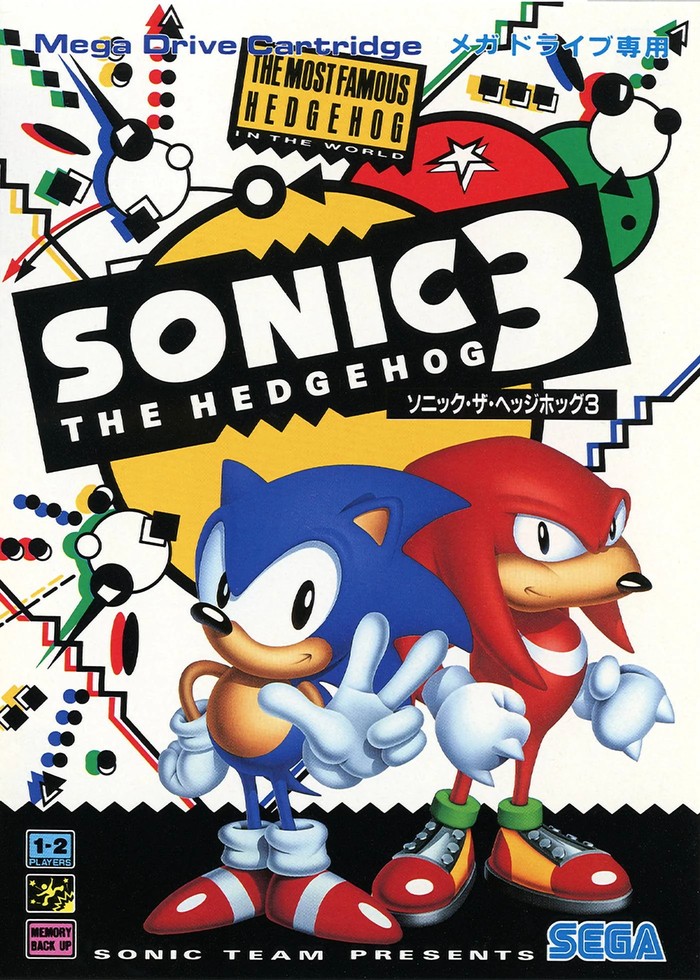
The History of Sonic 3 and Knuckles
Sonic the Hedgehog 3 (February 1994) and Sonic and Knuckles (October 1994) were developed together at Sega Technical Institute as a single game. Time, cartridge costs and a promotional deadline split them in two; the lock on cartridge of Sonic and Knuckles, with a slot in its top that accepts Sonic 3, joins them back into Sonic 3 and Knuckles, the game the team actually designed. Together they sold four million copies and introduced Knuckles the Echidna.
THE MAKING
One project, splitDevelopment of Sonic 3 began in January 1993 at STI in California, shortly after Sonic 2 shipped. It started life as an isometric game, the direction that later became Sonic 3D Blast, before time constraints returned it to a conventional 2D platformer. The story picks up where Sonic 2 ended: the Death Egg has crash landed on the floating Angel Island, and its guardian, Knuckles, has been tricked by Robotnik into treating Sonic as the thief. Knuckles ambushes Sonic out of his Super form in the opening seconds and steals the Chaos Emeralds, the series' first rival doing in one cutscene what no boss had managed.
The game outgrew its medium. The combined project was too large for an affordable cartridge and too long for its schedule, which included a fixed McDonald's promotion tied to the February launch. The documented solution, per the record assembled by Game Informer's history of the split, was surgery: Sonic 3 shipped with six zones in February 1994, and the remaining zones followed in October as Sonic and Knuckles, a game in its own right and also the other half of this one.
THE LOCK ON
The cartridge that completes the gamePer STI's Roger Hector, the lock on adapter was conceived between the releases of Sonic 1 and Sonic 2, and Sega's hardware division supplied it when the split made it necessary. Its behaviour is a small masterpiece of thoroughness. Dock Sonic 3 and the two games merge: fourteen zones in sequence, Knuckles playable through the Sonic 3 zones, Tails through the Sonic and Knuckles zones, the save system restored across the whole. Dock Sonic 2 and you get Knuckles in Sonic 2, his glide and climb retrofitted into the earlier game, because the team judged his play style suited its levels. Dock almost anything else and the cartridge generates Blue Sphere, an endless version of the new special stage, seeded by the guest cartridge's data.
The special stage itself matters: Blue Sphere, a rotating chequered planet of blue and red spheres, is widely held the finest of the classic special stages, and it only exists in this complete form because the game was split.
THE MUSIC QUESTION
A credit list with a hole in itSonic 3's credits name a team of composers that includes several of Michael Jackson's closest musical collaborators, and do not name Jackson. Whether he composed for the game, which tracks are his, and why he is uncredited are disputed on the record by the men involved, including the game's producer, Yuji Naka, in 2022. This Library gives that question its own page, at its documented weight, linked below; it is the reason Sonic 3's music was replaced in the Sonic Origins compilation of 2022 while the rest of the classic scores were not.
THE EDITIONS
Two cartridges, one wholeTHE RECEPTION
Praise, and a footnote about valueBoth halves were reviewed as improvements on what came before: bigger zones, the elemental shields, a story told in pantomime cutscenes, and a difficulty curve that rises properly into the Sonic and Knuckles zones. Sonic and Knuckles drew particular praise for the lock on technology and its replay value, with the one reservation, that it resembled Sonic 3, being rather the point. The combined game has since settled into the position Sonic 2's fans contest with it: the connoisseur's pick for the best of the classic era.
THE LEGACY
The end of the classic lineSonic 3 and Knuckles was the last main Sonic game Naka, Yasuhara's STI team and the Genesis produced together, and the lock on cartridge remains a one of one in games hardware: a sequel sold as a peripheral for its own first half. Every later classic style revival, from the Whitehead remakes to Sonic Mania's level list, treats the joined game as the canon it is completing.