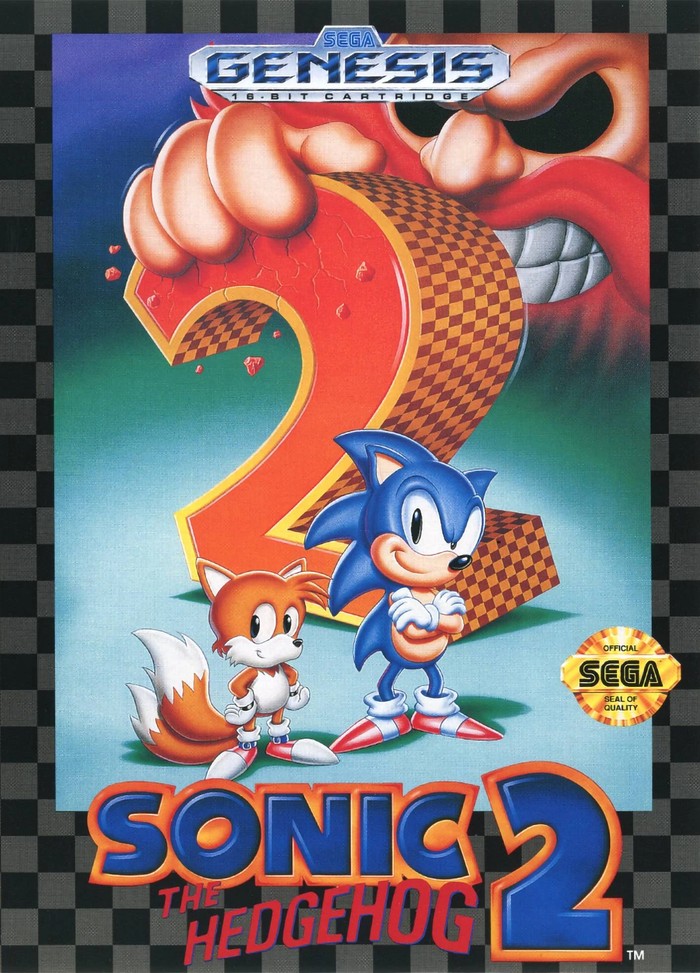
The History of Sonic the Hedgehog 2
Sonic the Hedgehog 2 was developed by Japanese and American staff together at Sega Technical Institute in California, released in Japan on November 21, 1992 and across North America and Europe three days later in the launch Sega named Sonic 2sday. It introduced Tails, the Spin Dash and Super Sonic, and sold over six million copies, second on the Genesis only to the original.
THE MAKING
Sega Technical Institute, 1991 to 1992Development began in November 1991, five months after the first game, but not in Japan. Yuji Naka had quit Sega over corporate policy disagreements; Mark Cerny, who had founded Sega Technical Institute in California, travelled to Japan and won him back with a higher salary and more creative freedom. Hirokazu Yasuhara moved to California too, and the sequel was directed by Masaharu Yoshii, produced by Shinobu Toyoda, with Yasuhara leading game design and a mixed Japanese and American staff around them. While they worked in California, Ohshima's team in Japan was building Sonic CD; the two sequels were made an ocean apart with little contact.
Masato Nakamura returned to compose, this time writing the score in London while recording Dreams Come True's fourth album, the same double life as the first game. The ending theme later became the band's song SWEET SWEET SWEET, with lyrics, exactly the film score trick Nakamura had wanted for the series.
The new sidekick came from level artist Yasushi Yamaguchi: a two tailed fox drawn from the kitsune of Japanese folklore. Sega of America objected to his given name, Miles Prower, a pun on miles per hour; the compromise was the nickname the world knows him by, Tails, with the pun kept in the small print.
THE DESIGN
Faster, by designThe staff's brief was speed. Sonic 2 is measurably faster than its predecessor, its eleven zones are larger, and it adds the move that defines classic Sonic: the Spin Dash, crouch, rev, and launch, which let players take hills at full pace without a run up. Its special stages went pseudo 3D, a half pipe built by art director Tim Skelly from a tech demo of Naka's, drawn from pre rendered polygons compressed to fit the cartridge. Collecting all seven Chaos Emeralds, one more than the first game, turns Sonic into the invincible, golden Super Sonic at fifty rings.
Not everything drawn reached the cartridge. Zones including the famous Hidden Palace were cut before release; in 1999 fan Simon Wai found an early prototype containing them on a Chinese website and shared it with the Western fandom, beginning a prototype archaeology that has followed this game ever since.
THE EDITIONS
Sonic 2sday and afterTHE RECEPTION
The consensus sequelSonic 2 was received as the rare sequel that improves on a landmark in every direction at once: faster, larger, better looking, with the two player race mode and Tails as genuine additions rather than decoration. It remains, in poll after poll of the series, the fan consensus pick for the best of the classic games, and its Chemical Plant and Casino Night music was still being remixed by Sega itself for Sonic Generations in 2011.
THE LEGACY
The pack in that finished the jobSonic 2 replaced the original as the Mega Drive pack in title with the redesigned Mega Drive II, completing the work Sonic 1 had started: for a stretch of the early 1990s, Sega's machine, not Nintendo's, was the one to beat. Its development model, a Japanese core team embedded in an American studio, also set the pattern for Sonic 3 and Sonic and Knuckles, which were built at the same institute.