
The History of Soul Blade
Most fighting games in 1995 were fought with fists. Soul Edge put a weapon in every hand, gave each fighter a different reach and speed because of it, and built a 3D arena around ring outs and weapon duels. It was developed by Namco's Project Soul team as an experiment in weapon based fighting, shown at the JAMMA trade show in November 1995, and released in arcades on System 11 hardware, the same board family used by Tekken and Tekken 2.
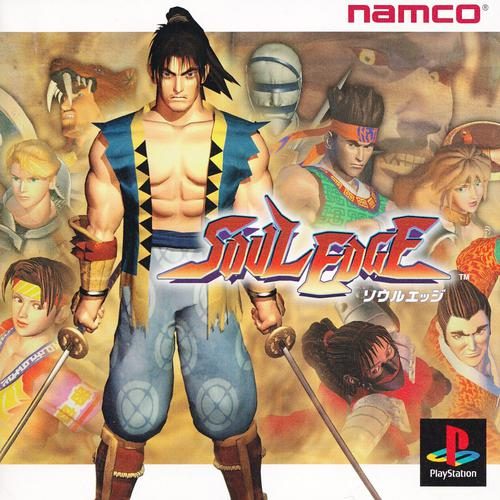
The version most players owned was not the arcade original. The PlayStation port, released in Japan on December 20, 1996 and renamed Soul Blade in North America, Europe and Australia in 1997, added a full story mode, extra weapons for every character, new costumes and a CGI opening. It reviewed superbly, sold well enough to earn budget re-releases, and was followed in 1998 by Soulcalibur.
THE TWO COVERS
Same art, two names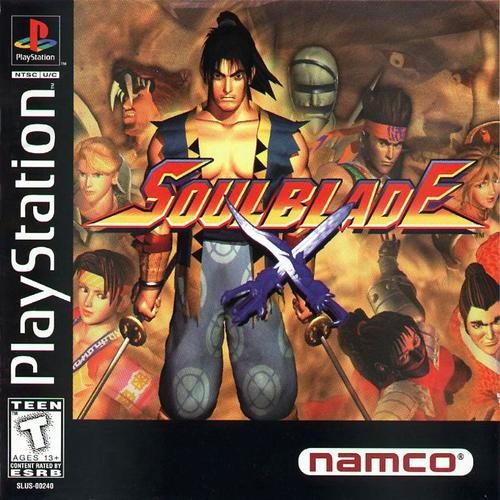
HOW IT WAS MADE
An experiment, then a revisionThe fighting system itself was the experiment's result: horizontal and vertical attacks plus a kick, an active block button, Critical Edge combination attacks that cost a third of your Weapon Gauge, and a weapon that could be broken and lost entirely if you blocked too much, leaving you to fight unarmed.
THE RELEASE
Arcade 1996, PlayStation 1996 to 1997The port kept the Ver. II roster of ten characters and added five unlockable ones, including SoulEdge, the final boss. Each character gained a third costume chosen from fan submissions. Alongside Arcade mode it added Versus, Survival, Team Battle, Time Attack and Training, three selectable soundtracks, individual endings made with the game engine, and Edge Master Mode, an RPG styled story mode covered on its own page in this wing.
HOW IT WAS RECEIVED
Named scores, not vibesAggregated, the PlayStation version holds 91 percent on GameRankings and 89 out of 100 on Metacritic. It was a bestseller in the UK and was re-released in the PlayStation Greatest Hits, Platinum and The Best budget lines. PSM named it the fourth top game on the PlayStation in 1997, EGM listed it as a runner up for Fighting Game of the Year, and its opening sequence won the SIGGRAPH 1997 award for the best game video of 1996. In Japanese arcades, Game Machine listed it as the second most successful arcade game of March 1996, though Next Generation noted it enjoyed less arcade success than it deserved next to Tekken.
WHAT IT LEFT BEHIND
Soulcalibur starts hereThe direct legacy is a series. Soulcalibur followed in July 1998, and the line that began as Soul Edge has run under that name ever since. The mechanics Soul Blade normalised, Guard Impacts, ring outs, weapon gauges and a story mode that paid out in new weapons, became the series' identity rather than one game's gimmicks.
It also left a template for home ports. In 1996 a fighting game port was expected to be a lesser copy of the arcade game. Soul Blade was the opposite: the home version was the bigger, more complete one, and reviewers rewarded it for exactly that.