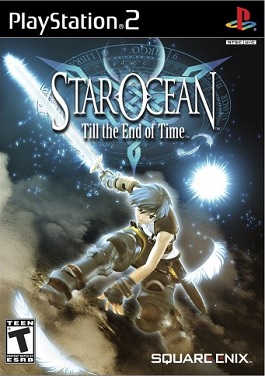
The History of Star Ocean: Till the End of Time
Star Ocean: Till the End of Time (PlayStation 2, 2003) is the third main Star Ocean and the last game Enix published before it merged with Square to become Square Enix. It moves the series fully into 3D, sets its story four hundred years after The Second Story, and ends with the most argued about revelation in the genre: the party's universe is the Eternal Sphere, a massively multiplayer game run from a fourth dimension, and its owner has decided to delete it.
THE MAKING
tri-Ace, a full 3D rebuild, and a launch that brokeTill the End of Time was developed by tri-Ace, directed and co-written by Yoshiharu Gotanda, produced by Yoshinori Yamagishi and Hajime Kojima, with music by Motoi Sakuraba. The design changes from The Second Story took Star Trek as a major influence, cited by the developers in their E3 2003 interview, and Yamagishi stated the game's main message as one of trust. The combat system carried over in shape, but everything was rendered in 3D for the first time; the team described the transition from the earlier 2D and 3D mix to a completely 3D environment as a lengthy process that only the PlayStation 2's power made possible.
The Japanese launch then became a cautionary tale. The original release was widely reported as buggy and would not run at all on the earliest SCPH-10000 PlayStation 2 consoles. Enix blamed Sony, saying the game had been coded with updated libraries that were not backward compatible; Sony denied responsibility. The dispute is documented, the fault line never publicly settled, and the fix arrived as a new edition rather than a patch, which in 2003 was the only kind of fix there was.
THE DESIGN
Fury, trophies, and death by empty magicBattles are real time, one character under direct control and two under AI tactics the player sets and can swap between. The series twist here is symmetrical danger: attacks can target hit points or mental points, special attacks cost HP, symbology costs MP, and a character who loses all of either is knocked out. A Fury meter governs how often a character can act, refilling while standing still, and the Bonus Battle Gauge turns clean fights into multiplied rewards until a critical hit, a death, or a retreat breaks it and takes the bonuses with it.
Between battles, Item Creation returns in expanded form: workshops for cookery, alchemy, engineering, and smithery can be invested in, inventors recruited, and successful inventions patented, so the shops pay the player royalties on items the player designed. The story underneath runs from a vacation planet under attack, through Fayt Leingod's crash landing on underdeveloped worlds and a war he is dragged into as a suspected engineer, to the genetics project that engineered Fayt, Sophia, and Maria for the day they would open the Time Gate together.
THE EDITIONS
The original Japan got, and the cut the West gotTHE RECEPTION
Loved abroad, argued about at homeTHE LEGACY
1.37 million copies, and a twist that never settledThe original Japanese release sold 533,373 copies in 2003 and the Director's Cut a further 207,881 between 2004 and 2009; estimated United States sales reached 630,000 copies by July 2006, for worldwide sales of 1,371,254 units. Of the shelf this page belongs to, it is one of the era's genuine mass sellers.
Its second legacy is the argument. The Eternal Sphere revelation reframes three games of series history as a simulation and its heroes as data that achieved sentience, and whether that is the boldest move a JRPG ever made or a betrayal of everything before it is still, as this Library's gallery puts it, argued about. Later Star Ocean games have had to live in the universe the twist left behind.
THE GAME ON THE SHELF
Till the End of Time · PS2