
The History of Super Mario 64
Super Mario 64 launched with the Nintendo 64 in Japan on June 23, 1996, reached North America on September 29, 1996, and became the best-selling game on the system at 11.91 million copies. Nintendo EAD built it camera first: before there were levels, there was a Mario running around a simple grid while the team worked out how a player should see a world with depth. Almost everything the 3D platformer became starts here.
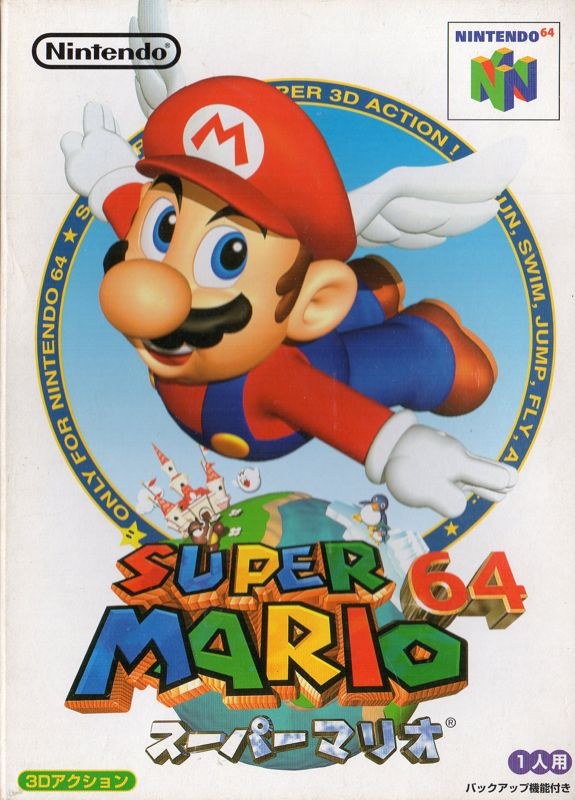
THE TWO COVERS
One flight, two boxes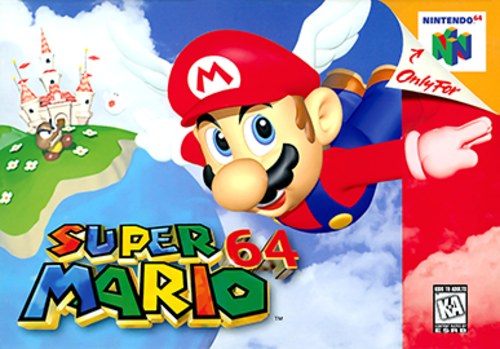
THE MAKING
A grid, a rabbit, and a cameraShigeru Miyamoto conceived a 3D Mario while working on Star Fox in 1993. Full production ran from September 7, 1994 to May 20, 1996, with a team of roughly fifteen to twenty people, and it began with the least glamorous problem in the new medium: the camera. The team settled the camera system before the levels, testing Mario's movement on a plain grid, because nobody yet knew how to make depth readable on a television. Yoshiaki Koizumi treated the simple shadow under every object as an iron-clad necessity, the anchor that tells a player where things truly are.
The details that survived are the ones players still quote. The Boos were modelled on assistant director Takashi Tezuka's wife, quiet normally and enormous in temper when Tezuka worked late. A rabbit in the castle basement, MIPS, is named for the console's MIPS processor. A two-player Luigi mode was designed and cut when the hardware and the schedule would not carry it. Koji Kondo's score and Charles Martinet's new voice for Mario arrived together: this was one of the first games where Mario spoke in full phrases, and the voice became the character's voice worldwide.
THE GAME
Fifteen paintings, 120 starsThe structure was the revolution. Instead of a road of levels, Princess Peach's castle is a hub, and its paintings are doors into fifteen courses, each holding multiple Power Stars behind different missions. There are 120 stars in all; 70 open the endless stairs to the final Bowser. Players chose their own order, returned to courses with new skills, and learned a space by living in it. Exploration, not a finish line, was the design.
Reviews at launch were close to unanimous: a 94 on Metacritic, 39 out of 40 in Famitsu, and praise for the freedom of movement that still anchors retrospectives. The one criticism that never left is the camera, which later re-reviews have judged harshly by modern standards. It is the fairest summary of the game: the camera was the experiment, the movement was the triumph, and every 3D platformer since has been an argument with both.
THE SECOND JAPANESE EDITION
Shindou, 1997Japan received the game twice. On July 18, 1997, Nintendo re-released it as the Shindou Pak Taiou version, built on the American edition with the text translated back into Japanese, adding Rumble Pak support and the English voice acting. It also quietly capped Mario's movement speed, which removed the Backwards Long Jump, the glitch the whole speedrunning era runs on. The full account is on this shelf's Shindou page.