
The History of Tobal No. 1
Tobal No. 1 was developed by DreamFactory, a studio Square founded in November 1995 as a subsidiary with one assignment: make Square's first fighting game, and its first game for the PlayStation. The 17 founding members all came from 3D polygonal fighting games, and their chairman, Seiichi Ishii, had been a designer on Virtua Fighter at Sega and the director of the first two Tekken games at Namco.
What that pedigree produced was a fighter designed for a home console from the first sketch, not adapted from an arcade cabinet. It ran at up to 60 frames per second by refusing texture mapping, let fighters move freely in 3D, added a dungeon crawling Quest Mode for the solo player, wore character designs by Akira Toriyama, and shipped with a demo disc for a game called Final Fantasy VII.
HOW IT WAS MADE
A new studio, built for one jobTHE RELEASE
Japan first, then the worldSquare released Tobal No. 1 in Japan on August 2, 1996. It was the publisher's first game for the PlayStation, its first fighting game, and the first release on its DigiCube label for Japanese convenience stores. Sony Computer Entertainment handled the international release: North America on October 31, 1996 and Europe on January 10, 1997.
The overseas version nearly looked different. Ishii said there were plans to alter the characters for the West, because the flat shaded look stood apart from other fighters and Toriyama's art style was not yet widely recognized outside Japan. There was no time to make the changes, so the game shipped as designed. Every version, Japanese and North American alike, carried a second disc: a sampler with a playable demo of Final Fantasy VII and video previews of Final Fantasy Tactics, Bushido Blade and SaGa Frontier.
THE TWO COVERS
Same game, two shelves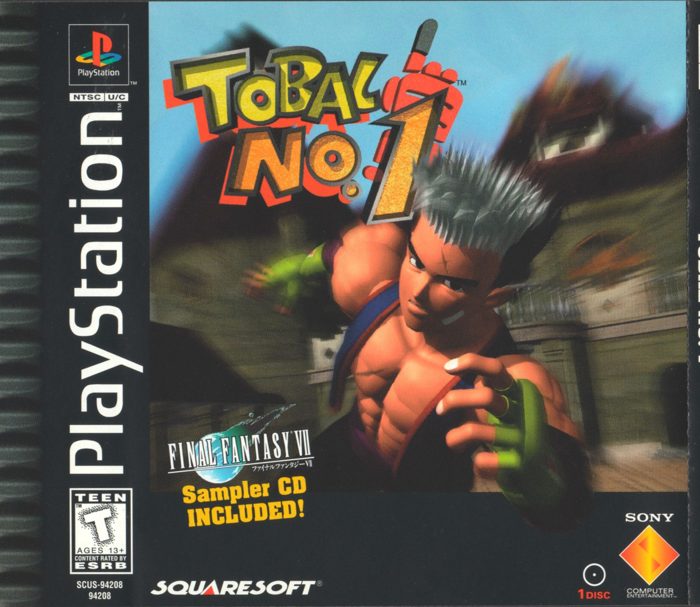
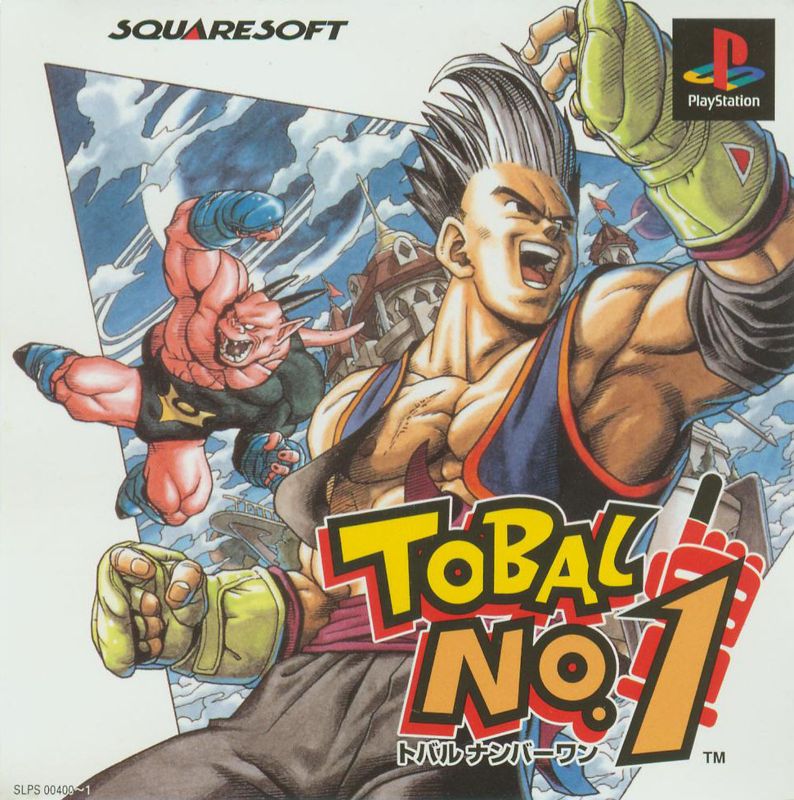
HOW IT WAS RECEIVED
Strong reviews, a Japanese hitWHAT IT LEFT BEHIND
A sequel that stayed homeThe sequel, Tobal 2, followed in Japan in 1997 and was never released in North America or Europe, which froze the series in the West at exactly one game. A mobile version, Tobal M, appeared in Japan in December 2007. DreamFactory itself carried the formula forward into Ehrgeiz, its arcade and PlayStation fighter built with Namco.
The split reputation never healed. In Japan, Tobal No. 1 is remembered as a genuine hit from a hit year. In the West it is remembered first as the box that carried the Final Fantasy VII demo, and only second as what it actually was: the fastest, strangest and most free moving 3D fighter on the PlayStation in 1996.