
The History of Twilight Princess
Twilight Princess (2006) was made as a GameCube game, delayed, and ported to launch the Wii, so it arrived as two games at once: the swan song of one console and the flagship of another. Link, a ranch hand from Ordon Village, is pulled into the Twilight that covers Hyrule, turns wolf inside it, and fights back beside the imp Midna against the usurper Zant and the power behind him. It sold 8.85 million copies and stood as the best-selling Zelda in the series until Breath of the Wild passed it in 2018.
HOW IT WAS MADE
Nintendo EAD, 2003 to 2006Nintendo announced a new GameCube Zelda in 2003, from the same team that had made the cel shaded Wind Waker. At the 2004 Game Developers Conference, director Eiji Aonuma let slip that it was in development under the working title The Wind Waker 2, in a similar style. Nintendo of America then told him that Wind Waker's North American sales had been sluggish because its cartoon look read as a game for children. Aonuma went to producer Shigeru Miyamoto wanting a realistic Zelda that would appeal to North America. Miyamoto pushed back on changing only the presentation and told him to start with what Ocarina of Time could not do, particularly horseback combat. Lead character designer Keisuke Nishimori rode a horse himself to feel the motion.
The look took its scale from the recent Lord of the Rings films, and the game runs on a modified Wind Waker engine. The wolf came from a dream Aonuma had on a business trip: he dreamt he was a wolf locked in a cage, and woke confused about where he was. The two worlds idea reached back through the series, to A Link to the Past and its Dark World. Aonuma created the story; Mitsuhiro Takano wrote the story scenes, and Aya Kyogoku and Takayuki Ikkaku wrote the in-game script. The score is by Toru Minegishi and Asuka Ota, with Koji Kondo as sound supervisor. Kondo considered a full orchestra, then kept sequenced music for its interactivity. Midna's speech is scrambled English phrases, sampled from voice actress Akiko Komoto.
The E3 2004 trailer, realistic at last, was met with enormous praise, and the game was set for 2005. Then the Wii intervened. Miyamoto thought the new console's pointing controller suited aiming a bow, Aonuma agreed, and Nintendo president Satoru Iwata backed making both versions and letting players wait. The announced November 2005 GameCube release slipped a full year. One problem survived to the end: players swing the Wii Remote with the right hand, but Link held his sword in his left. With no time to rebuild the model, the team mirrored the entire Wii version. Link became right handed, east and west swapped, and the GameCube version kept the original orientation.
THE RELEASE
A launch game and a last gameThe Covers
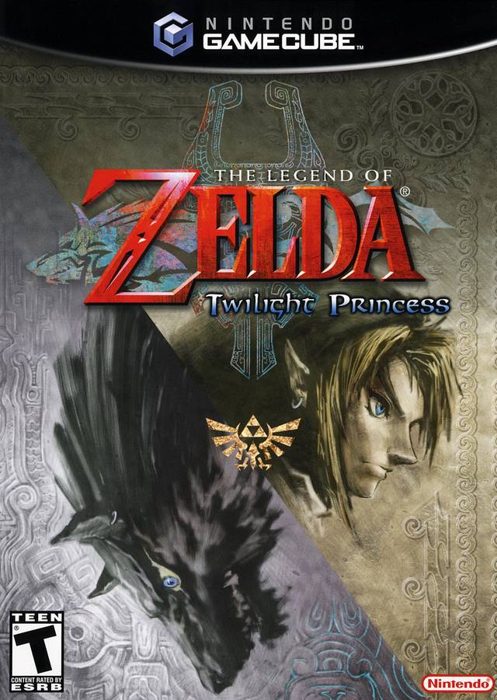
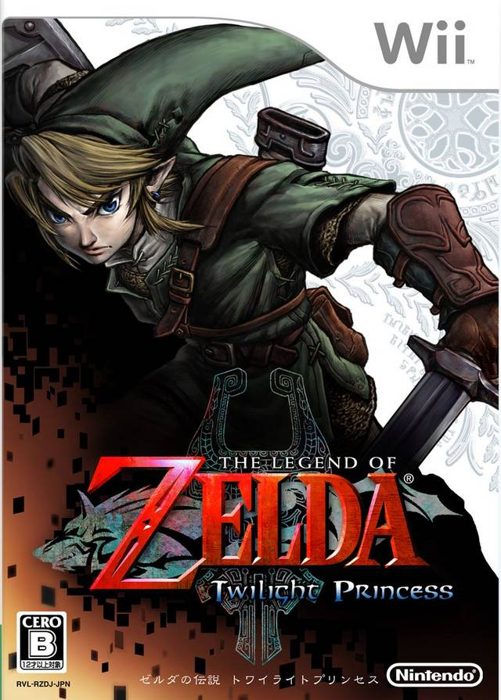
The Wii version launched the console in North America on November 19, 2006, and reached Japan on December 2. The GameCube version followed in December 2006, Japan on December 2 and North America on December 11, as the final first-party game for the GameCube. A Japanese GameCube edition exists, but Japan sold it only through Nintendo's online store, which is why every Japanese guide aimed at the Wii instead. In North America the game sold with three of every four Wii purchases in its first week, and its 412,000 US copies that November were 87 percent of Wii launch sales, the highest attach rate for a launch game since Super Mario 64.
HOW IT WAS RECEIVED
Acclaim, with the Wii controls argued overPerfect scores came from 1UP.com, Computer and Video Games, Electronic Gaming Monthly, Game Informer, GamesRadar and GameSpy, and Game of the Year awards followed from GameTrailers, EGM, Game Informer, GameSpy, X-Play and Nintendo Power, among others. Critics praised the art direction, combat, level design and story, and argued in print about the rest: blurry textures and low resolution characters on hardware built for the GameCube, and a soundtrack in MIDI form. The Academy of Interactive Arts and Sciences gave it Outstanding Achievement in Story and Character Development.
WHAT IT LEFT BEHIND
The long twilightBy September 2015 the two original versions had sold 8.85 million copies, 5.82 million of them on Wii and 1.32 million on GameCube, making this the best-selling Zelda until Breath of the Wild passed it in April 2018. Its world kept working: Link's Crossbow Training built a 2007 Wii Zapper game from its assets, and Akira Himekawa's manga adaptation ran to eleven volumes between 2016 and 2022.
In March 2016, Tantalus Media's Twilight Princess HD brought the GameCube version's orientation back on Wii U, with a Wolf Link amiibo that unlocks the Cave of Shadows. It holds 86 on Metacritic and added 1.17 million copies by December 2022. For collectors, the strangest legacy sits in print. Japan published five Twilight Princess guides, every one branded for the Wii, and never published a GameCube guide at all, because the Japanese GameCube game was an online store exclusive. That gap is documented in the archive below.