
From the Library: covers, censuses, and editions, documented. Browse the Library →
SOJ Guilty Gear ยท Vintage Fighting Games
← Back to the Fighting Games Gallery

What Are Guilty Gear's Heavy Metal References?

Start with the hero. It only gets louder from there.

Guilty Gear is a fighting game that doubles as a record collection. Its creator, Daisuke Ishiwatari, is a documented Queen devotee who grew up on Western rock and metal, and he filled his game's names with tributes. This page lists the documented ones, not every rumored one. Every entry below comes from a source opened during this page's research.

The evidence comes in two kinds, and the page keeps them labeled. The first kind is creator level: names that reference works on Ishiwatari tie to the bands directly. The second is the catalogue: the move and character names collected by the Music References FAQ for Guilty Gear XX, a fan compiled list first published in 2003, which this page uses for move names and the plainer character names.

THE TWO COVERS

Same game, two sales pitches
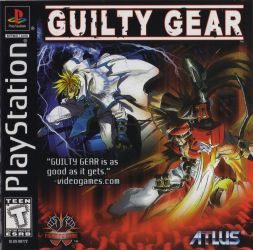
guilty-gear North American PlayStation cover
North America
The American cover, published by Atlus, crowds Sol and Ky into a storm of lightning and flame and leads with a review quote. Atlus let players vote for the box art from three candidate designs before release.
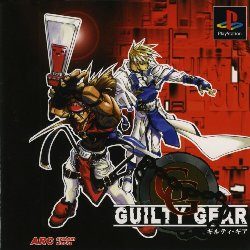
guilty-gear Japanese PlayStation cover
Japan
The Japanese cover is cleaner and stranger: Sol and Ky posed against a deep red field, with the Arc System Works name on the box of its own game.

NAMES THE CREATOR DOCUMENTED

The top shelf, tied to Ishiwatari himself
Sol Badguy: Queen
The hero is a Queen tribute in full. Reference works document that Sol takes heavy inspiration from Freddie Mercury, that his surname comes from Mercury's alias Mr. Bad Guy, and that his real name, Frederick, was influenced by the singer as well. Ishiwatari's favorite band, by his own account, is Queen, and he voiced Sol himself.
Ky Kiske: Helloween
Ky Kiske's name is a splice of two members of the German power metal band Helloween: guitarist Kai Hansen and vocalist Michael Kiske. The Music References FAQ independently records the Kiske half, and reference works on Ishiwatari document the full construction.
Axl Low and Millia Rage
Axl Low takes his name from Guns N' Roses vocalist Axl Rose, a reference recorded in both reference works and the FAQ. Millia Rage takes her surname from Rage, the German metal band. The same band's 1995 album Black in Mind also gives Zato-1's shadow beast one of its move names, per the FAQ.

BAND NAMES WORN AS CHARACTER NAMES

Catalogued since 2003
Venom, Testament, Slayer
Three fighters wear band names outright. Venom is named for Venom, the Newcastle band that helped invent black metal. Testament is named for the San Francisco thrash band Testament. Slayer is named for Slayer, and reference works document the band among Ishiwatari's favorites and as the direct inspiration for the character. His move list then turns into a Queen set list, covered below.
Chipp Zanuff, Zappa, Dizzy, Jam
Chipp Zanuff references Chip Z'nuff of the American band Enuff Z'nuff. Zappa references Frank Zappa. Dizzy references Dizzy Reed, the Guns N' Roses keyboardist. Jam Kuradoberi's surname renders Cloudberry Jam, the Swedish pop group. All four entries come from the Music References FAQ, the long running fan compiled catalogue of the series' musical names.
Eddie: Iron Maiden
Zato-1's shadow companion Eddie is named after Eddie, the mascot of Iron Maiden. This one is documented in reference works on Ishiwatari as well as the FAQ, and it is the neatest single reference in the series: a creature made of shadow, named for a creature made of album covers.

MOVES NAMED FOR SONGS, ALBUMS AND BANDS

The FAQ's catalogue, move by move
Metallica, twice over
Ky Kiske's Ride the Lightning is the Metallica song and album of the same name. Testament's Master of Puppets is Metallica's album and title track. Ky also carries Rising Force, the title of Yngwie Malmsteen's first release, and Testament carries Seventh Sign, after Malmsteen's 1994 album The Seventh Sign, and Grave Digger, after the German band of that name.
Slayer sings Queen
The character named for the loudest thrash band on the list fights with the gentlest catalogue on it. Five of Slayer's moves in the FAQ are Queen songs: Dead on Time and Under Pressure, and from the News of the World album, Spread Your Wings, All Dead, All Dead and It's Late. His remaining listed move, Undertow, is the title of Tool's 1993 album.
The rest of the set list
Sol has a move called Napalm Death, for the Birmingham grindcore band. Zato-1's Break the Law references the Judas Priest classic Breaking the Law. Millia's move list includes Iron Maiden, Iron Savior and Winger. Potemkin's Hammer Fall is the Swedish power metal band HammerFall, and his Magnum Opera riffs on Malmsteen's album Magnum Opus. Venom's Dark Angel is the Los Angeles thrash band. Justice's Gamma Ray is the German power metal band. Bridget's Kickstart My Heart is the Motley Crue song from Dr. Feelgood. The FAQ even lists a stage: Nirvana.

WHY THE GAME IS BUILT THIS WAY

A borrowed habit, openly borrowed

The references are not Easter eggs sprinkled on a finished game. They are a working method Ishiwatari took from his stated chief inspiration. Bastard!!, the manga he named as the thing that inspired him, is documented as naming its characters, locations and key objects after rock and heavy metal musicians, and reference works on Ishiwatari state plainly that he borrowed that trait into Guilty Gear. The soundtrack followed the same logic: the original game's music, composed by Ishiwatari with Takahiro Uematsu, Hatsuaki Takami and Takuya Moritou, is rock and heavy metal, and its themes became one of the aspects the series is most known for.

A last honesty note. Guilty Gear reference lists online run far longer than this page, and some entries rest on nothing firmer than a name sounding similar. This page prints only what could be verified from an opened source during its research: the names tied to Ishiwatari in reference works, and the move and character names catalogued by the Music References FAQ, a fan compiled document first published in 2003 that sticks to listing terms and their musical roots. Rumored references that no opened source documented are left out, on purpose.

More fighting games →

THE FIRST WORD

First word on new listings, plus a subscriber promo code for the eBay store.