
What are Kiki's Delivery Service and Spirited Away called in Japanese?
Spirited Away is, in Japanese, Sen to Chihiro no Kamikakushi, literally "Sen and Chihiro's Spiriting Away." The last word does the work. Kamikakushi means, literally, "hidden by gods," and it names an old piece of Japanese folklore: a person taken by the spirits. The film's analysis record puts the stakes of the word plainly: "Kamikakushi is a verdict of 'social death' in this world, and coming back to this world from Kamikakushi meant 'social resurrection.'" The English title keeps exactly that one idea, the spiriting away, and lets both of the heroine's names go.
Both names in the Japanese title belong to the same girl, and the film explains why she has two. Chihiro signs Yubaba's work contract with her full name; Yubaba takes away the second kanji of Chihiro and renames her Sen. Sen is an alternate reading of chi, the first character of Chihiro, and it literally means one thousand. Haku's warning gives the renaming its weight: Yubaba controls people by taking their names, and if Chihiro forgets hers completely, as Haku forgot his, she will never be able to leave the spirit world. The Japanese title is the plot in five words: one girl, two names, and a taking.
Kiki's Delivery Service is, in Japanese, Majo no Takkyubin, literally "Witch's Express Home Delivery." The title was not invented for the film. It is the title of Eiko Kadono's 1985 novel, the book the film adapts, carried over unchanged. The English title changes the emphasis completely: it adds Kiki, who is not named anywhere in the Japanese title, and it turns the specific Japanese delivery word into the plain, generic Delivery Service.
That specific word is the interesting half of the title. Takkyubin, literally "home-fast-mail," is a trademark of Yamato Transport, stylized in non-Japanese languages as TA-Q-BIN; the ordinary generic word for the same service is takuhaibin. Kadono had used the trademarked word in her book title without permission. Yamato Transport sponsored the film, but initially did not approve of the usage of its trademark; the success of the film restored relations between the company and the author. So the Japanese title of one of the most beloved family films ever made carries, by documented history, a courier company's brand name, and the English title does not.
The extreme case in the catalog shows what an undisciplined retitle could do, and it is documented in the Nausicaa record. The 1985 American version of Nausicaa of the Valley of the Wind was titled Warriors of the Wind: cut by about 22 minutes from the 117 minute original, with most characters renamed, Nausicaa herself becoming Princess Zandra, and American poster and video art showing characters who are not in the film. Miyazaki was unsatisfied with it, and the documented consequence is the strict no-edits clause Ghibli adopted for later foreign releases of its films.
One honest gap belongs on this page. The sources opened for it document what the Japanese titles mean, what they contain, and what the English titles changed, but none of them records a statement from the people who chose the English titles Spirited Away and Kiki's Delivery Service explaining the choosing. Where a reason is on record, as with Warriors of the Wind and the Spanish renaming logged in the tiles below, this page prints it. Where it is not, the page prints the titles themselves and says so.
Two posters, two naming systems
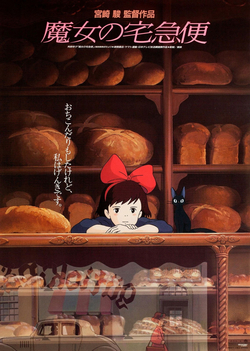
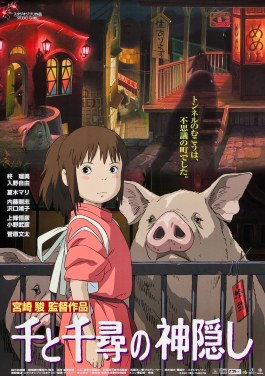
Neither English title is a translation of the Japanese one. Each keeps one element, the delivery service, the spiriting away, and rebuilds the title around it.