
What happened to Human Entertainment?
Human Entertainment, formally Human Corporation, began in May 1983 as Communicate, merged with TRY Corporation into a company called Sonata, and took the Human name in 1989, just as it began publishing under its own brand. What it became was two companies in one skin. There was the sports house: Fire Pro Wrestling from 1989, the Formation Soccer series, Final Match Tennis, the Human Grand Prix racers. And there was the strange house: the first music rhythm game, Dance Aerobics (1987), the horror of Laplace no Ma and the Twilight Syndrome games, an open world town in Mizzurna Falls (1998), and, in 1995, Clock Tower. Unusually, it also ran a school, the Human Creative School, training game developers and hiring from its own classrooms.
The end came quickly at the decade's close. On November 1, 1999, Human began restructuring negotiations with the Tokyo Hachioji district court over approximately four billion yen of outstanding debt, recorded at 3.79 billion yen as of that month. As part of the attempted deal, the game creator school subsidiary was to be transferred, and the rights to Fire Pro Wrestling, Twilight Syndrome, and Bakusou Dekotora passed to Spike. The negotiation failed. In January 2000, Human Corporation was declared bankrupt and disbanded.
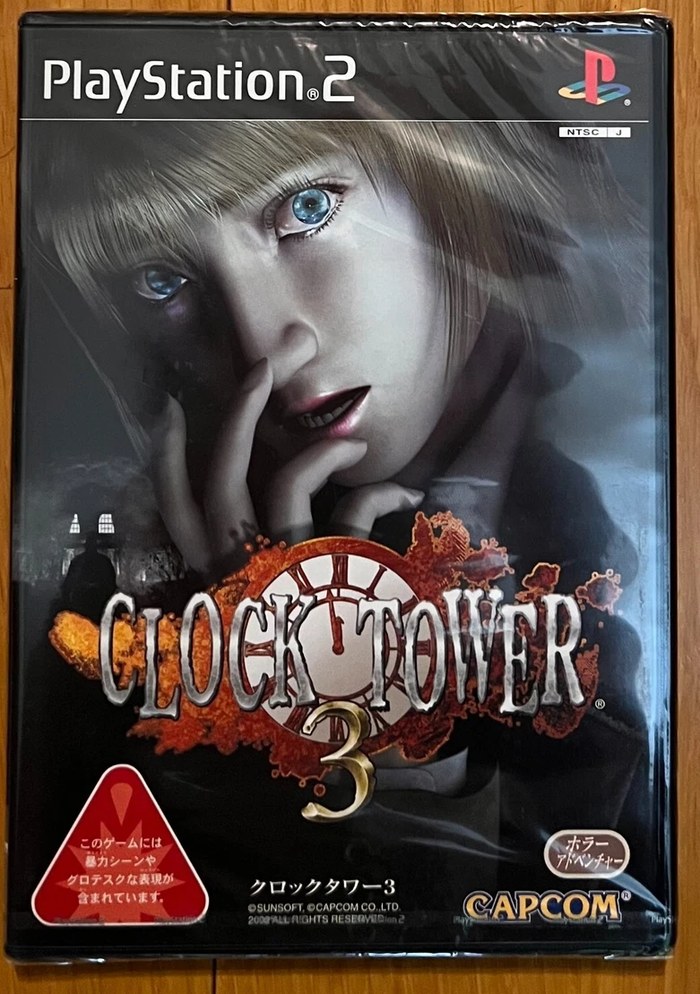
What happened to the pieces is the hopeful half of the story. Former staff formed Nude Maker, where Clock Tower's Hifumi Kono went on directing, Sandlot, and teams inside Spike; Goichi Suda, a Human alumnus, founded Grasshopper Manufacture with former members. And the Clock Tower name itself went to Sunsoft, which became the property's sole owner after 2000 and co-produced Clock Tower 3 with Capcom in 2002. The company died; almost everything it made found a new home. The one thing that did not travel was the 1995 game itself, which stayed in Japan for another twenty four years.