What inspired Hokuto no Ken?
The technique came first. Editor Nobuhiko Horie, hunting for a signature move for a martial arts manga, found in a used Chinese bookshop on Suzuran Street in Jinbōchō the story of a medical student whose overstimulated pressure point made a patient’s eye worse. Destruction through the body’s own channels, Hokuto Shinken, was built on that anecdote. The names came from a Chinese constellation myth Horie drew on: Hokuto and Nanto, two sages, gods of death and of life, the poles the series’ two great fist schools still carry.
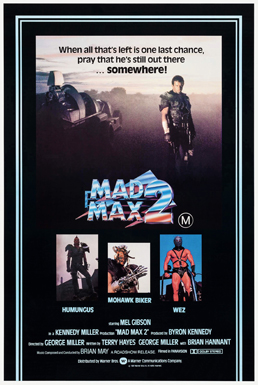
The world came from the cinema of 1981 and 1982. Buronson discarded the pilot’s modern Japan and chose a post-nuclear future under the influence of the Mad Max films; Hara took the look from Mad Max 2 directly, with Blade Runner and Katsuhiro Otomo’s Akira beside it, and illustrators Syd Mead and Frank Frazetta recommended by his editor. It has also been argued, with the chronology on its side, that Go Nagai’s Violence Jack (1973), biker gangs in a ruined desert a decade early, stands behind both Mad Max and Hokuto.
The hero is two actors. Hara wanted Kenshiro like Bruce Lee, with aspects of Yūsaku Matsuda, the Japanese action star he had drawn from memory as a teenager. Even the seven scars began as pure aesthetics: Buronson asked for them because they looked right, and the backstory, dealt by the man who stole Yuria, was devised to explain them afterwards.