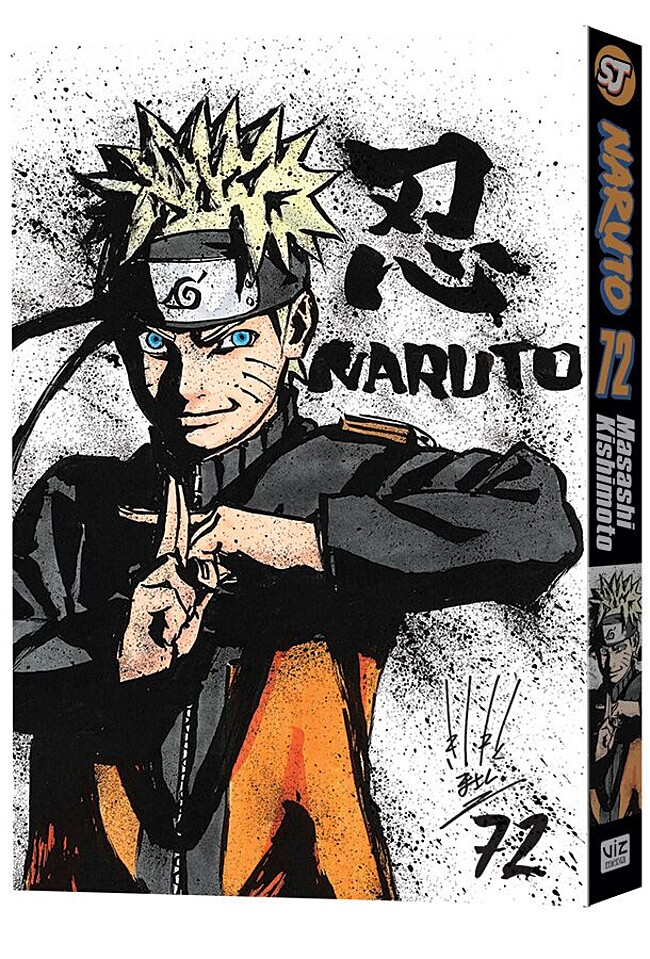
What inspired Naruto?
This page prints only what Masashi Kishimoto has said himself, in interviews and in his own author notes. The list starts in childhood. Between second and fourth grade he found Akira Toriyama's Dr. Slump anime and Dragon Ball manga: 'I loved his characters. I was especially attached to Dr. Slump's Arale and Dragon Ball's Goku. His art really appealed to me. I thought to myself, I want to become like Toriyama Sensei.' Reading Dragon Ball week by week in Weekly Shonen Jump, he told Anime News Network in 2015, 'taught me what entertainment is and how to keep an audience captivated, and of course, the art influenced me as well.'
In middle school he nearly lost the thread: baseball took over and drawing stopped, until he passed a poster for Katsuhiro Otomo's Akira on the way home. In his own author notes he wrote that the overhead shot of Kaneda walking toward his motorcycle held him for over an hour, and that he has drawn ever since 'in the hope that someday I can approach the standard set by that picture.' Otomo's cinematic style stayed with him; at New York Comic Con he named Otomo and Hiroaki Samura of Blade of the Immortal beside Toriyama as his style influences, crediting Samura with teaching him the craft of the splash page and how much expression hands alone can carry.
The net is wider than three names, and he has cast it himself. At the same 2015 panel he added Osamu Tezuka's Phoenix, Takehiko Inoue's Slam Dunk, and Naoki Urasawa's Monster and 20th Century Boys to the works that influenced him, and spoke of his admiration for Star Wars. To the Los Angeles Times he named five works he studied as a student: Dragon Ball, Akira, Jin-Roh: The Wolf Brigade, Ninku, and Ghost in the Shell, adding, 'All the people I was influenced by have been very successful in other countries, which may be why it was easier for my work to be accepted there. Naruto owes a lot to those artists who won acceptance and popularity overseas.'
What he built from all of it was deliberately his own. The tailed beasts descend from Godzilla, the scenery of the Village Hidden in the Leaves from his hometown in Okayama, and the hand signs from the Chinese zodiac tradition. And the hero's design is a stated paradox: a real ninja hides, so for a Jump series he did the opposite, a boy in a bright orange jumpsuit announcing 'Hey, I'm here!' Resemblances fans argue about that Kishimoto has never claimed are not on this page. The record is rich enough without them.
THE INFLUENCES, ON HIS OWN SAY-SO
Interviews and author notes onlyTHE LAST VOLUME
Naruto, in print