
What Was Cut From Rival Schools Outside Japan?
The Japanese PlayStation version of Rival Schools ships on two discs, and the second one, the Evolution disc, exists mainly for one mode: Nekketsu Seisyun Nikki, a character creation mode in the form of a dating sim and visual novel. In the North American and European versions, that mode is gone entirely.
The cut is often described loosely, sometimes as a pile of missing mini games. The contemporary record is more precise, and more interesting: one big mode, its editing tool, a substitute cast of premade characters, and a US box that still advertised the missing feature.
THE TWO COVERS
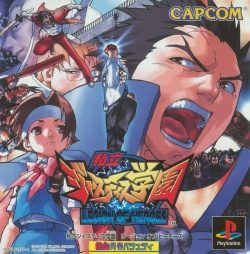
Same game, two shelves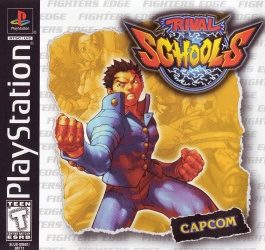
WHAT WAS REMOVED
Documented preciselyWHAT WAS NOT CUT
Correcting the common claimIt is often repeated that the Western versions also lost the sports mini games. The contemporary American evidence says otherwise. GameSpot’s US review of the PlayStation version, published August 28, 1998, lists the hidden subgames present in the American game: a home run derby, a penalty kicking contest, volleyball target practice and soccer target practice. The November 1998 US Evolution disc FAQ documents the same games in the US version, with their unlock conditions: Home Run Derby with Shoma, Penalty Shot with Roberto, Service Mode volleyball with Natsu, plus Kyoko’s Office. The Lesson, Group, League, Tournament and Cooperate modes also survived, as the official Western description of the second disc confirms.
Smaller localization edits did happen inside what remained. Later reporting by Hardcore Gaming 101 notes that in the English versions the cutscenes stay in Japanese, the setting is no longer named as Japan, and some character material was softened or changed, including Roy’s fierce anti Japanese sentiment and Tiffany’s language gaffes. These are edits to dialogue and framing, not removed modes.
The pattern repeated. The expanded Nekketsu Seisyun Nikki 2 of 1999 was never released outside Japan at all, and Project Justice on Dreamcast again kept its character creation mode, by then a virtual board game, in Japan only, for the same localization reason. Western Rival Schools players got an excellent fighting game twice. They never got the school year that made the Japanese version a different kind of game.