
What was the first Dragon Ball video game?
The first Dragon Ball video game is Dragon Ball: Dragon Daihikyo, released September 27, 1986 for Epoch's Super Cassette Vision. It is an overhead shoot 'em up: Goku rides the Nimbus across scrolling country, firing ki blasts and swatting enemies with the Power Pole. It is also a licensing fossil: the publisher is Epoch, the console's maker, making Daihikyo the only Dragon Ball game produced without Bandai's involvement, before Bandai's grip on the license became total. The manga was not yet two years old, the anime seven months old, and the games industry arrived immediately.
The famous first is the second game. Dragon Ball: Shenlong no Nazo reached the Famicom on November 27, 1986, developed by Tose for Bandai: an action adventure following the manga's first two volumes to the first wish on Shenlong. It crossed the Pacific in March 1988 in the strangest disguise in the series' history. The American NES version, retitled Dragon Power, scrubbed the license off its own game: Goku redrawn on the box as a generic kung fu hero, Bulma renamed Nora, Yamcha renamed Lancer, the Dragon Balls renamed Crystalballs, the Kamehameha renamed the Wind Wave, the tournament levels cut, and the panties power up replaced by a sandwich. The European editions kept the Dragon Ball name and art. America got the game and was not told what it was.
The Famicom line then settled into the pattern that made it collectible: Daimao Fukkatsu (August 1988) retold the King Piccolo arc as a hybrid of board game, card battle, and RPG, and topped the Japanese sales charts for three straight months; Dragon Ball 3: Gokuden (October 1989) covered the whole story to Piccolo Junior. By the time the Z era games arrived, Dragon Ball had been a video game property for four years, on three systems, with one identity crisis already behind it.
THE FIRST TWO, SIDE BY SIDE
Shenlong no Nazo and its American disguiseThe same game, two identities
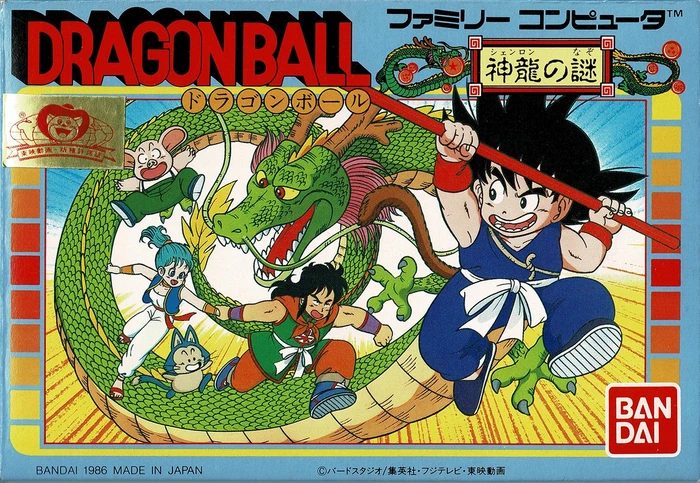
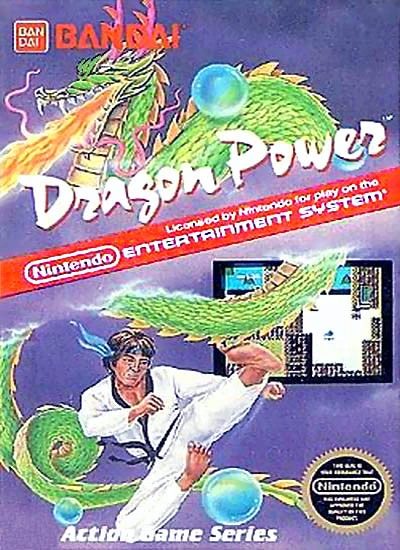
Dragon Daihikyo is rarer and earlier, but this pair is the identification story of the era: one cartridge, two names, and an American box that conceals what the Japanese box celebrates.