
Where does Castlevania's art style come from?
There is no single answer. The series has had three successive looks: the heroic fantasy paintings of the Famicom era, answered in America by Tom duBois; Ayami Kojima's baroque, fashion-inflected painting from 1997 onward; and two deliberate departures since, an anime shift on the Nintendo DS and a full reboot look for Lords of Shadow.
Era one
Paintings, answered by paintingsCastlevania III, two traditions
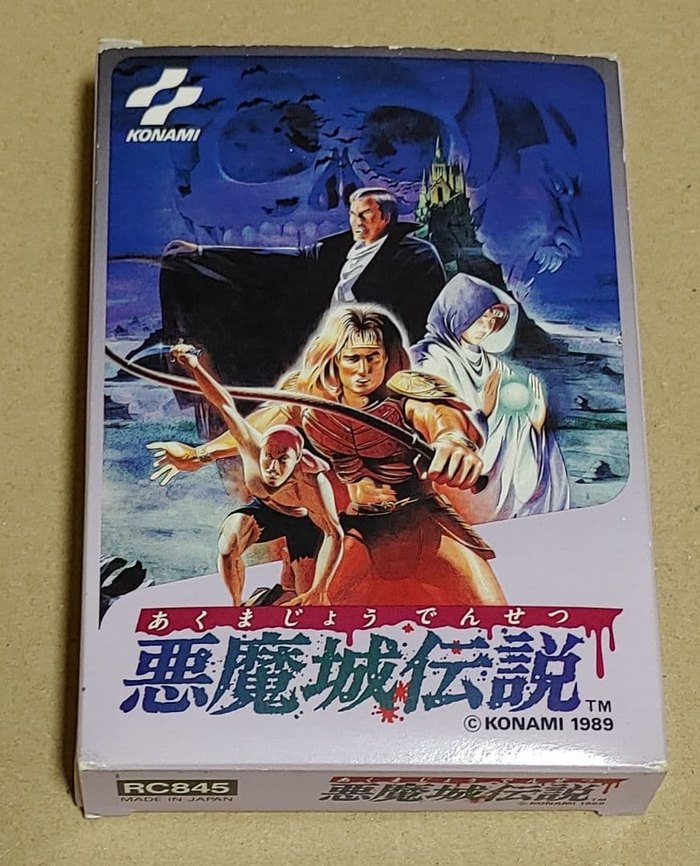
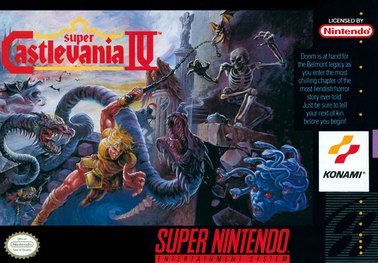
The Japanese boxes of the Famicom and Super Famicom era are lush heroic fantasy paintings. For the third and fourth games America did not reuse them: Konami of America commissioned Tom duBois, who painted new covers and cited Ray Harryhausen's films as his inspiration. The early split is not Japan's art versus no art. It is two painting traditions aimed at two store shelves.
Era two
Ayami KojimaThe Kojima look
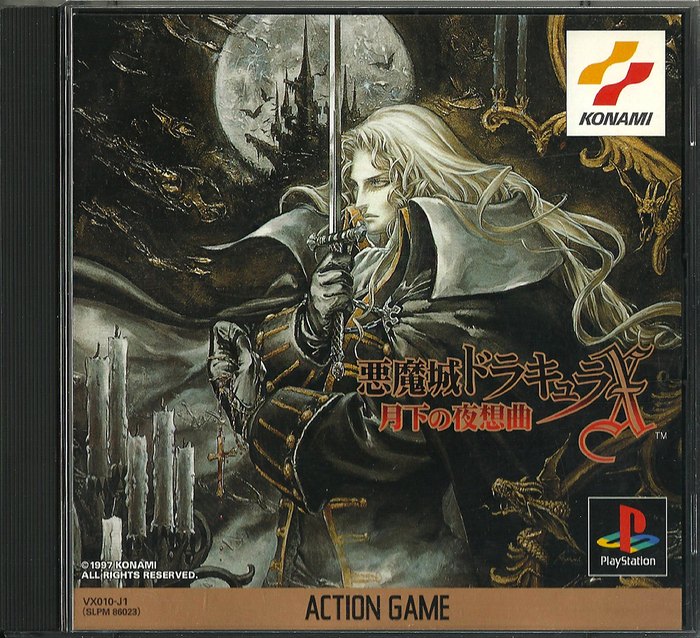
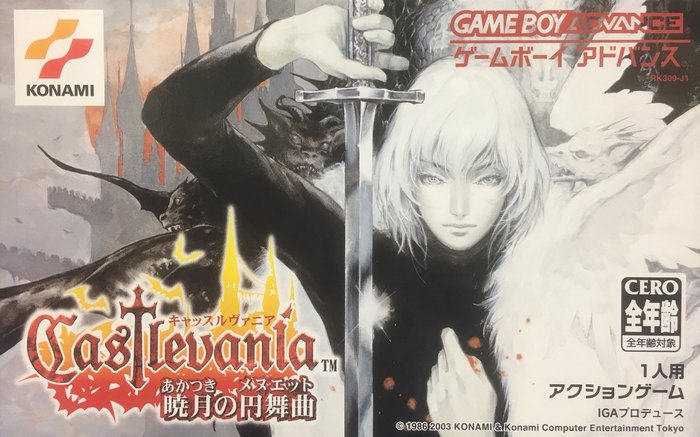
Kojima arrived with Symphony of the Night, her first video game work. She had been an office worker drawing in her free time, selling doujinshi at Comiket, until a novel publisher found her. Her covers for novels, including work connected to Vampire Hunter D author Hideyuki Kikuchi, made her name, and game companies came to her through her publisher.
Her sources
In her own wordsKojima is self-taught, and her stated influences are specific. In her words: 'I really like Francisco de Goya and Caravaggio as classical artists. I cannot list all of them; there are tons of other artists that inspired me.' She describes looking at paintings, Caravaggio's among them, and reproducing what she liked, not as study but as passion. Japanese classical painting stands beside the European baroque in accounts of her style, with Tawaraya Sotatsu and Tsukioka Yoshitoshi named.
Asked about her roots, she said that more than horror, it was science fiction that fascinated her, along with Frankenstein, Kamen Rider and things related to body modification, and that what is nice with frightening things is that when you add beauty to it, it can give a very interesting result. That sentence is the era in one line. The clothes are part of it: she said she was at the time really into Italian fashion in general and looking at a lot of Gucci magazines, while disclaiming any deep fashion expertise. Producer Koji Igarashi wanted drastic changes to the style and atmosphere, and Kojima redesigned Maria from a very cute little girl into a more lady-like adult woman. America then left her Alucard off the box entirely, as the covers page in this library documents.
Era three
The departures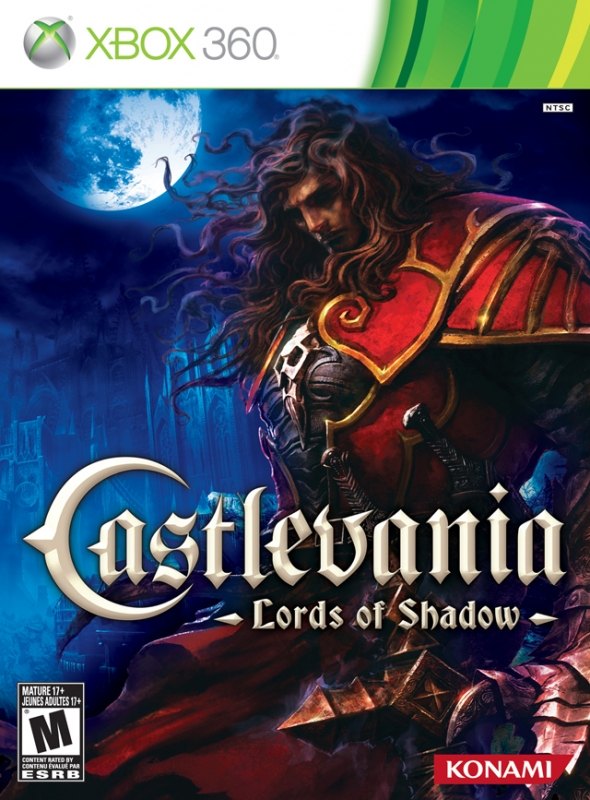
Two later turns were deliberate. On the Nintendo DS the series shifted toward an anime look, a producer decision aimed at the younger handheld audience. Then Lords of Shadow handed the series to Spain's MercurySteam, whose covers sell weathered armour and weather, a cinematic realism far from Kojima's baroque line. The gothic look most people picture is Kojima's, but the series has never kept one look for long, and each change was somebody's stated decision, not drift.