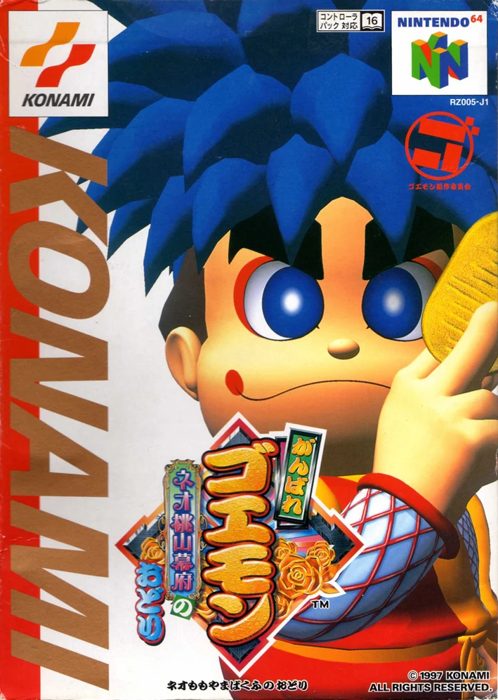
Who was Goemon, the thief the games are named for?
The record first, because it is short. Ishikawa Goemon led a band of thieves in the Japan of the warlord Toyotomi Hideyoshi, and he surfaces in the historical annals for the first time in a 1642 biography of Hideyoshi, written nearly fifty years after his death, where he is referred to simply as a thief. Tradition dates his execution to October 8, 1594, though even that is uncertain and the accounts conflict: after a failed attempt on Hideyoshi's life, he was boiled alive in an iron cauldron, in the most repeated version together with his young son, whom one telling says he held above the oil to spare him. He is said to have left a farewell poem remarking that thieves would always exist. A tombstone stands at Daiunin temple in Kyoto.
The legend was built during the Edo period that followed, and it is the legend Japan kept. Later storytellers made him a noble thief who robbed rich feudal lords, merchants, and clerics and shared the take with oppressed peasants. A supposed assassination attempt on Oda Nobunaga was attached to him. Kabuki fixed his image forever: in Sanmon Gosan no Kiri, the surviving act of a 1778 play by Namiki Gohei and still performed today, Goemon sits atop the Sanmon gate of Nanzen-ji smoking an oversized silver pipe, a kiseru, and rates the spring view at ten thousand gold pieces. Even his execution entered daily language: a deep iron kettle tub is still called a goemonburo, a Goemon bath.
That is the figure Konami inherited, and the games are honest about which one they chose. The folklore Goemon keeps the kiseru as his weapon, the outlaw's swagger, and the hero's billing, with only the blue hair as pure invention. Modern portrayals of Ishikawa Goemon split between a slender ninja and a hulking bandit, and the games took the folk hero of the kabuki stage over the thief of the 1642 record. Konami's character is described in his own series bible the same way the record requires: loosely based.
RECORD AND LEGEND
What can actually be documentedTHE GAME ON THE SHELF
Mystical Ninja Starring Goemon