
From the Library: covers, censuses, and editions, documented. Browse the Library →
SOJ Ehrgeiz ยท Vintage Fighting Games
← Back to the Fighting Games Gallery

Why Are Final Fantasy VII Characters in Ehrgeiz?

Because it was Square's own fighter, and Final Fantasy VII was Square's biggest property on Earth.

Start with who made what. Ehrgeiz was developed by DreamFactory under Square, in a joint venture with Namco. Final Fantasy VII was Square's own game, released in Japan in January 1997 to enormous success. When the Ehrgeiz team wanted guest fighters, the most famous RPG cast in the world was an internal request, not a licensing negotiation.

Then look at the credits. The artist of Ehrgeiz, Tetsuya Nomura, designed the game's original characters and its Final Fantasy VII characters alike. Cloud, Tifa and Sephiroth did not arrive as licensed likenesses. They arrived drawn by the same hand that had created them, which is why they sit inside this game's art style instead of on top of it.

THE TWO COVERS

Same game, two shelves
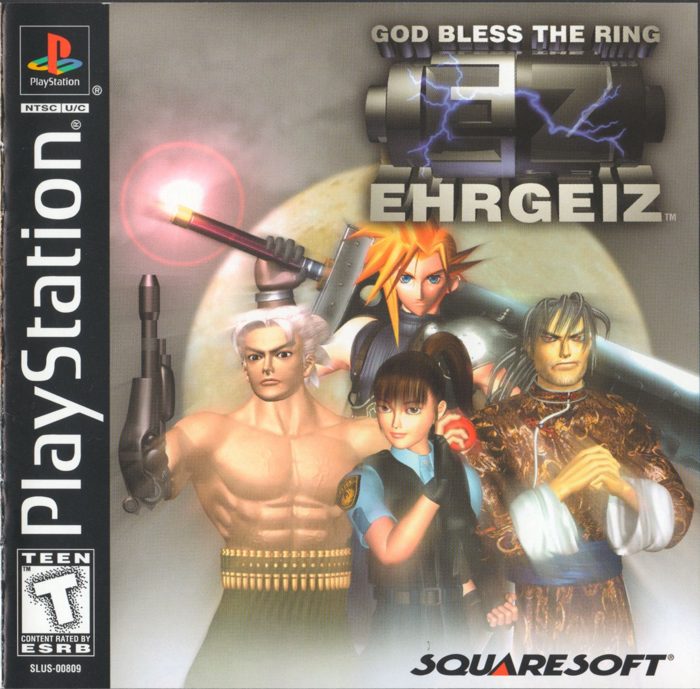
Ehrgeiz North American PlayStation box art
North America
Cloud Strife stands at the center of the North American cover, Buster Sword on his shoulder, above Godhand, Yoko and Lee Shuwen. The Final Fantasy VII guest is the face of the box.
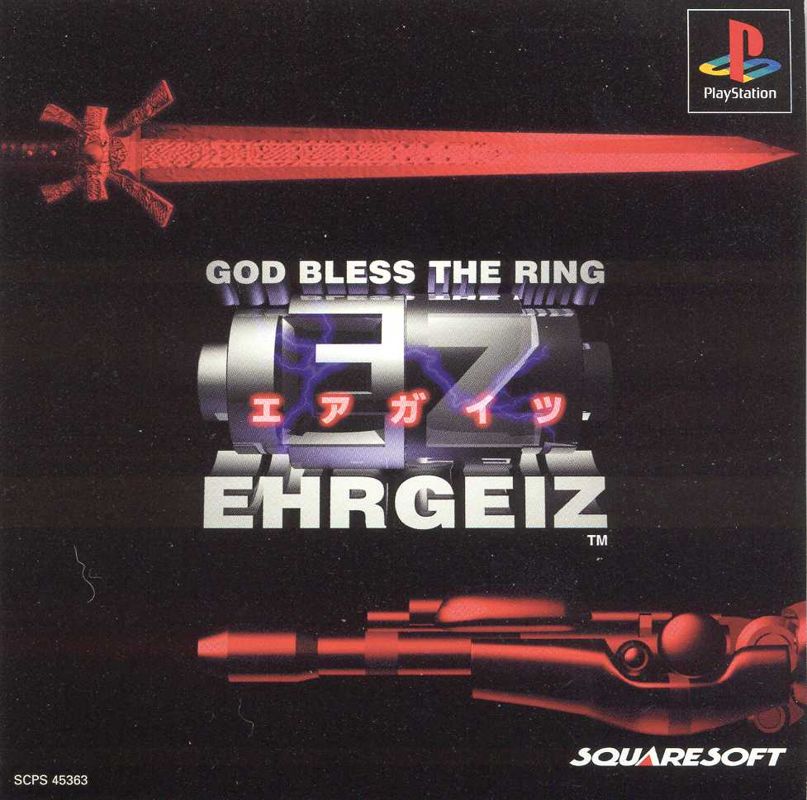
Ehrgeiz Japanese PlayStation box art
Japan
Japan's cover shows no fighters at all: the Ehrgeiz sword and a gun arm in red over black, with the God Bless the Ring title. Squaresoft, 1998.

WHO IS IN, AND WHERE

Two in the arcade, six at home
THE ARCADE GUESTS
Cloud Strife and Tifa Lockhart were the Final Fantasy VII characters in the 1998 arcade version, and even they were held back as an event: the game revealed Cloud after the machine had been running for thirty days, and Tifa after sixty.
THE PLAYSTATION SIX
The home roster is the famous one. Cloud, Tifa and Sephiroth are available from the start on PlayStation. Vincent Valentine, Yuffie Kisaragi and Zack Fair are hidden characters who must be unlocked. Six of the central figures of the biggest RPG in the world, in a fighting game.
BUILT ON THE HOME CAST
The guests were integrated economically. Vincent fights with Godhand's moveset and Yuffie with Sasuke's, while Zack, Cloud's predecessor in SOLDIER, is built as Cloud's counterpart. Even the boss Django leans in: his red furred alternate costume is a direct nod to Red XIII, and his attack names reference Red XIII, his father Seto and Final Fantasy summons.

THE DOCUMENTED LINKS

Why it was possible, and why it made sense
ONE PUBLISHER
Both games were Square productions, developed in the same small circle. Ehrgeiz was a Square and Namco joint venture built by Square's own DreamFactory. There was no licensing wall to climb: the characters lived in the same building as the fighting game.
ONE DESIGNER
Ehrgeiz's artist was Tetsuya Nomura, and he is credited with designing both the game's original characters and its Final Fantasy VII characters. The guests did not need to be reinterpreted by a stranger. The man who had drawn Cloud and Tifa for Final Fantasy VII drew them again for the ring.
THE TIMING
Ehrgeiz was announced in late 1997, the year Final Fantasy VII launched in Japan and became a phenomenon, and its arcade release followed in March 1998. Square's new fighter arrived while its RPG cast was at maximum fame, and the association was the marketing.
WHAT THE PRESS CALLED IT
Contemporary coverage read the move plainly. GameSpot's review notes Ehrgeiz was often dubbed the Final Fantasy Fighter, and that one advantage of having Squaresoft behind the design was access to popular franchise characters such as the protagonists of Final Fantasy VII. The same review complained that none of the guests received their own FMV ending, which made the inclusion feel haphazard.
THE LATER READ
Hardcore Gaming 101's retrospective is blunter: the characters were added to lure RPG fans in, and it worked as identity if not as balance, because Ehrgeiz became known as the Final Fantasy fighting game despite the guests being a minority of its roster.

THE HONEST FOOTNOTE

What is documented, and what is not

One caution belongs on the record. No creator interview in the sources for this page gives a single official sentence of motive, of the form: we added Cloud because of this. What is documented is the structure around the decision: same publisher, same character designer, a reveal schedule in the arcade that treated the guests as events, and contemporary press that understood the characters as the game's draw.

So the answer stands on those documents rather than on legend. Final Fantasy VII characters are in Ehrgeiz because Square could put them there with nobody's permission but its own, because Nomura's presence made them native rather than pasted in, and because in 1998 there was no faster way to tell RPG players that a fighting game was also for them.

More fighting games →

THE FIRST WORD

First word on new listings, plus a subscriber promo code for the eBay store.