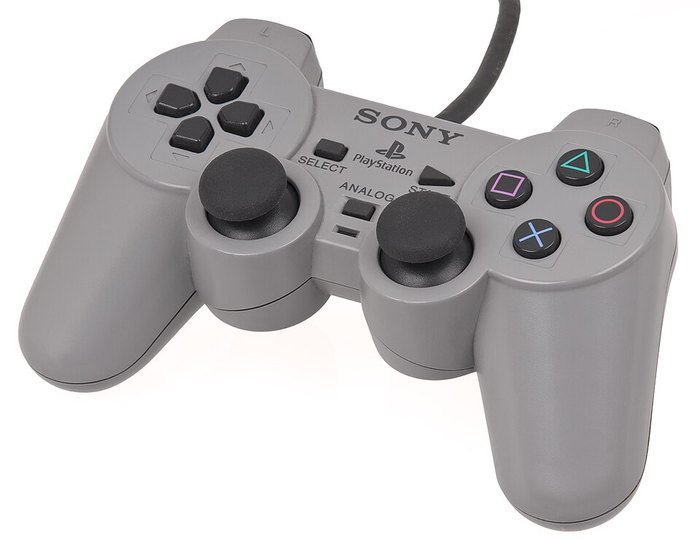
Why are the confirm and cancel buttons swapped on Japanese PlayStations?
The shapes were never decoration. Teiyu Goto, designer of the original PlayStation controller, explained his scheme in a widely quoted interview: the triangle is a viewpoint, a head or a direction; the square is a sheet of paper, menus and documents; and circle and cross mean yes and no, which he colored red and blue, over his own management's objections. In Japan the assignment reads itself: maru, the circle, is the mark a teacher draws for a correct answer, and batsu, the cross, is the mark for a wrong one. So on a Japanese PlayStation, circle confirms and cross cancels, because the symbols say so.
The West never got the memo. As games were localized, Sony's Western arms and their developers settled the pair the other way: cross to confirm, circle to cancel, reading the bottom button as 'go' and the X as a form-filling tick. Import players paid for the split in confusion for years; Metal Gear Solid, shipped West with the Japanese layout, taught a generation of Americans to press circle and back out of every menu.
The argument ended by decree. With the PlayStation 5 in 2020, Sony unified the system interface worldwide on X to confirm, Japan included, to end the regional split, a change reported at the time by Famitsu and AV Watch and grumbled about publicly in Japan, where twenty-six years of muscle memory said otherwise. Japanese PS5 games were still free to keep the old layout, prompts and all: the empire standardized, and the games kept their accent.
THE CONTROLLER
Four symbols, two readings