Why are the Japanese Harry Potter books split into two volumes?
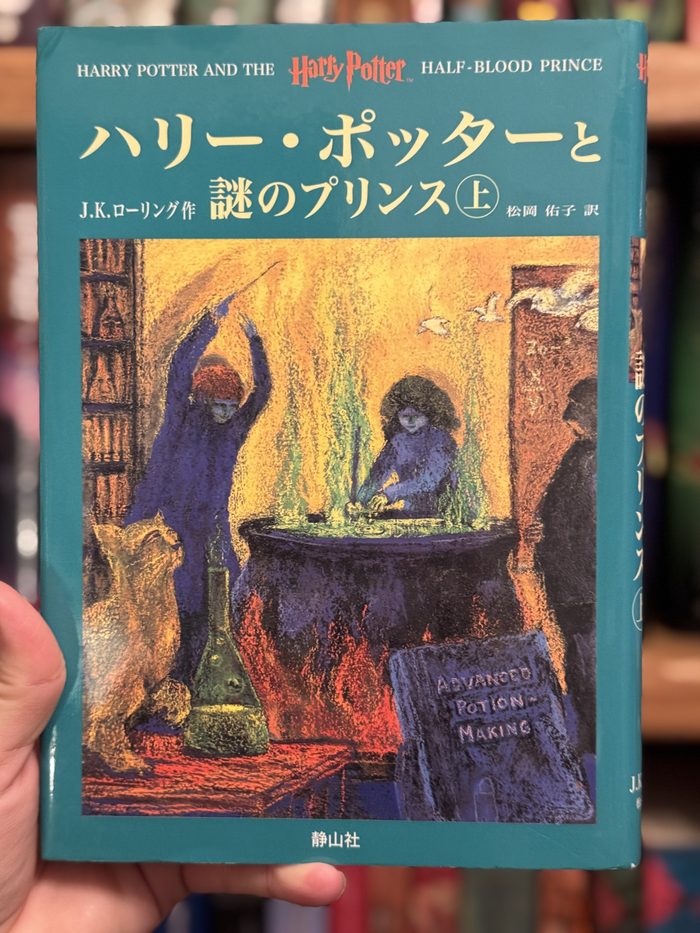
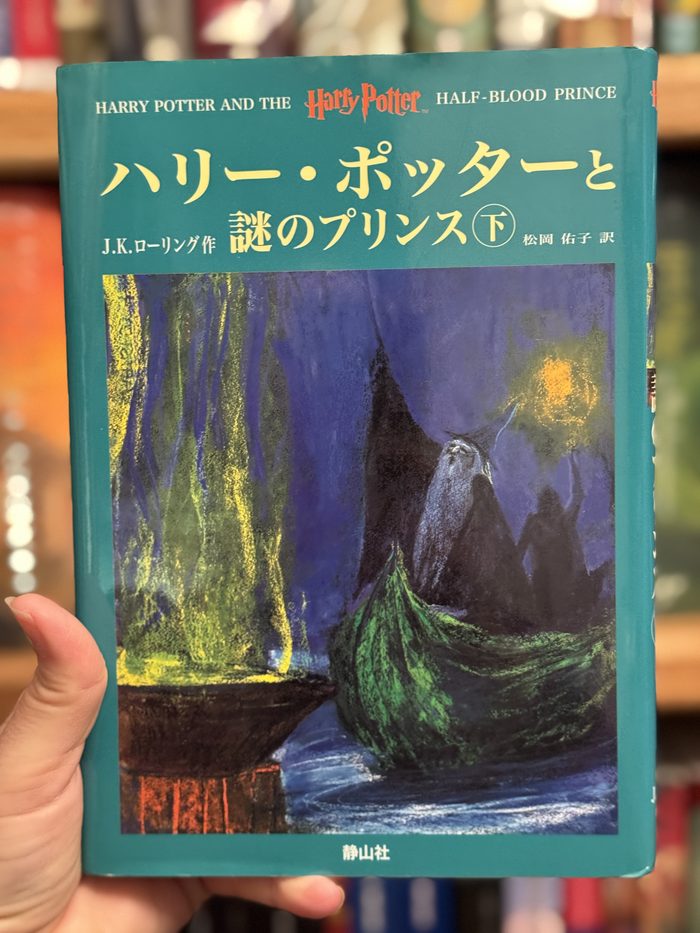
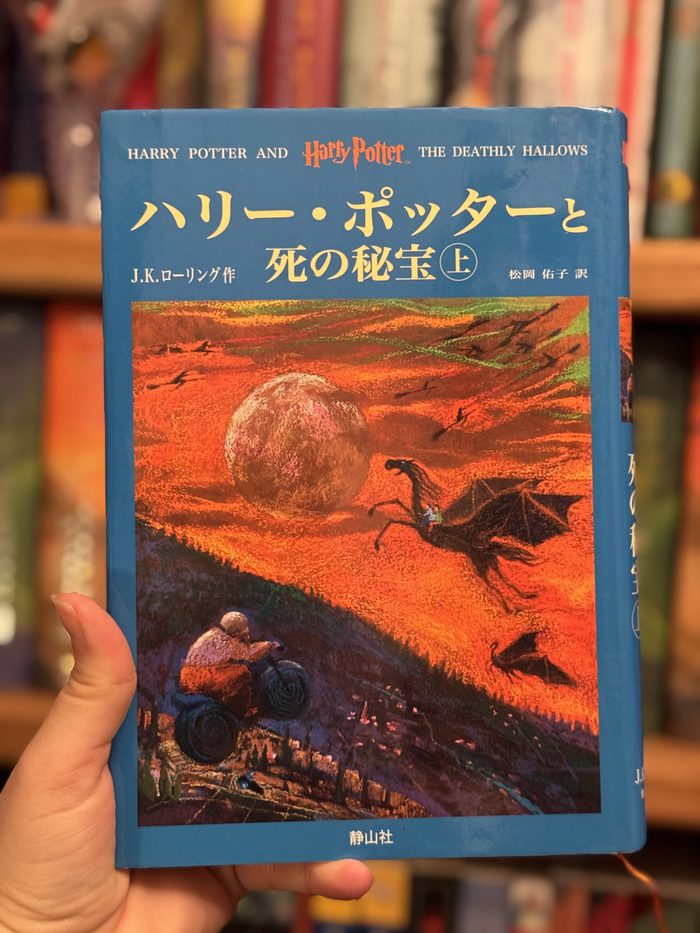
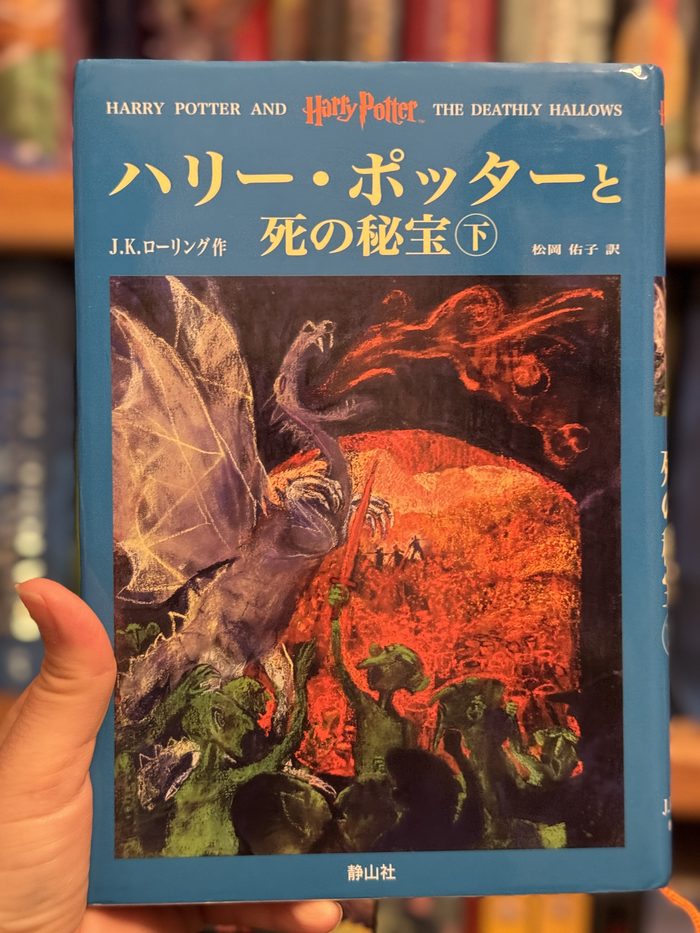
Count the Japanese hardcovers and the arithmetic looks wrong: seven novels, eleven hardcovers. The first three books fit the Say-zan-sha format whole. From Goblet of Fire onward the novels had grown too long for a single volume of that size, so each was published in two halves: the first half, marked with the character for upper, and the second half, marked lower. Splitting a long work into an upper and a lower volume is standard Japanese publishing practice, and Say-zan-sha applied it to books four through seven.
These were not a book cut in half and sold twice in plain wrappers. Each half is a complete Say-zan-sha hardcover with its own original cover painting and its own sale: a Japanese reader bought the Goblet of Fire twice, in two designed objects, months or weeks apart. For a collector the split is a gift. The Japanese run holds four more original covers than the British or American runs of the same novels.
The paperback lines multiply the count again. The Pegasus Bunko children's edition runs to twenty volumes, splitting the stories further still, with numbered spines (1-1, 1-2, and onward) and furigana reading aids printed beside the kanji throughout, so younger readers could sound out every character. Same novels, three different Japanese answers to the question of how much book belongs between two covers.
ONE NOVEL, TWO PAINTINGS
Order of the Phoenix, upper and lowerOrder of the Phoenix: the two halves
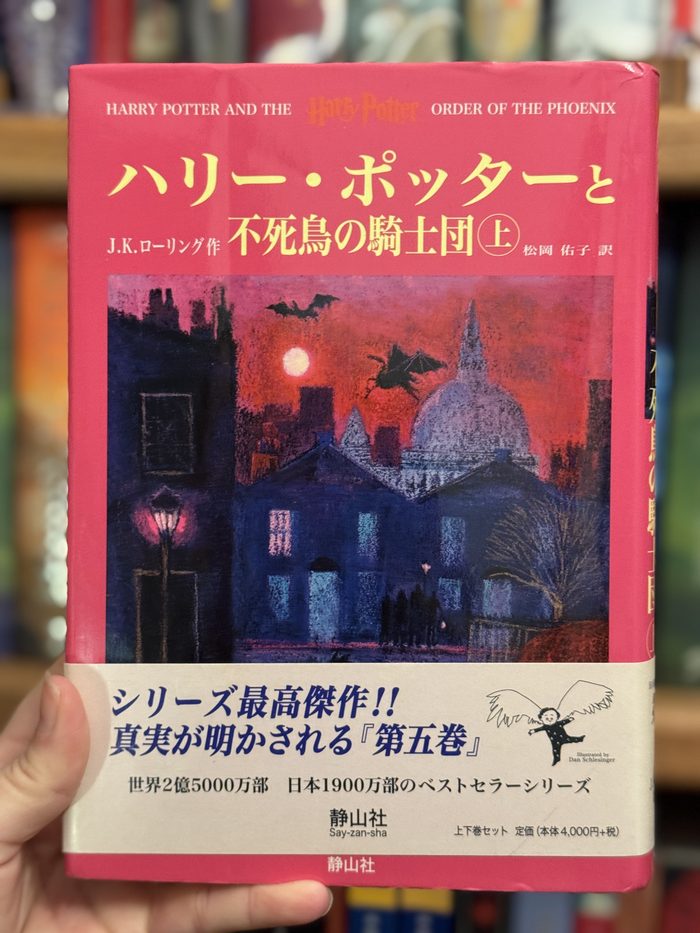
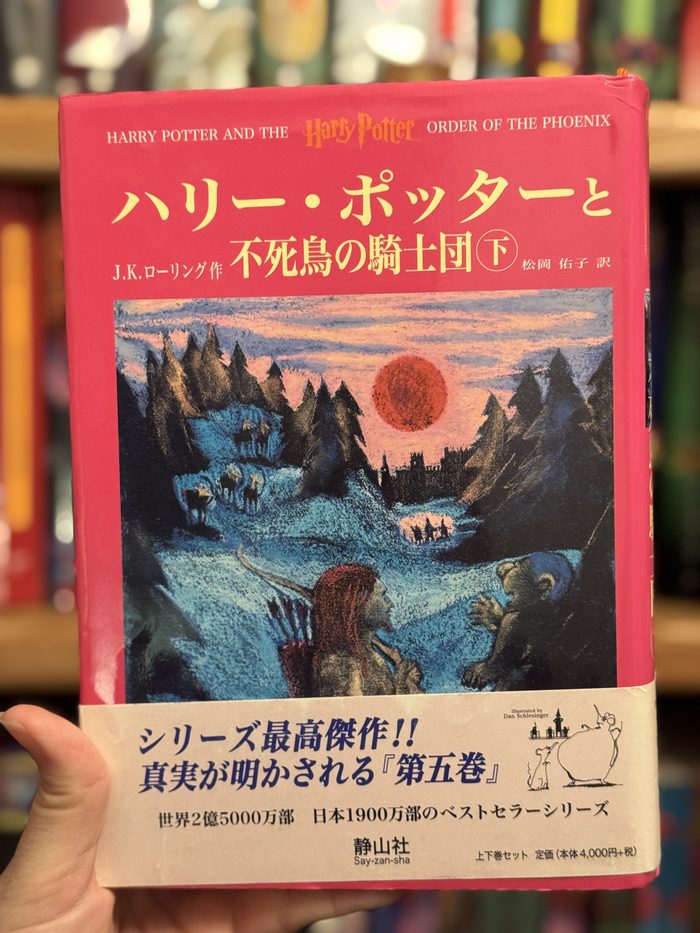
Neither half is a part-work or a sampler. The story simply stops at the midpoint of the binding and resumes in a second full hardcover, a rhythm Japanese readers know from centuries of upper and lower volumes.
THE REST OF THE SPLIT RUN
Books six and seven, in halves