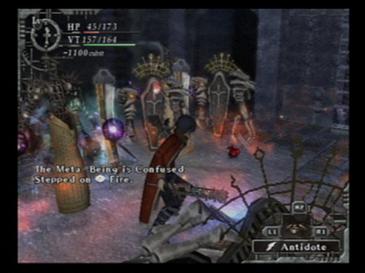
Why Did Baroque Fail, and Why Is It Sought Out Now?
Start with the platform. Baroque shipped on 21 May 1998 for the Sega Saturn in Japan only, a console already losing its war, from a small publisher, in a genre with no export name. Famitsu scored it 25 of 40. The PlayStation port a year later reached more people, but the original Baroque had already become the kind of game a magazine calls interesting and a market calls a write-off.
The remake had the bigger stage and the same result. Atlus USA sold it honestly as "hardcore", and the reviews split down the middle: GameSpot's 6.5 called it at times an incredible work of interactive fiction and at other times a muddled mess; IGN's 5.4 praised the concept and faulted the direction. Metacritic settled at 60 on PS2 and 50 on Wii. Within a year the North American PS2 version was being spotted at $17.22 on Amazon, in a 2009 bargain thread whose posters keep saying the same thing: try it, it is different, it is worth this much at least.
Then the culture caught up with it. The 2010s made death-as-progress the grammar of a genre, and players went looking for ancestors. Baroque had been doing it in 1998, in first person, with a story told in fragments by the dying. Sting, to its credit, never let it go: anniversary illustrations, the 2012 soundtrack and World Guidance reissues, Syndrome on phones in 2019, the Switch port of the original in 2020, and enhanced spin-off reissues in 2025. A flop is a game nobody wants twice. Baroque has been reissued, in one form or another, for twenty-seven years.