
Why did EarthBound fail in America but become a classic?
Start with the split. Released in Japan as Mother 2 on August 27, 1994, the game sold 518,000 copies there and finished as the country's tenth best selling game of 1994. Released in North America as EarthBound on June 5, 1995, it sold about 140,000 copies. Same cartridge, same jokes, two different countries, and the Japanese audience bought nearly four copies for every American one.
America was not ignoring it. Nintendo spent about $2 million marketing the game, and spent it on the wrong signal. As part of the wider Play It Loud campaign, EarthBound was sold with the slogan "This game stinks" and with foul smelling scratch and sniff magazine advertisements built on gross out humor. GamePro reported more reader complaints about that one ad than about any other advertisement of 1995. The campaign told RPG buyers the game was a fart joke, and told everyone else nothing at all.
The rest of the shelf worked against it too. Journalists who later reconstructed the launch blamed a stack of causes, not one: graphics that read as simple and cartoonish in the season of Chrono Trigger and Final Fantasy VI, a genre that was still a niche in the United States, a Super NES already being phased out (the game never received a European release at all), and an expensive package, because every copy carried its Player's Guide inside the box. Localizer Marcus Lindblom remembered the game being hurt by reviews that dismissed its graphics as simplistic at the exact moment critics prized graphics most. In Japan, by contrast, the game rode on creator Shigesato Itoi's fame at home. In America, Itoi was nobody, and the box never explained why that mattered.
The afterlife reversed the verdict piece by piece. Ness headlined onward as a fighter in the Super Smash Bros. series, a fan community organized around Starmen.net refused to let the game disappear, and by the 2000s at least three reader polls had ranked it among the greatest games of all time. Eurogamer called it a "sacred cow among gaming's cognoscenti." Its fingerprints are on later games from Costume Quest and South Park: The Stick of Truth to Undertale and Omori. By 2013, before any rerelease, physical copies were already worth twice the original retail price. The classic was always in the cartridge. The failure was in the selling.
TWO COUNTRIES, TWO BOXES
The same game, sold two waysMother 2 vs EarthBound
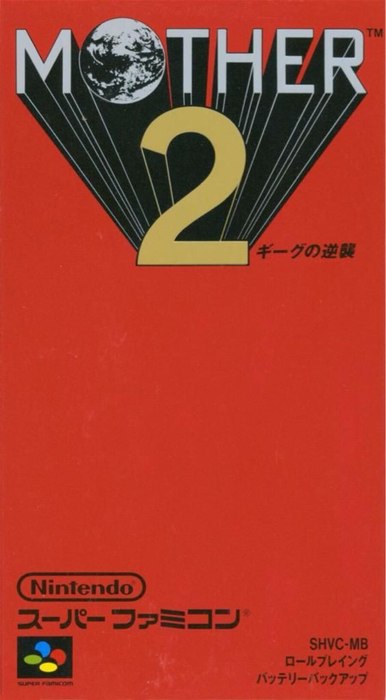
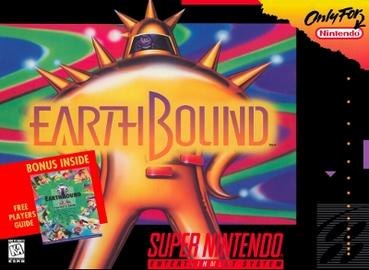
Neither box is wrong about the game. One assumes you already trust it. The other is shouting at a country that had never heard of it, and shouting the wrong thing.