
Why did The Lord of the Rings Online survive when other licensed MMOs died?
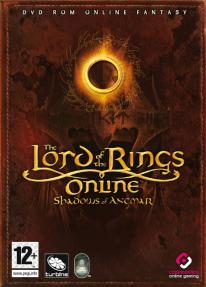
The Lord of the Rings Online launched on April 24, 2007 as The Lord of the Rings Online: Shadows of Angmar. It was originally developed by Turbine and set in Eriador during the time of The Lord of the Rings, with four playable races and seven classes at launch. Licensed online games usually live on a contract and a launch audience. This one outlasted both expectations, and the reasons are in its record rather than in nostalgia.
The first reason is the pivot of 2010. Free to play was announced on June 4, 2010 and launched in North America on September 10, 2010, with Europe following on November 2 after a delay. Turbine reported that revenues from the title tripled in the six months that followed. That same year the NPD Group ranked it the third most played massively multiplayer role playing game, with Turbine citing the free to play model for the growing player base, and in January 2011 PC Gamer named it MMO of the year, noting the success of the move.
The second reason is that the world kept growing, through every change of management. Mines of Moria arrived in November 2008 and Siege of Mirkwood in December 2009, and expansions and updates then added Isengard, Rohan and Gondor. The licence had already been renewed once, with a January 2014 announcement that Turbine and Middle-earth Enterprises had extended it to 2017. On December 19, 2016 it was announced that Turbine would no longer develop the game: development moved to Standing Stone Games, a new independent studio staffed by the people who had been working on the game at Turbine, and publishing moved from Warner Bros. to Daybreak Game Company. The Mordor expansion followed in 2017 and closed the main storyline, and the game then moved into aftermath and earlier tales, with expansions in Minas Morgul, Gundabad and Umbar. A 64 bit client arrived in 2019, the 2022 fifteenth anniversary made the expansions up to Helm's Deep permanently free, new regions were still being added in 2024 and 2025, and 2025 brought a consolidation onto new 64 bit servers built for higher populations.
Interpretation, labelled as such: the documented reception points to the third reason, which is that this was a world built to be lived in, not only quested through. The New York Times called it a major achievement of interactive storytelling. The game shipped with player housing and an elaborate player music system, in which characters learn instruments and perform for each other in places like the Prancing Pony. In 2018 and 2019 the Massively blog named it the most underrated MMORPG of the year, citing its vast and diverse world, its storytelling, and a friendly and dedicated community. Games built only on a licence tend to end with the licence news. This one had revenue after the paywall fell, new land every few years, and a community that treated Middle-earth as a home, and that combination is what the record supports.