
From the Library: covers, censuses, and editions, documented. Browse the Library →
SOJ Tobal No. 1 ยท Vintage Fighting Games
← Back to the Fighting Games Gallery

Why Did Tobal No. 1 Come With a Final Fantasy VII Demo?

Because Square owned the most wanted demo in the world, and a new fighting game that needed an audience.

Square's problem in the summer of 1996 was attention. DreamFactory was an unknown studio, the fighting genre belonged to Sega and Namco, and Tobal No. 1 had a flat shaded look unlike anything else on the shelf. Square's asset was Final Fantasy VII, its first PlayStation RPG, still months from release and already the most anticipated game in Japan.

So Square put the two together. Every copy of Tobal No. 1, in Japan and in North America, came with a second disc carrying the earliest public playable demo of Final Fantasy VII. It was cross promotion in its purest form: the RPG sold the fighter, and the fighter put the RPG into hundreds of thousands of homes before it existed.

THE TWO COVERS

Same game, two shelves
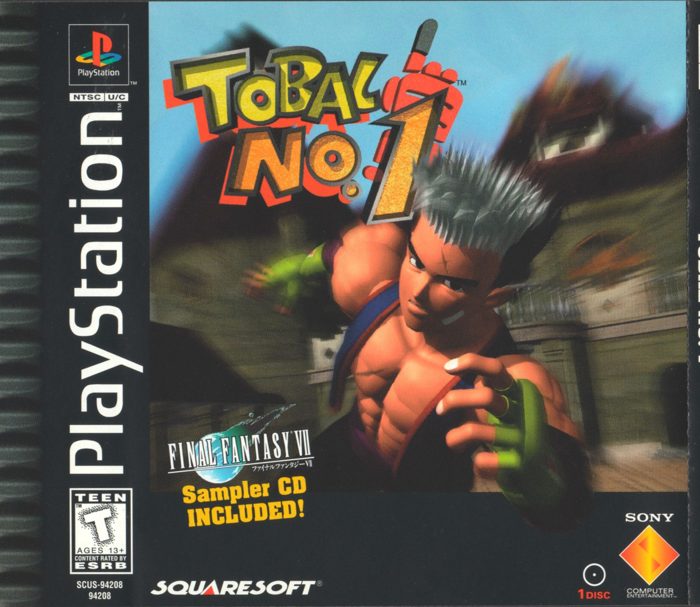
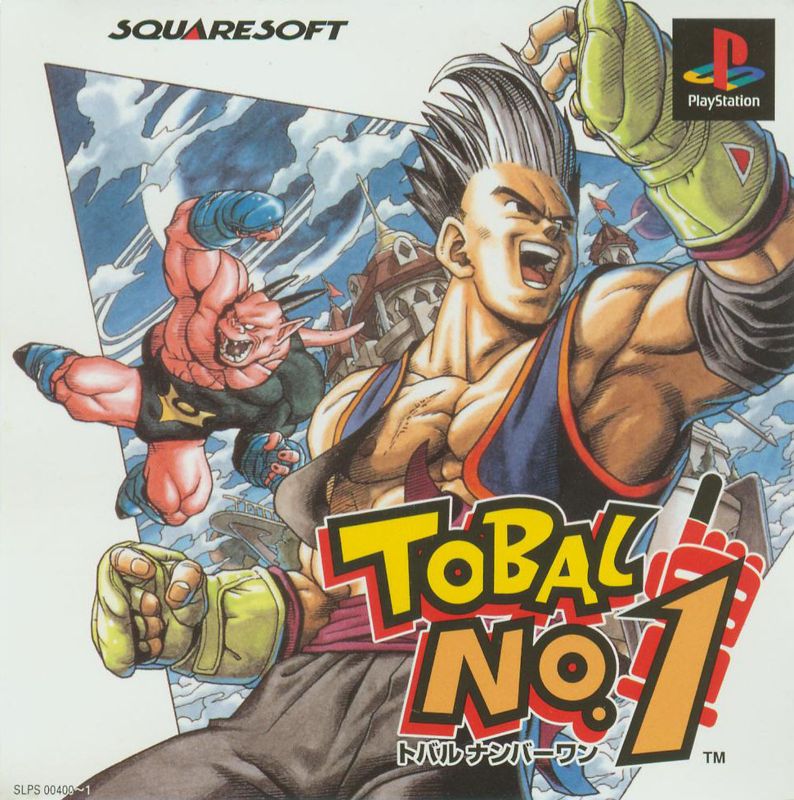
Tobal No. 1 North American PlayStation box art
North America
A computer rendered Chuji lunges off the North American box, and the selling point sits under the logo in yellow: Final Fantasy VII, Sampler CD Included. Squaresoft and Sony Computer Entertainment, 1996.
Tobal No. 1 Japanese PlayStation box art
Japan
Japan got Akira Toriyama's own illustration instead: Chuji in the foreground, Ill Goga behind him, under a plain Squaresoft wordmark. This is the art the game's character designer actually drew.

THE DISC

What was actually in the box
A SECOND DISC, EVERYWHERE
Both the Japanese and North American versions of Tobal No. 1 were packaged with an extra disc. In Japan it was titled Square's Preview Extra. On it: a playable, pre-release demo of Final Fantasy VII, plus video previews of Final Fantasy Tactics, Bushido Blade and SaGa Frontier.
WHAT YOU COULD PLAY
The demo is the opening of Final Fantasy VII: the introductory movie and the first reactor bombing mission in Midgar. Cloud fights alongside Barret and Aeris, with high level spells available from the start, including Fire 2, Bolt 2 and Demi, and the summon Leviathan.
NOT THE FINISHED GAME
This was an early build, and it shows. Aeris is in the party from the first battle, which she is not in the finished game. Limit Breaks are called Specials. The boss is a giant Sweeper rather than the Guard Scorpion. The escape allows three minutes, and the demo closes by promising a December 1996 release date the finished game missed, arriving in Japan in late January 1997.
THE ONLY WAY IN
In 1996 there were no downloadable demos. If you wanted to play any part of Final Fantasy VII months before release, this disc was the only public route, and Square knew the value of that: the North American box carries the badge Final Fantasy VII Sampler CD Included as a headline feature.

WHAT IT DID FOR SALES

The honest version of the famous claim
JAPAN: A CHART TOPPER
On release, Tobal No. 1 topped the Japanese sales charts. It sold 752,000 copies in Japan in 1996 and finished the year as the country's ninth best selling home video game.
THE ATTRIBUTION
That strength has been attributed to the demo disc in reporting from the era onward, including Computer and Video Games coverage of Final Fantasy VII's Japanese launch and later retrospectives. The reasoning is simple arithmetic: Final Fantasy VII was the most anticipated game in Japan, and for months this fighter was its only playable form.
NORTH AMERICA: THE CONTROL GROUP
The same package, demo included, sold 99,183 copies in the United States and settled into cult status. The demo could multiply interest where Final Fantasy fever already ran hot. It could not manufacture that fever where it did not.

THE FIGHTER UNDERNEATH

Why the story is not the whole story

The famous version of this story, that people bought a fighting game just to throw it away and keep the demo, is the era's reporting and fan memory rather than a measured fact. No source separates demo buyers from fighter buyers, and the fighter complicates the joke: Tobal No. 1 reviewed well on its own merits, with IGN at 8.7 out of 10 and Electronic Gaming Monthly calling the battle mode the highlight and the demo a bonus that added value for money.

The defensible verdict is narrower and stronger. Square bundled the most wanted demo in the world with a good game from an unknown studio, in the one market where that demo was worth the most, and the bundle topped the charts and sold three quarters of a million copies. The demo did not make Tobal a good fighter. It made sure Japan found out that it was one.

More fighting games →

THE FIRST WORD

First word on new listings, plus a subscriber promo code for the eBay store.