
Why did Toriyama's art get sharper during Dragon Ball?
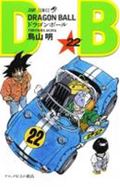
Compare the first volume with the Cell era and the drawings seem to belong to two artists: round, soft, gag manga curves at the start, hard angles and hatched muscle at the end. Toriyama, asked about it by his own former editor Kazuhiko Torishima, gave a precise answer. The influence was animator Toyoo Ashida, a director whose art Toriyama described as careful yet full of tension. Working alongside Ashida's example, he said, his pen sped confidently along the page, his own speed rose by about a factor of fifteen, and drawing action stopped feeling like a slog. Torishima named the result in the same conversation: the linework becomes stronger and more angular from around the fight with Vegeta, and Toriyama agreed. That was Ashida's influence.
His own verdict on the earlier manner is practical, not nostalgic: drawing slowly with his more rounded touch was not suited to the movement of action. The action inside his head came out of kung fu movies, and specifically out of Bruce Lee, the stillness that explodes all at once, which Jackie Chan's more intricate choreography could not give him on paper. The hero had to change shape for the same reason. Toriyama has said that if Goku had kept a child's proportions, whole kinds of fight depiction would stay difficult, so he pushed to grow the character up over his editor's strong opposition, and the taller Goku unlocked everything from fight choreography to the famous illustration of him astride a motorbike.
The deadline did the rest, and Toriyama never hid it. Super Saiyan hair is left white in the manga so it would not have to be blacked in, a saving he and Torishima joked about in print: the editor's first thought was that it was cutting corners, and that readers would not notice. He destroyed the Tenka'ichi Budōkai ring early, he admitted, because it seemed like a pain to draw, and the beam struggles of the later fights were, among other things, a relief to his sole assistant. The sharp style is usually read as the story darkening. In the author's own record it is simpler and better: a faster pen, a taller hero, and a weekly schedule editing the art from inside.