
Why Do Bloody Roar's Fighters Turn Into Animals?
Every fighter in Bloody Roar can transform into an animal hybrid mid fight: a wolf, a tiger, a lion, a rabbit, a mole, a gorilla. The game gives that ability a name, Zoanthrope, and a history. The developers gave it a reason of their own. Both are documented, and they belong in separate rooms.
Below, the in-fiction explanation comes first, drawn from the game's own story materials. The design explanation follows, in the director's own account. Mixing the two is how fighting game lore usually goes wrong, so this page does not mix them.
THE TWO COVERS
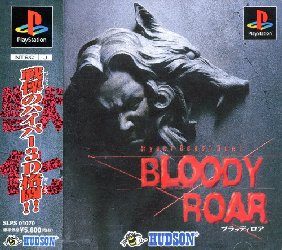
Same game, two sales pitches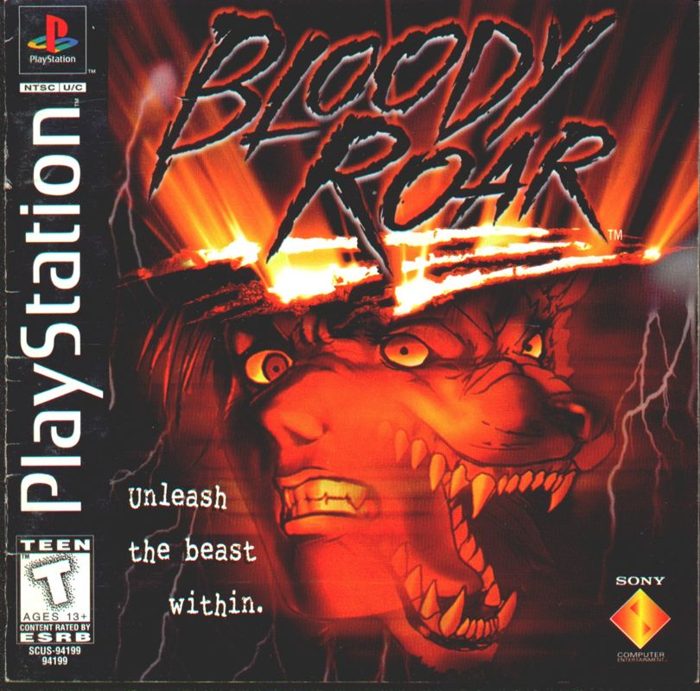
THE IN-FICTION ANSWER
Zoanthropes, a living planet, and a weapons companyIn the world of the game, the fighters are Zoanthropes, people carrying a dormant trigger buried in human DNA. The story frames that trigger through the Gaia hypothesis: Earth itself, treated as a single living organism, foresaw the damage intelligent but physically frail humans would do, and seeded animal genetic material into the human genome as a survival mechanism, meant to wake under extreme environmental stress and produce a hardier kind of human.
For millennia the human genome suppressed the foreign DNA. It surfaced in the modern age for two documented reasons. Some Zoanthropes simply manifested, under stress or by inheritance. Others were made: the multinational Tyron Corporation found the hidden code while analyzing the human genome, classified it, and set out to engineer Zoanthropes as biological weapons, through kidnapping, forced awakening and mind control. The first game's cast is a map of that split. Yugo the wolf and Gado the lion are natural Zoanthropes hunting Tyron. Alice the rabbit was kidnapped as a child and awakened by Tyron's experiments. Uriko, the final boss, is Tyron's artificial chimera, a young girl brainwashed into a weapon.
THE CAST, BY ANIMAL
Eight fighters, eight other selvesTHE DESIGN ANSWER
A separate story, told by the directorNone of the Gaia story explains why the developers chose animals, and the documented design story is refreshingly plain about it. Director Kenji Fukuya, in a 1998 developer interview given around Bloody Roar 2, said that from the start he felt normal human versus human fighting games were kind of boring, and that he originally wanted superpowered characters, like the Super Saiyans from Dragon Ball. Eighting came up with the beast theme, which tied the whole thing together.
So the two answers sit on different levels, and the page keeps them separate on purpose. In the fiction, the fighters turn into animals because a living planet planted the ability and a corporation tried to weaponize it. In the design room, they turn into animals because a director wanted superhuman spectacle, and his co-developers found the one theme that made a power up visible at a glance: fur, fangs and a silhouette that changes the moment the meter fills.