
From the Library: covers, censuses, and editions, documented. Browse the Library →
SOJ Crash Bandicoot · The Japanese Redesign
← Back to the Library

Why does Crash Bandicoot look different in Japan?

Because Sony Japan asked for a friendlier animal, and got one in fifteen minutes.

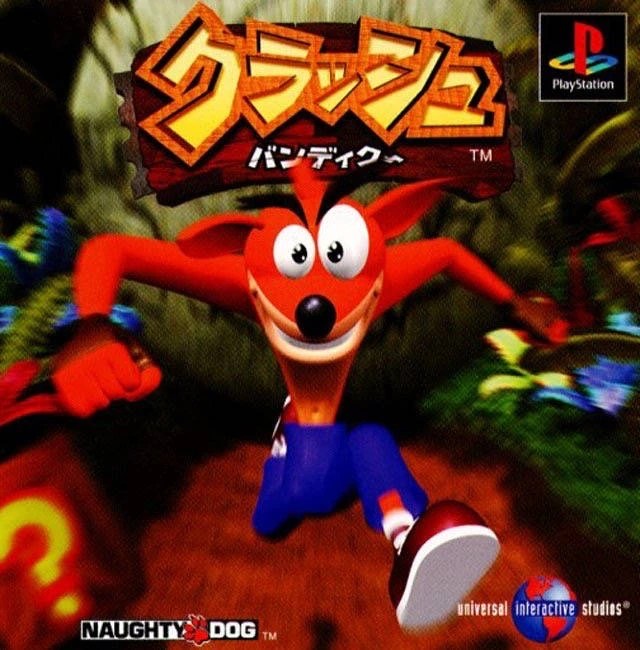
The Japanese Crash has huge round eyes, a small closed smile, and a smaller tuft of hair. The American Crash has green eyes and a grin full of teeth. The difference was decided in a single meeting in Japan, where Sony Computer Entertainment Japan told Naughty Dog that the character and the game's non-Japanese heritage were its weak points, and it was fixed, on the spot, during a break. The redesign then carried a Western platformer to a place no Western game had been: a million copies sold in Japan.

THE TWO COVERS

The fifteen-minute face, on the box
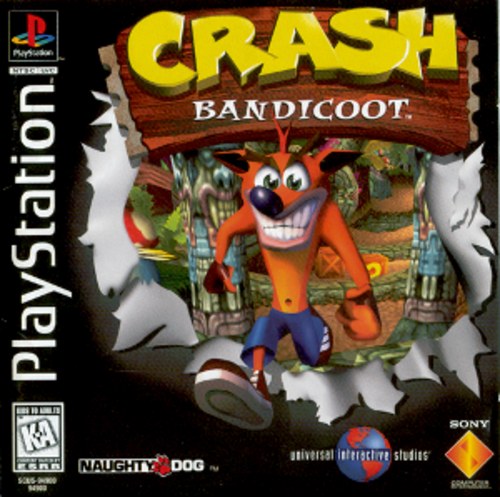
Crash Bandicoot American PlayStation box art, 1996
America · 1996
The original face: green eyes, a wide toothy grin, hair spiked high. Sony Japan's verdict was that he looked aggressive.
Crash Bandicoot Japanese PlayStation box art, 1996
Japan · 1996
The Japanese face: eyes as two big soft shapes, mouth closed in a small smile, hair lowered. Same character, redrawn to be read as gentle.

WHAT CHANGED

A face, a difficulty curve, and a paper trail of small mercies
The Meeting
Andy Gavin prepared for a month, studying anime and manga, Japanese films, and rival characters. SCEJ's executives handed over a document comparing Crash with Mario and Nights into Dreams: the graphics scored well, the character and the game's foreign heritage did not. Artist Charlotte Francis's renderings at the meeting had not impressed.
The Fifteen Minutes
In a break, Gavin gave Francis fifteen minutes: close the huge smiling mouth so Crash seems less aggressive, turn the green eyes into two small black Pac-Man shapes, and make the spike of hair smaller. Sony Japan bought the game for Japanese distribution after being shown the modified printout.
The Difficulty
Producer Shuhei Yoshida argued, with charts, that the game was excessively hard for Japanese players, and Naughty Dog rebuilt parts of it: The High Road was shortened, platforms in Upstream and Up the Creek were resized, and Aku Aku now explains mechanics through pop-up text in the early levels.
The Hidden Origin
The localisation worked to hide the game's American origins, for instance by using no roman letters, and some music was changed at SCEJ's request to be less edgy. A screen showing Crash struck by the crates he failed to break was altered after Japanese child testers reported being disturbed by it.
The Dance
Sony Japan's television campaign put a costumed Crash mascot on screen dancing, an idea from marketing manager Megumi Hosoya. The ad's song became the opening theme of the Japanese Crash games that followed, and Naughty Dog eventually put the dance into the games themselves.
The Sister
The redesign logic reached the cast list. Tawna, Crash's girlfriend in the first game, drew objections, and for Crash 2 Naughty Dog created Coco, a girlish little sister, partly to answer Sony Japan's marketing wish for a softer female supporting character. She is on the Japanese Warped cover on this shelf.

WHAT HAPPENED

The receipts, three games deep

The Japanese edition of the first game sold 610,000 copies by late February 1998, and in May 1997 Crash became the first non-Japanese game to receive a Gold Prize in Japan for passing half a million units. Crash 2 went further: about 1.3 million copies in Japan, the highest-selling Western title in the country at the time. Crash 3 finished the argument, outselling both predecessors in Japan and becoming the first non-Japanese PlayStation game to sell over a million copies there.

Compare the other shelves in this gallery. Japan softened Spyro by rebuilding the whole game around its players' comfort, and Japan never received Conker or the third Spyro at all. Crash is the middle path and the success story: keep the game, redraw the face, soften the cruelest edges, hide the passport, and dance on television. The two boxes above are the whole strategy in one glance, which is why the Library files the Japanese Crash not as a variant but as the version that proved a Western mascot could be re-engineered into a Japanese one.

The full story: The History of Crash Bandicoot →More from the Library →
MORE FROM THE 3D PLATFORMERS ARCHIVE →
One shelf of eighty-two in the Library. Browse them all →

THE FIRST WORD

New pages and new pieces, first.