Why does Street Fighter II have so many versions?
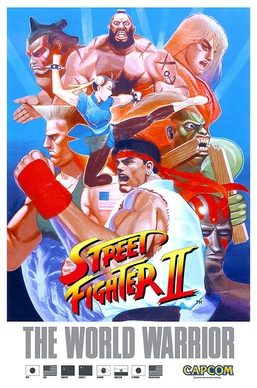
There are five arcade editions of Street Fighter II, and each exists for a documented reason. The original, The World Warrior (1991), made fighting games modern, and immediately left its four boss characters unplayable and its mirror matches impossible. Champion Edition (1992), called Street Fighter II Dash in Japan for the prime mark in its logo, fixed exactly that: the four bosses became selectable, and two players could finally pick the same fighter, distinguished by an alternate palette.
Champion Edition's success created the next problem: bootlegs. Illicit hacked editions, the most famous being Rainbow Edition, sped the game up and let fighters change mid match, and arcades bought them. Capcom's answer was to out bootleg the bootleggers: Hyper Fighting (1992), Dash Turbo in Japan, officially delivered the speed, plus new techniques like Chun-Li's Kikoken and Dhalsim's Yoga Teleport. Then came the rebuild: Super Street Fighter II (1993), on new CPS II hardware, redrew the game, replaced the music, and added four newcomers, Cammy, Fei Long, T. Hawk, and Dee Jay. Its slower pace annoyed Hyper Fighting's players, so the final edition, Super Turbo (1994), Super Street Fighter II X in Japan, restored the speed, added Super Combos, let players select the older Super versions of every character by code, and hid a secret boss, Akuma, who interrupts the final match on strict conditions.
So the pile of versions is not indecision; it is a paper trail. Playable bosses, piracy, hardware, pacing, and a hidden demon: every subtitle on the shelf answers to one of them, and the 15th anniversary Hyper Street Fighter II later let players mix characters from all five editions in a single match, the whole argument in one cabinet.
THE FIVE EDITIONS
Each one, and its reasonTHE FLYER
Street Fighter II, the World Warrior era