From the Library: covers, censuses, and editions, documented. Browse the Library →
SOJ Langrisser · The Remake
← Back to the Library

Why Does the Langrisser I & II Remake Have Two Art Styles?

Because its makers knew the argument was coming, and built the answer into the game: a switch.

When Chara-Ani unveiled its full remake of Langrisser I & II in 2018, one decision dominated every conversation about it. The characters had been redrawn from scratch by Ryo Nagi, the artist of Ar Tonelico, in a clean modern style aimed, in the developers’ own words, at what light novel art had made popular. To a series whose identity is Satoshi Urushihara’s art, this was not a detail. It was the whole question.

The remake’s answer, and the reason this page exists, is that both styles are in the box. The new art is the default; the Classic Mode restores Urushihara’s. Which one a player chooses is the most personal setting in the game, and the one every review of it leads with.

THE TWO HANDS

1994 against 2019

The same series, drawn twice

Urushihara’s originals · Nagi’s redraws · one toggle between them
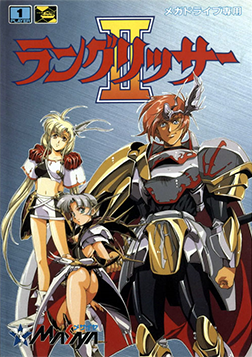
Langrisser II Japanese Mega Drive cover, art by Satoshi Urushihara, 1994
Urushihara · 1994The original Langrisser II cover: dense, glossy, ceremonial.
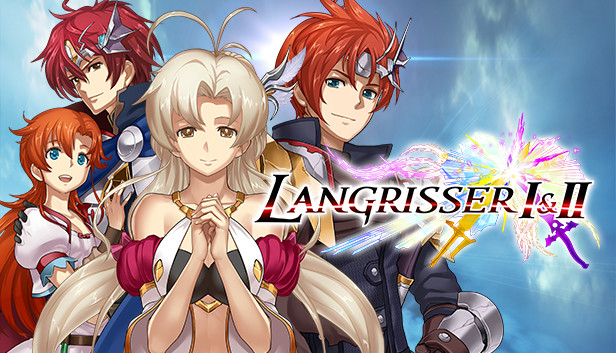
Langrisser I & II 2019 remake key art by Ryo Nagi
Nagi · 2019The remake’s key art: the same cast redrawn brighter, lighter, and rounder.

Neither image is a reskin of the other. Every portrait in the remake exists twice, once in each hand, because the developers decided the argument between them belonged to the player.

HOW THE SWITCH WORKS

Classic Mode, documented
What it changes
Classic Mode, delivered as downloadable content, swaps the character portraits from Nagi’s illustrations to Urushihara’s classics and reverts the music to the original Mega Drive arrangements. In the West the option sits in the game as a Classic and Remastered art choice.
How Japan got it
Early Japanese copies carried a serial code for the mode as a first-print bonus, and it was playable in the February 2019 demo. The limited edition, with its art book and soundtrack CD, wore a new Urushihara package illustration.
Even the new heroine
The remake adds a new character, Betty, a knight of the Dalsis Empire. For Classic Mode, Urushihara drew her himself, so the one heroine with no 1990s original still has a classic portrait.

THE REST OF THE REMAKE

More than a redraw
The games
Released in Japan on April 18, 2019 for PlayStation 4 and Switch after a delay from February, then in the West on March 10, 2020 (North America) and March 13 (Europe), with PC via Steam. NIS America published the Western editions; the limited edition was priced at $79.99.
What else is new
Full Japanese voice acting, a re-arranged score by the original composer Noriyuki Iwadare, a new scenario, and, for the first game, new routes and multiple endings: Langrisser I finally gets the branching its sequel pioneered.
The makers on the art
Chara-Ani’s team said in interview that they wanted art in the popular light novel manner and that Nagi gave the best response, and that they deliberately left the old version in alongside: both sides of the coin, enjoyable by both audiences.
More from the Library
MORE FROM THE LANGRISSER ARCHIVE →
One shelf of the Library. Browse them all →

THE FIRST WORD

New pages and new pieces, first.