
From the Library: covers, censuses, and editions, documented. Browse the Library →
SOJ Marvel vs. Capcom · Vintage Fighting Games
← Back to the Fighting Games Gallery

Why Does the PlayStation Marvel vs. Capcom Have a Cross Over Mode Instead?

Because identical teams were the one way to tag inside 2 MB of RAM.

Cross Over is an exclusive mode in the PlayStation port of Marvel vs. Capcom, and it is the only mode in that port that permits tag team gameplay. It exists for one reason: it cheats the memory limit that removed tagging from every other mode.

The trick is elegant. Tagging needs four fighters in memory when the two teams are different. If both players field the same two fighters, only two unique characters ever need to be loaded, and full tag team play suddenly fits.

THE TWO COVERS

Same game, two shelves
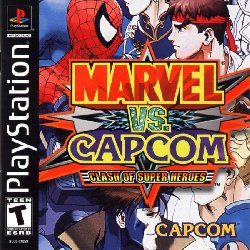
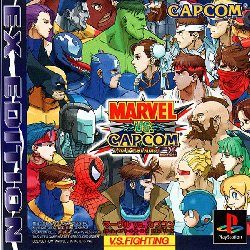
Marvel vs. Capcom PlayStation US box art
United States
Spider-Man and Ryu carry the American cover, the two faces of the crossover.
Marvel vs. Capcom PlayStation Japanese box art
Japan · EX Edition
Japan renamed the port the EX Edition and packed the cover with the full cast.

HOW THE TRICK WORKS

The documented mechanics
Mirror teams, by force
Cross Over allows tag team play by forcing the players to fight with identical teams. You do not pick a partner in this mode. The game builds your partner out of your opponent’s pick, and builds your opponent’s partner out of yours.
The worked example
If Player 1 chooses Spider-Man and Player 2 chooses Ryu, then Ryu is automatically selected as Player 1’s secondary character and Spider-Man as Player 2’s. Both sides tag between the same pair, and the console loads exactly two fighters.
Why it had to be this way
The PlayStation’s RAM limitations restricted most modes to two character battles instead of four, and reduced the second fighter to an assist. Cross Over is the exception that proves the diagnosis: restore the four fighter format only where the memory cost stays at two.
What the other modes got instead
Arcade, Versus and Training modes on PlayStation keep the partner as an assist for short attacks and team super combos, add linked super combos, and add a Gallery mode for art and endings. Cross Fever, the Dreamcast mode, went the opposite direction: four players at once.

A WORKAROUND THAT BECAME A FOOTNOTE

Why it is remembered

Capcom had used the same compromise before: the PlayStation ports of X-Men vs. Street Fighter and Marvel Super Heroes vs. Street Fighter also replaced tagging with round based fights and a crossover style mode, for the same memory reason. By 1999 the pattern was familiar enough that reviewers treated Cross Over as the expected PlayStation solution rather than a novelty.

It worked, within its limits. Two players who wanted the real tag experience on a PlayStation could have it, as long as they accepted mirror teams and gave up choosing a partner. When the arcade original returned in the 2024 Fighting Collection, Cross Over stayed behind with the EX Edition: a clever, honest workaround for a hardware ceiling that no longer exists.

More fighting games →

THE FIRST WORD

First word on new listings, plus a subscriber promo code for the eBay store.