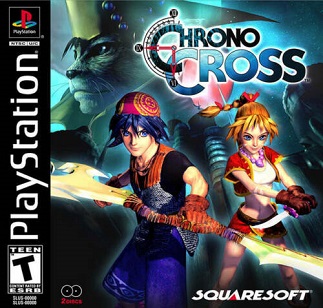
Why Is Chrono Cross So Divisive?
Chrono Cross holds a 94 on Metacritic, higher than Chrono Trigger's 92, and one of the few perfect 10s GameSpot ever gave a PlayStation game. It is also, a quarter century later, the sequel its own fanbase argues about most. This page separates the two records, because the disagreement is not about whether the game is good. It is about what it was supposed to be.
THE CRITICS' RECORD
What reviewers actually saidOn release the game was received about as well as a game can be: widespread acclaim in Japan in 1999 and North America in 2000, GameSpot's perfect 10.0, and an aggregate that still sits above its predecessor's. Reviewers praised the graphics, Honne's painted backgrounds, the battle system, and Mitsuda's score, and they judged the game in front of them, in a crowded year, against other PlayStation RPGs. Against that field it won.
THE FANS' RECORD
What the sequel was measured againstTHE PRODUCER SAW IT COMING
Tier 1, from 1999Producer Hiromichi Tanaka said the quiet part before release, in July 1999: the team knew it was starting "not from zero, but from a start from minus," making a new Chrono without the Dream Team whose names sold the first one, determined "to create a sequel that may surpass its predecessor" as a way of returning the favor to that team. The minus start is the whole argument in one phrase. Cross was designed by Trigger's supporting staff to surpass a game the world credited to three famous men, and it changed the formula precisely because repeating it was the one guaranteed way to lose.
The verdict this Library prints: the divisiveness is structural, not a misunderstanding. Judged as a PlayStation RPG, Chrono Cross is one of the era's best reviewed games. Judged as the continuation of Chrono Trigger's story, cast, and creative team, it deliberately is not one, and the disappointment is a response to a real absence, not an error. Both judgments cite true facts. That is why the argument does not end.
THE GAME ON THE SHELF
Chrono Cross