
Why is Kirby angry on American box art?
Fans named the phenomenon first: American Kirby is hardcore. From Kirby: Nightmare in Dream Land (2002) onward, the American boxes sharpened Kirby's round face, angled eyebrows, set jaw, through Air Ride, The Amazing Mirror, Canvas Curse, Squeak Squad and beyond, while the same games shipped in Japan with the same art but a smiling Kirby. The games inside were identical. Only the face on the box changed.
In January 2025, former Nintendo localization director Leslie Swan explained the intent to Polygon: the American Kirby was not meant to read as angry, but as determined, because in the US, tween and teen boys are drawn to tougher characters. The Japanese view was stated by Kirby: Triple Deluxe director Shinya Kumazaki to GameSpot in 2014: cute Kirby is what Japan prefers. Two markets, two theories of the same eight-inch puffball, printed side by side for a decade. A few games escaped the treatment, Epic Yarn among them; by the 2010s the practice quietly faded as Nintendo's regions aligned their marketing.
And the original American Kirby makes the angry one look subtle. On the 1992 US box for Kirby's Dream Land, Kirby is white. The Game Boy screen was monochrome; Sakurai has said he believes the American team simply misread the sprite, while Satoru Iwata once speculated it was done to make Kirby more marketable. Sakurai had always intended pink. Miyamoto, guessing from the same gray sprite, expected yellow, which is why player two's Kirby is yellow to this day.
THE FACE, TWICE
Nightmare in Dream Land, 2002Kirby: Nightmare in Dream Land
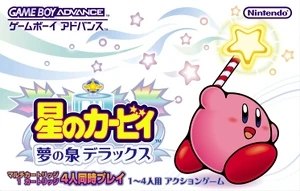
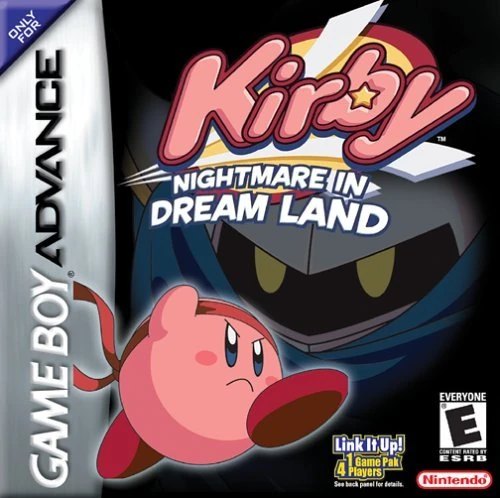
The art department changed one thing, the expression, and it is the thing the whole internet noticed.
AND BEFORE THAT, WHITE
Kirby's Dream Land, 1992Kirby's Dream Land
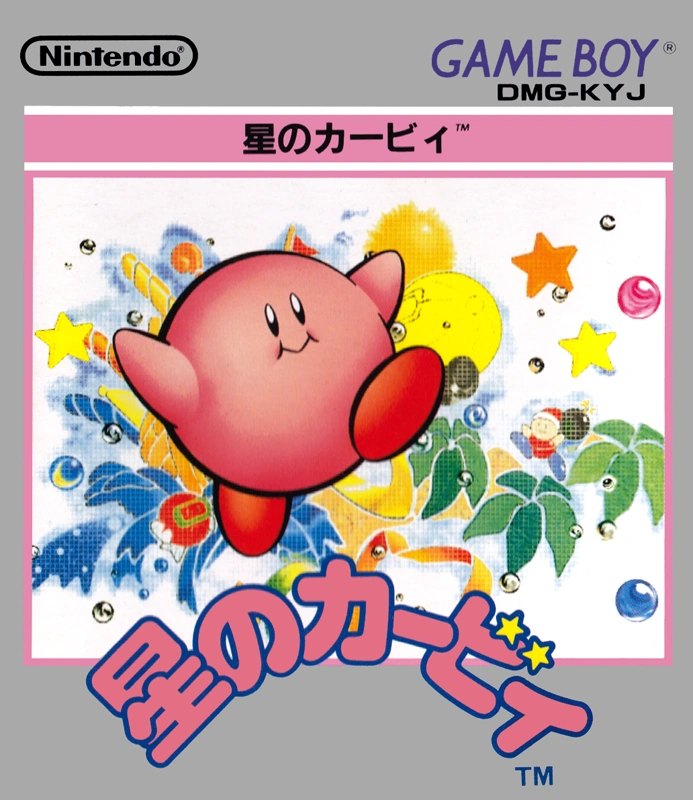
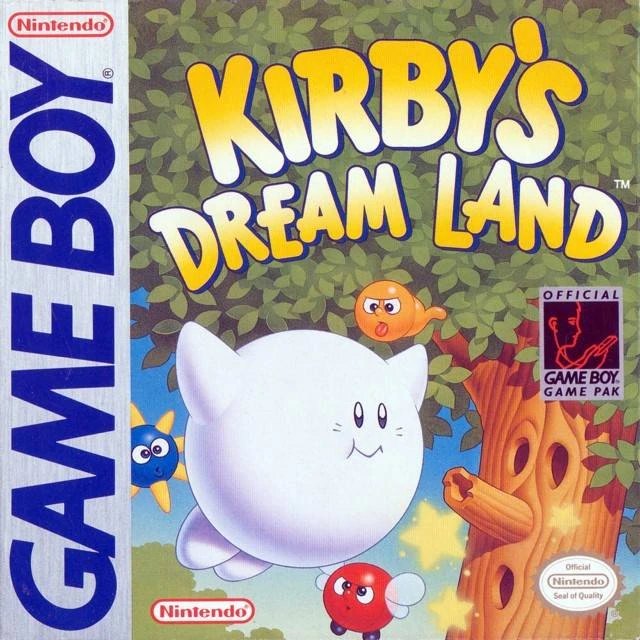
Before America made Kirby angry, it made him white: the monochrome Game Boy left his color to guesswork, and the guesses are still visible in the series, down to the yellow second player.