
Why was EarthBound 64 cancelled?
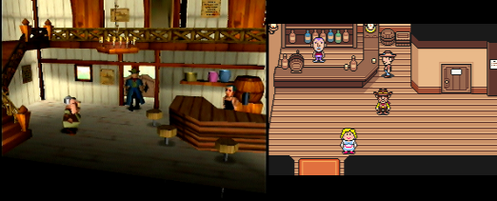
EarthBound 64 was Mother 3 in its first life: begun for the Super Famicom, moved to the Nintendo 64 and its 64DD add on, and developed, in 3D, for about six years. When the cancellation came in August 2000, creator Shigesato Itoi did something unusual: he published, on his own website, a long conversation among himself, producer Satoru Iwata, and Shigeru Miyamoto, explaining what had gone wrong, so that disappointed fans would have the account from the people responsible rather than from rumor.
Miyamoto's explanation was about resources, not quality. The project, he said, was taking too much of a toll on progress for the upcoming Dolphin, the system that became the GameCube, and it simply could not continue on. He was explicit that this was not because the game was progressing badly or would not have done well. At Nintendo's Spaceworld event that same month he told reporters the same thing in shorter form: the team was simply needed on other projects. Iwata added the structural point: whatever Mother 3's future might be, it was certain it would not be developed for the Nintendo 64.
Iwata, who had been a producer on the project, took the blame personally, and his words in the published conversation are the most quoted part of it. He said he had no thoughts other than his embarrassment that they could not bring Itoi's hard work to fruition, and could not deliver a game they had announced they were working on. Years later, in accounts of that conversation, his regret is still the headline. The two men even disagreed, in print, about how far along the game was: Iwata estimated about 30 percent of the final product was ready, while Miyamoto put asset and scenario preparation nearer 60 percent. Secondary accounts of Itoi's position put the remaining work at about two more years. On any of those numbers, finishing meant years of a scarce team's time, spent on a dying console, while the next one waited.
The alternatives were considered and set aside in the same conversation: moving the game to the GameCube, which the team judged would not fix the underlying problems, and turning the story into a novel, which Itoi later weighed again for the restarted project and rejected, because Mother 3 was a video game and nothing else. Three years later the game restarted on the Game Boy Advance, in 2D, with its story intact. EarthBound 64 is therefore not a lost game so much as a lost version: the levels, the models, and six years of work were abandoned, and the book of the story was eventually finished on cheaper hardware, by a different studio, in the style of the games that came before it.