
Why was Mike Tyson removed from Punch-Out?
The deal came first, the fame second. Nintendo of America president Minoru Arakawa saw the young Tyson fight and was struck by his power and skill, and Nintendo signed him before he was champion: the agreement predates Tyson's title win over Trevor Berbick on November 22, 1986. The price most often reported is a rumored $50,000 for three years, a figure Nintendo has never confirmed, and one that looked like the bargain of the century within a year. Tyson's in-game record, 31 and 0 with 27 knockouts, was his real record as of August 1987. Mike Tyson's Punch-Out!! released in North America that October.
Japan, notably, never needed him. The Famicom's gold tournament cartridge of September 1987, handed to top finishers in a Nintendo golf competition, ended with Super Macho Man as champion. Tyson was an American marketing layer on a Japanese game, which made him easy to remove when the time came.
The time came in 1990. On February 11, in Tokyo, Tyson lost to James 'Buster' Douglas in the upset of the century. That same year, the three-year contract reached its end, and Nintendo chose not to renew it. The re-release that followed in August 1990, retitled simply Punch-Out!!, replaced Tyson with a fictional champion, Mr. Dream. Nintendo has never given a fuller reason than the contract's expiry, and the documented sequence is exactly that: expiry, and a decision, in the shadow of the Douglas loss.
One part of the story should be retired: Tyson was not removed over his 1992 conviction. That came roughly two years after Mr. Dream was already on the cartridge. Nintendo later planned a Tyson sequel set in space, which arrived without him as Power Punch II in 1992. The license lapsed; the game moved on; the myth filled the gap.
THE SWAP, TWO BOXES
Same game, different championMike Tyson's Punch-Out!! and Punch-Out!!
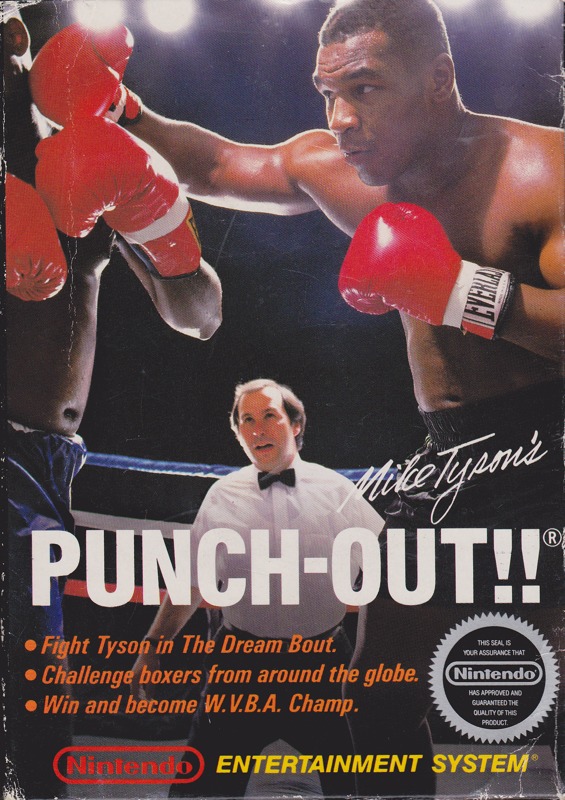
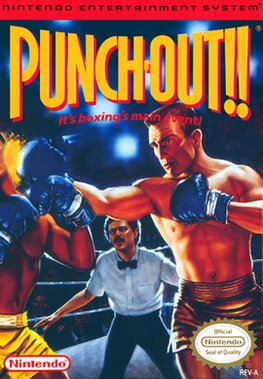
Everything inside the ring stayed the same. Only the face on the box, and the name and face of the final boss, changed.