
From the Library: covers, censuses, and editions, documented. Browse the Library →
SOJ Banjo-Kazooie · The Unfinished Secret
← Back to the Library

Why was Stop 'n' Swop never finished?

Because the console forgot too fast.

Finish Banjo-Kazooie with all 100 Jiggies and the ending shows you two coloured eggs and an Ice Key sealed behind a wall, treasures the game says are waiting for the sequel. The plan, called Stop 'n' Swop, was real, patented, and partly built: collect the items in one game, switch the console off, swap cartridges at speed, and the second game would find them waiting. It died because the trick depended on how long a Nintendo 64's memory held its contents after power-off, and Nintendo changed the hardware.

THE GAME THAT TEASED IT

Banjo-Kazooie, 1998
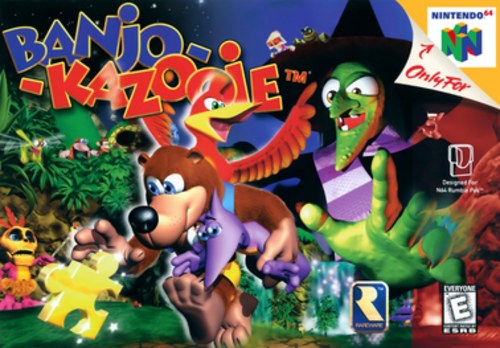
Banjo-Kazooie American Nintendo 64 box art, 1998
America · 1998
The American box. Inside its ending, behind ice and inside a sarcophagus, sit the most argued-over collectables of the cartridge era.
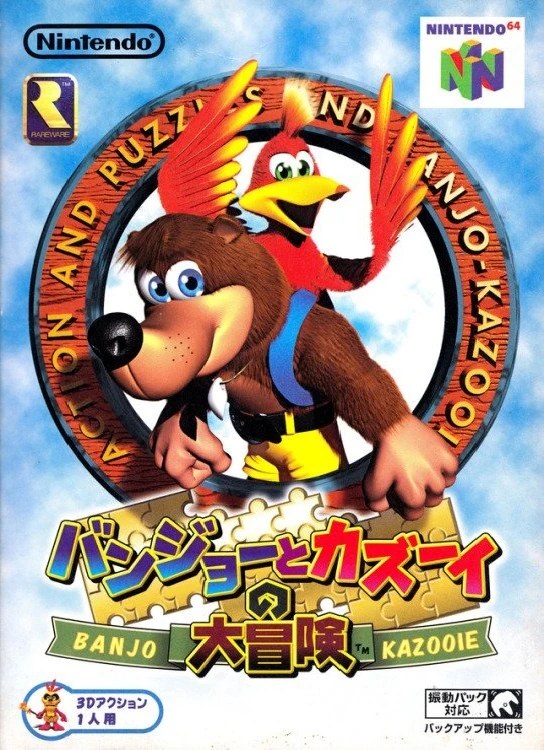
Banjo-Kazooie Japanese Nintendo 64 box art, 1998
Japan · 1998
The Japanese edition carries the same tease. The secret was never regional; the hardware problem that killed it was universal.

HOW IT WAS SUPPOSED TO WORK

A swap measured in seconds
The Tease
The 100-Jiggy ending points the player at secrets the game will not hand over. Hackers from the Rare Witch Project, Alan Pierce and Mitchell Kleiman, found the rest hidden in the code: cheat codes for six coloured eggs plus the Ice Key, and a menu with the words Stop 'n' Swop on it.
The Trick
The Nintendo 64's Rambus memory does not empty the instant power dies. On early consoles it could hold data for roughly ten seconds, long enough to pull one cartridge and seat another. Rare even filed a patent describing the swap, published in 2004, after the idea was already abandoned.
The Revision
In 1999 Nintendo revised the hardware and the memory's retention fell to about one second. A feature that needs a child to swap cartridges inside a second is a feature that fails on the shop floor. Rare engineer Salvatore Fileccia put the numbers on the record in a 2008 interview.
The Word From Nintendo
Nintendo asked for the feature's removal, citing the unreliable retention and a fear of hardware damage from hot swapping. Lead software engineer Paul Machacek has said the damage fear was unfounded, but the decision stood. Nintendo's own consumer line of the era told players simply that the feature was not implemented.

WHAT PLAYERS GOT INSTEAD

The eggs, delivered late and by hand

Banjo-Tooie quietly honoured the promise in miniature: three of the eggs, pink, yellow, and blue, are hidden inside the sequel packed in little Banjo-Kazooie game cartridges, to be carried to Heggy the hen and hatched, and the Ice Key opens a vault holding the Mega Glowbo that turns Kazooie into a dragon. The full connection, data passed between separate games by a memory that could not be trusted, only arrived a decade later in the Xbox Live Arcade re-releases, where Stop 'n' Swop finally worked as designed.

It remains the defining almost of the era: a feature killed not by imagination or budget but by a memory chip's discharge time. The eggs on this shelf's boxes are the ordinary kind. The famous ones never left the first game at all.

The full story: The History of Banjo-Kazooie →More from the Library →
MORE FROM THE 3D PLATFORMERS ARCHIVE →
One shelf of eighty-two in the Library. Browse them all →

THE FIRST WORD

New pages and new pieces, first.