
What is the first Yakuza game?
A crime novel you could walk around in, built by an arcade team that had never made anything like it.
Yakuza reached Japanese PlayStation 2s on December 8, 2005, as Ryū ga Gotoku, "Like a Dragon". Kazuma Kiryu, a rising Tojo Clan officer, takes the blame for his boss's murder to protect his sworn brother Nishiki, and serves ten years. He walks out to find a changed city, an expelled name, and the whole underworld hunting ten billion yen missing from the clan's vault.
HOW IT GOT MADE
Project JA rejected pitch
Nagoshi's proposal was turned down by Sega's executives, who expected something else from the Super Monkey Ball man. The project survived because, after the Sega-Sammy merger, a demo reached chairman Hajime Satomi, who approved it on sight.
¥2.4 billion (about $21 million)
Three years in development under the codename Project J, on an entirely new engine, with combat built from Nagoshi's arcade brawler SpikeOut. To help finance it, Sega signed tie-in deals with real Japanese companies, which is why Kamurocho's shelves carry real brands.
A novelist on the script
The main plot was supervised and edited by crime novelist Hase Seishū; the game's own lead writer was a young Masayoshi Yokoyama, who runs the studio today. Two teams wrote in parallel, one on the main story, one on the substories.
Field research
The team did its homework in Kabukicho and Roppongi hostess clubs. Scenes of yubitsume, the traditional severed-finger punishment, were cut so the game would earn a friendlier rating from Japan's CERO board.
THE RELEASE
Japan first, as always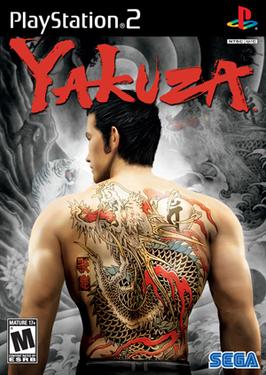
The Western box · 2006
North America got the game on September 5, 2006, wearing art the Japanese release never used: Kiryu's bare, dragon-tattooed back under red brush lettering, sold hard as Japan's answer to Grand Theft Auto.
The Japanese verdict
232,650 copies in its first Japanese weeks, a budget-priced reprint within a year, and over a million sales in the end. Nagoshi's read on why: almost no other big-budget game had tried to portray contemporary Japanese life directly.