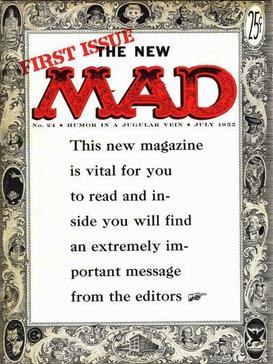
How did Mad magazine shape Lupin III?
Ask what Lupin III is made of and the ingredients cross three countries: a French gentleman thief, a British spy’s toolkit, and the house style of Mad magazine. Monkey Punch acknowledged Mort Drucker, Mad’s great caricaturist, as an influence on his drawing, and the debt is visible on every page of the 1967 manga: elastic faces, backgrounds stuffed with sight gags, violence played as slapstick timing. Jason Thompson’s verdict in Manga: The Complete Guide is the standard one: the manga is “a fascinating homage to Mad magazine.”
The lineage page matters because it explains Lupin’s silhouette. This is not the clean line of Tezuka-school manga; it is Kurtzman-era American humor cartooning, all elbows and grins, pointed at a crime story. When Takeshi Koike designed The Woman Called Fujiko Mine in 2012, he went back to exactly this: Monkey Punch’s scratchy, Mad-inflected page, over forty years of polished anime design.