From the Library: covers, censuses, and editions, documented. Browse the Library →
SOJ Diablo · The Covers
← Back to the Library

How do the Japanese and American Diablo covers compare?

The first game was redrawn for Japan. The sequels were not.

Diablo's cover history has a clean break in it. On PlayStation in 1998, Japan and America received completely different illustrations. From Diablo II onward, the art stopped changing at the border: the same painting, dressed in local logos, ratings, and stickers. Each pair below is shown from the actual packages.

DIABLO, PLAYSTATION, 1998

The pair that matters most

Diablo, PlayStation

Completely different art
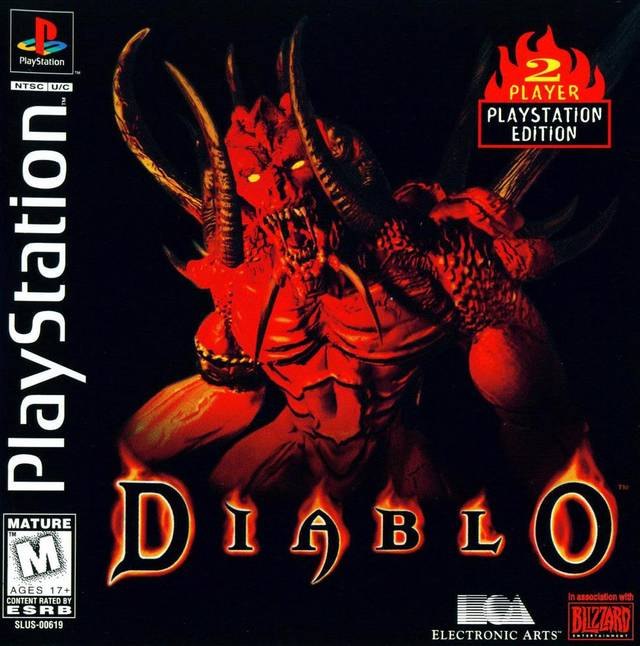
Diablo American PlayStation box art, 1998
America · SLUS-00619Diablo's full upper body against solid black: red torso, long straight horns, one arm raised. The spine banner runs down the left edge, with a "2 Player PlayStation Edition" flame badge above.
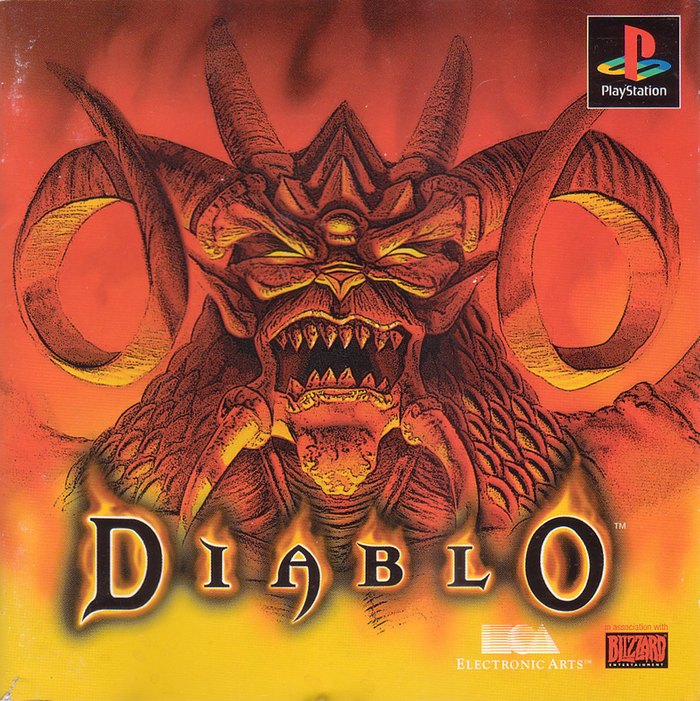
Diablo Japanese PlayStation box art, SLPS-01416, 1998
Japan · SLPS-01416A bright close-up of the face alone, snarling and fanged, ring-horns curling at the sides, over an orange-to-yellow wash. No rating mark on the front; the EA badge and a small "in association with Blizzard" line sit at the corner.

This is the Japanese edition SOJ actually sells, and its art has a source: the face is the US PC illustration, pulled out of the shadows, brightened, and cropped to fill the box. Japan did not commission a new Diablo. It promoted the PC painting to the whole cover.

Diablo, PC, 1996
Japan never got a PC box
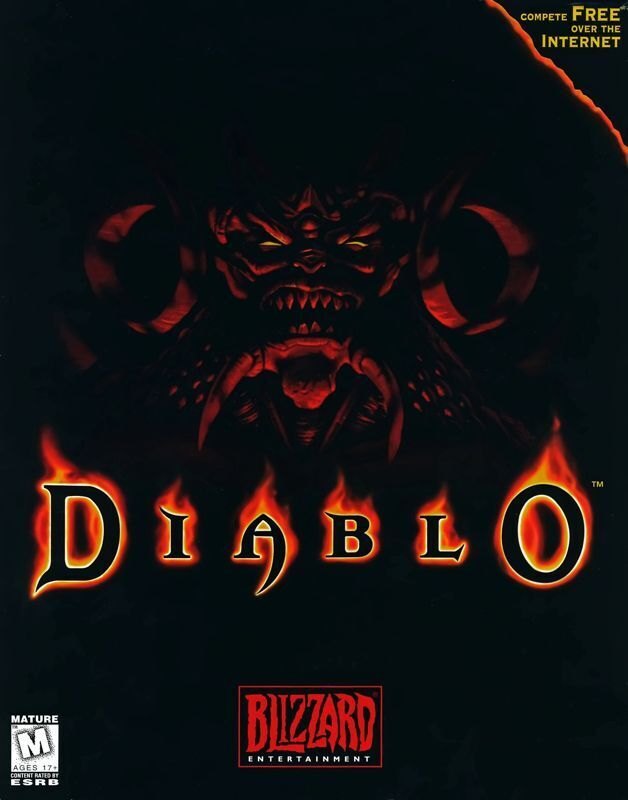
Diablo American PC box art, 1996
America · PC · 1996The origin of the Japanese PS1 face: Diablo looming out of near-black shadow, eyes and fangs barely lit, the flaming title beneath.
Diablo Japanese PlayStation box art, 1998
Japan · PlayStation · 1998The same face, two years later and an ocean away, as Japan's first Diablo cover, because there was no Japanese PC edition to carry it.

Why is there no Japanese PC cover beside the American one? Because the PC game was never localised: development delays had left its code and text tangled together, Japanese players made do with imported English copies, and SourceNext eventually sold the English version as agent. The PlayStation edition was Japan's first Diablo in Japanese, and it borrowed the PC art to say so.

DIABLO II, PC, 2000

The art stops changing

Diablo II, PC

Same art, different treatment
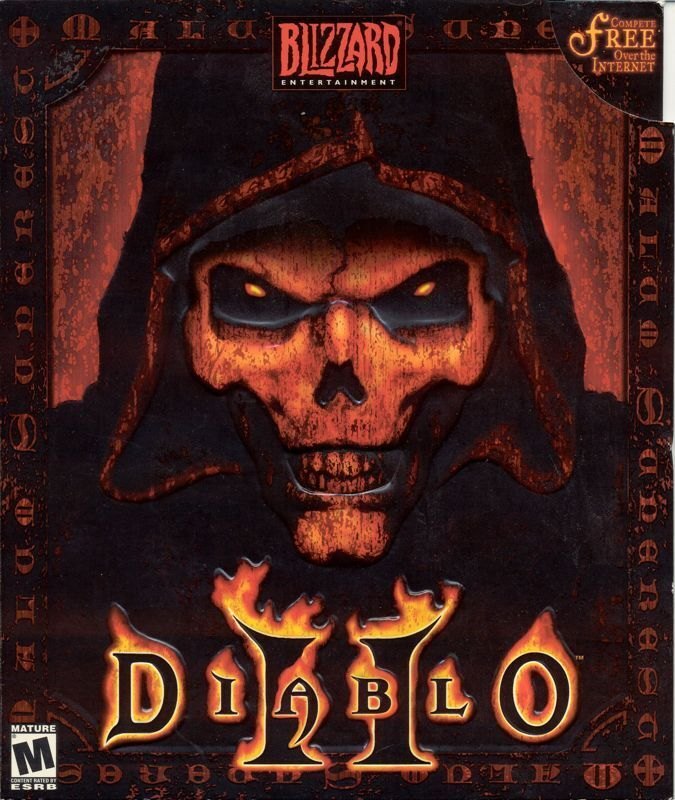
Diablo II American PC box art, 2000
America · 2000The Dark Wanderer's flaming skull inside a border of carved runes, ESRB M at the corner, the internet-play fold at the top.
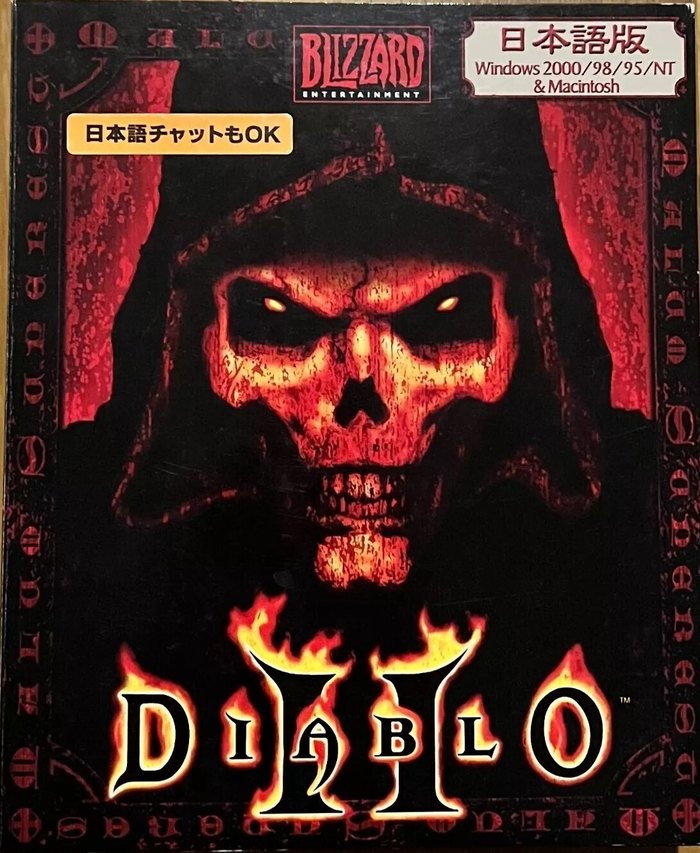
Diablo II Japanese PC box art, Capcom, 2000
Japan · Capcom · 2000The identical painting. Japan's dressing is a white plate naming the Japanese edition and its systems, plus a yellow sticker promising Japanese chat. (This copy is a photograph, so its reds run hotter than the flat scan.)

Capcom published Diablo II in Japan, first as an English version with a Japanese manual (July 1, 2000), then fully in Japanese (October 18, 2000, at 9,800 yen). The localisation lived inside the game, in Japanese chat and translated event text. The box kept the world's art.

DIABLO III, 2012 TO 2014

One split nobody expects

Diablo III, PlayStation 3

Same art, different treatment
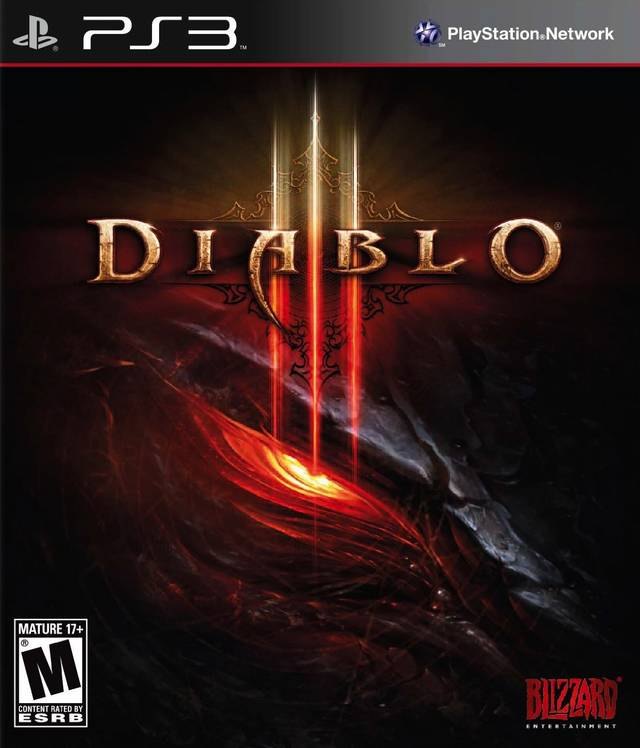
Diablo III American PlayStation 3 box art, 2013
America · PS3 · 2013No face at all: the gold title and its three red slashes over dark, ember-lit rock.
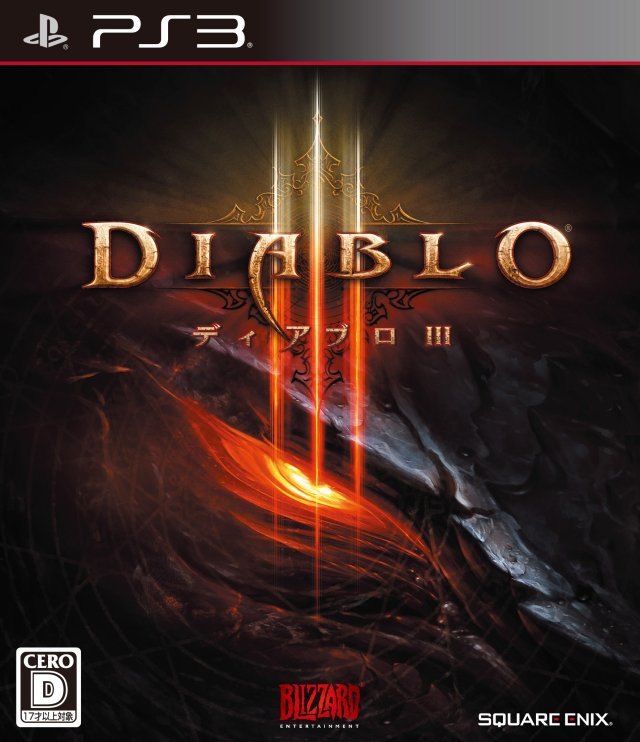
Diablo III Japanese PlayStation 3 box art, Square Enix, 2014
Japan · Square Enix · 2014The same abstract art. Katakana under the title, CERO D for the ESRB M, Square Enix's mark added at the corner.

The surprise is not between regions but between machines: the PC box (2012) is a close-up of Diablo's face, while the PS3 art drops the face everywhere on earth. And Japan's Diablo III arrived as a Square Enix PlayStation 3 exclusive on January 30, 2014; no distinct Japanese PC cover exists to compare.

How was Diablo released in Japan?What inspired Diablo?The full story: The History of Diablo II →
MORE FROM THE DIABLO ARCHIVE →
One shelf of eighty-two in the Library. Browse them all →

THE FIRST WORD

New pages and new pieces, first.