
From the Library: covers, censuses, and editions, documented. Browse the Library →
SOJ Valkyrie Profile · The Clock
← Back to the Valkyrie Profile Gallery

How Does the Time System in Valkyrie Profile Work?

Eight chapters, a small purse of periods in each, and heaven grading the work at the end of every one.

Most role playing games let you grind until you are ready. Valkyrie Profile gives Lenneth a schedule instead. The whole game is a countdown to Ragnarok, run in chapters, and nearly everything she does, recruiting a hero, entering a town, clearing a dungeon, is paid for out of the same limited currency: periods. This page documents how the system works, as the game's design is recorded in the sources below.

THE SYSTEM IN FOUR PARTS

Design, documented
1. CHAPTERS AND PERIODS
The game is divided into eight chapters. Each chapter is divided into periods, and the count depends on difficulty: 16 periods per chapter on Easy, 24 on Normal, and 28 on Hard. Visiting towns, entering dungeons, and recruiting einherjar each use up periods, so the player budgets the chapter the way Lenneth herself must.
2. SPIRITUAL CONCENTRATION
On the 3D world map, Lenneth flies over Midgard. Pressing Start performs a Spiritual Concentration, which reveals new dungeons, cities and towns, and the recruitable einherjar hidden among them. The map does not show you the chapter's work for free; finding it is part of the work.
3. THE SACRED PHASE
When a chapter's periods are spent, the Sacred Phase begins. Lenneth returns to Asgard, and Freya updates her on the status of the war with the Vanir and on the fate of the einherjar she has already sent to Valhalla. It is also payday: how well Lenneth met the chapter's requirements decides the Materialize Points Freya grants, the game's money, transmutable into items and equipment.
4. SEND, OR ANSWER FOR IT
Each chapter requires Lenneth to send at least one einherjar to Valhalla, two at most, preferably meeting the requirements set at the chapter's start. Every einherjar has a Hero Value, a number for combat strength and strength of character, and heroes who meet or exceed the requirements survive, tilt the war in the Aesir's favor, and raise Lenneth's Evaluation.

THE GRADE THAT CAN END THE GAME

Evaluation

Evaluation is the system's teeth. Offering up the artifacts won in dungeons instead of keeping them, and sending einherjar who meet the chapter's requirements, raises it. Keeping too many artifacts and failing to send heroes lowers it. If Lenneth's Evaluation reaches 0, the game delivers its worst ending, Ending C, without waiting for Ragnarok. The clock and the grade are the same pressure seen from two sides: time limits what you can prepare, and heaven scores what you did with it.

Difficulty changes the shape of the whole machine, not just enemy strength. The three levels offer different einherjar, dungeons, and quests; on Hard, every character starts at level 1, but more dungeons are available and with them more objectives awarding Event EXP, the banked experience the player distributes by hand. The clock is longest exactly where the game is hardest.

THE GAME ON THE SHELF

Valkyrie Profile · PlayStation
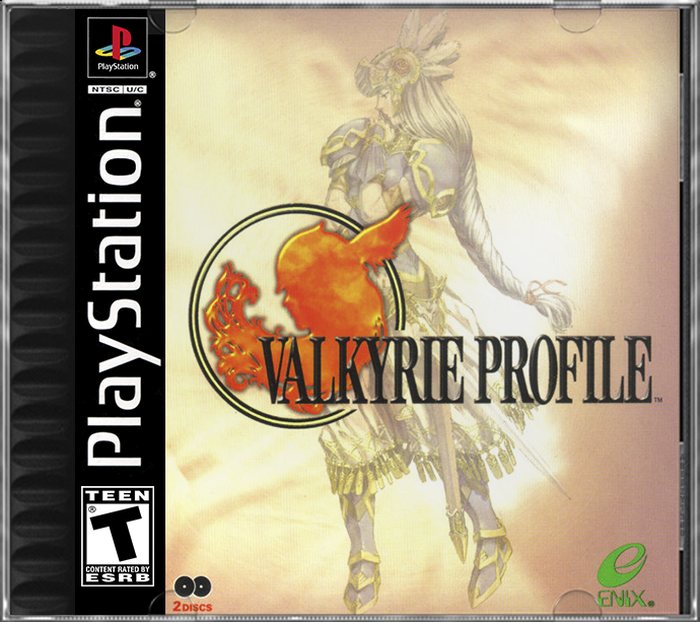
Valkyrie Profile American cover
American box art · 2000
The American PlayStation box of the game whose chapters run on a budget of periods.
The HistoryWhat are the three endings?
MORE FROM THE VALKYRIE PROFILE ARCHIVE →
One shelf of eighty-two in the Library. Browse them all →

THE FIRST WORD

New pages and new pieces, first.