
Is ActRaiser a City Builder or an Action Game?
ActRaiser (December 16, 1990 in Japan) is two games taking turns. In the action stages, the player animates a stone statue and fights through side-scrolling levels ending in bosses drawn from world mythology. In the simulation stages between them, the player is a god in the sky, directing an angel, planning roads, and spending miracles, lightning, rain, sun, wind, earthquake, to help two first humans grow into a civilization. Sealing the four monster lairs around each land lets the towns advance, and the god's own level rises with the total population of the world. Faith is the experience point system.
The alternation is the argument. Action clears the ground; building fills it; a bigger population makes a stronger god; a stronger god clears harder ground. Quintet's later games all descend from this loop: Soul Blazer turns building into restoration, Terranigma turns it into resurrection. No other Super Nintendo launch-window game mixed genres at this scale, and critics noticed: Electronic Gaming Monthly later wrote that playing it feels "more like a religious experience" than other games on the system.
Then the ending undercuts the power fantasy entirely. Tanzra defeated, the Master revisits his civilizations and finds the temples empty. The people, able to solve their own problems now, no longer need to pray. The god and his angel leave the world, content to wait in the heavens until they are needed again. A game about omnipotence that ends by endorsing its own obsolescence: that is the Quintet signature, present in the studio's very first title.
TWO BOXES
The same god, marketed twiceActRaiser, Japan and North America
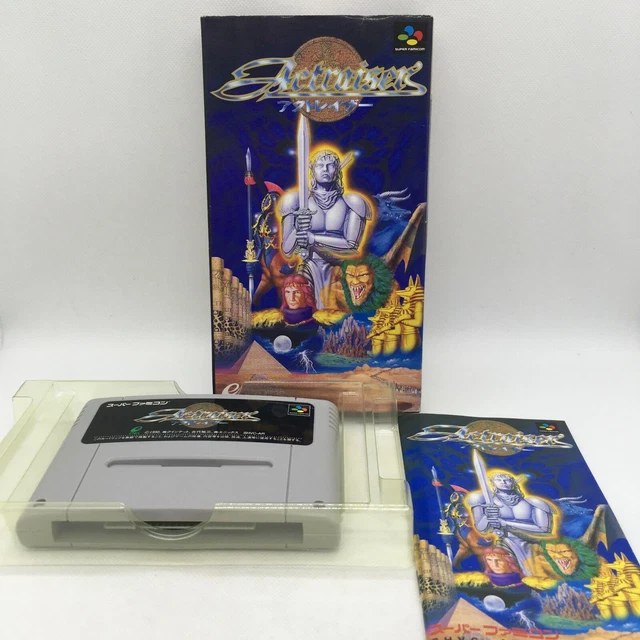
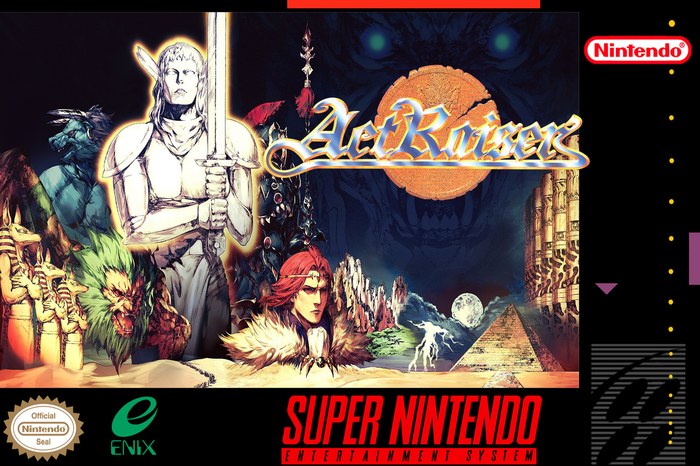
The Western release renamed its way around Nintendo of America's content rules: the protagonist, God in Japanese, became The Master; Satan became Tanzra; even the monster lair markers were redrawn, from Stars of David to skulls. The allegory survived intact; only the labels were filed off.