
From the Library: covers, censuses, and editions, documented. Browse the Library →
SOJ Ranma ½ · The Games
← Back to the Library

Ranma ½ Video Games

Seventeen games. The famous one in America is Street Combat: a Ranma fighter with every trace of Ranma removed.

The census counts seventeen Ranma games across fighting, RPG, puzzle and pachinko. The heart of the line is the Super Famicom trilogy from NCS (Masaya). The first, Chonai Gekitouhen (March 27, 1992), was localized by Irem as Street Combat (North America, April 1993): the mechanics are identical, but the entire cast and the music were replaced, Ranma himself became Steven, a blond scientist in a robot suit. The second, Bakuretsu Rantouhen (late 1992), crossed over nearly intact as Hard Battle, English dub voices included.

The third, Chougi Rambuhen (April 1994, by Atelier Double), is generally judged the best of the three, Super Play scored it 79%, and its planned American release was cancelled after Hard Battle’s sales. Both earlier Super Famicom fighters were still being played competitively at Evo Japan 2018. Only two of the Super Famicom fighters were ever adapted for Western release.
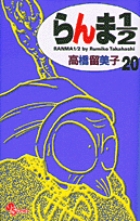
Ranma 1/2 volume 20 shinsoban cover
Ranma 1/2, Vol. 20 (Shinsoban)
Volume 20. The games, fighters and RPGs alike, draw their rosters from this middle stretch of the manga.

THE CENSUS, BY CORNER

17 games, 1990–96 and after
Street Combat · 1993
Chonai Gekitouhen with Ranma erased: the most instructive localization artifact in this entire hub.
Hard Battle · 1992–93
Bakuretsu Rantouhen, released in the West almost unchanged: the control case that proves Street Combat was a choice, not a necessity.
The One That Stayed Home
Chougi Rambuhen (1994): the strongest Super Famicom fighter, Japan-only after its US release was cancelled.
The RPG · October 22, 1993
Akanekodan-teki Hihou (Hidden Treasure of the Red Cat Gang): the Super Famicom’s Ranma role-playing game.
The Rest of the Map
A puzzle game (Ougi Jaanken), Game Boy fighters, two PC Engine titles, and Battle Renaissance for the PlayStation (December 6, 1996): the line’s 3D farewell.
The Games CensusThe History
MORE FROM THE RUMIKO TAKAHASHI ARCHIVE →
One shelf of the Library. Browse them all →

THE FIRST WORD

New pages and new pieces, first.