
THE LIBRARY
Collector guides, cover censuses, and edition answers, documented issue by issue. Every page answers one specific question, completely.
← Back to GHOST IN THE SHELL on the Library shelf
GHOST IN THE SHELL
17 shelves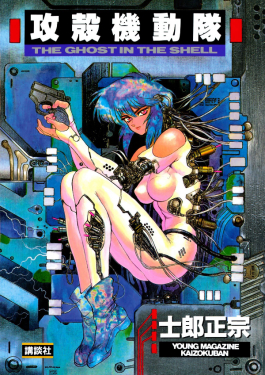
The Ghost in the Shell Manga Gallery
Every Ghost in the Shell manga volume and landmark edition by Masamune Shirow, documented: the 1991 Kodansha tankobon, the Solid Box, 1.5, Man-Machine Interface,…

The History of the Ghost in the Shell Manga
How Masamune Shirow’s Ghost in the Shell ran in Young Magazine Kaizokuban from May 1989, became a single Kodansha tankobon in October 1991, and grew two sequels…
What is Ghost in the Shell 1.5: Human-Error Processor?
Ghost in the Shell 1.5: Human-Error Processor collects four Shirow stories from 1991 to 1996 (Fat Cat, Drive Slave, Mines of Mind, Lost Past) that were left out…
What is Ghost in the Shell 2: Man-Machine Interface?
Ghost in the Shell 2: Man-Machine Interface is Masamune Shirow’s full-color sequel, serialized in Weekly Young Magazine in 1997, boxed in the Solid Box of 2000,…
Are the English Ghost in the Shell Editions the Same as the Japanese?
The English editions of Ghost in the Shell differ from the Japanese originals in reading direction, sound effects, and two famous pages Shirow himself redrew. A…
How Can You Tell a First Printing of the Ghost in the Shell Manga?
Identify a first printing of the 1991 Ghost in the Shell tankobon from its colophon: October 5, 1991 first-printing line, ISBN 4-06-313248-X, KC Deluxe imprint,…
Why Does Ghost in the Shell Have So Many Footnotes?
Masamune Shirow packed the margins of Ghost in the Shell with author’s notes on weapons, politics, and technology. Why the manga’s famous marginalia is a design…
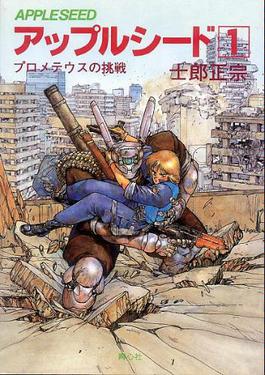
Who is Masamune Shirow?
Masamune Shirow (born Masanori Ota, November 23, 1961) created Black Magic, Appleseed, and Dominion before Ghost in the Shell. His career before and around the…
What Are the Intron Depot Art Books?
Intron Depot 1 (Seishinsha, July 1992) collects 226 of Masamune Shirow’s illustrations from 1981 to 1991, including his Ghost in the Shell color work. The Shirow…
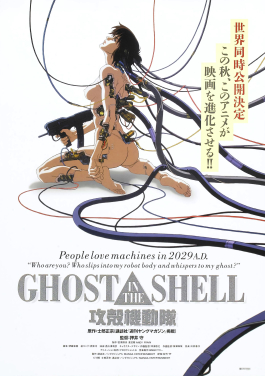
How Was the 1995 Ghost in the Shell Film Made?
Mamoru Oshii’s 1995 Ghost in the Shell at Production I.G: Kazunori Ito’s script, Kenji Kawai’s choral score, and the Digitally Generated Animation process that…
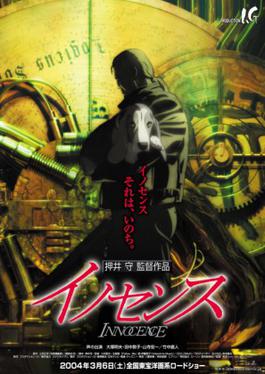
What is Ghost in the Shell 2: Innocence?
Ghost in the Shell 2: Innocence (2004) is Mamoru Oshii’s sequel, co-produced by Production I.G and Studio Ghibli, following Batou in 2032. It was the first anime…
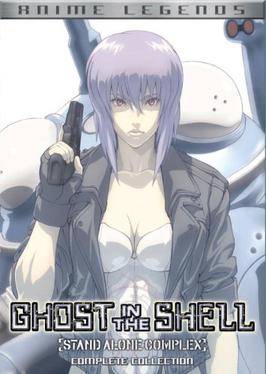
How Does Stand Alone Complex Split Its Episodes?
Stand Alone Complex labels every episode Stand Alone or Complex: self-contained cases versus chapters of the Laughing Man arc, marked by green and blue title…
Who is the Laughing Man in Ghost in the Shell?
The Laughing Man is the hacker at the center of Stand Alone Complex’s first season: a corporate-blackmail case from six years before the series, whose logo and…
What Are the Tachikoma in Ghost in the Shell?
The Tachikoma are Stand Alone Complex’s spider-like think tanks: AI vehicles with childlike voices that learn, individualize, and question their own existence,…
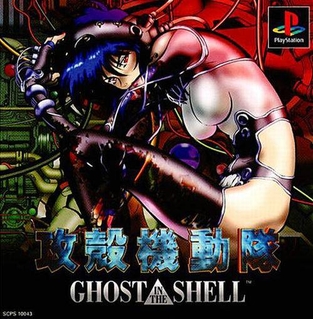
What is the 1997 Ghost in the Shell PlayStation Game?
The 1997 PlayStation Ghost in the Shell by Exact and Production I.G puts the player inside a Fuchikoma that climbs walls and ceilings, with an original story and…
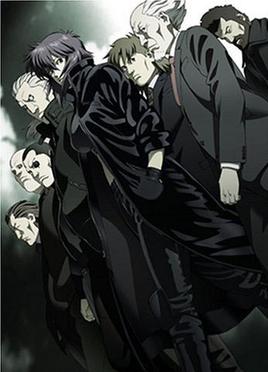
What Are the Stand Alone Complex Video Games?
Stand Alone Complex reached consoles twice: Cavia’s 2004 PlayStation 2 action game, set between the two TV seasons, and G-Artists’ 2005 PSP first-person sequel.…
What Happened to Ghost in the Shell: First Assault Online?
First Assault Online, Neople and Nexon’s Stand Alone Complex shooter, ran from Steam Early Access in December 2015 to shutdown in December 2017. Plus the…
